Alternate Nostril Breathing (Nadi Shodhana) for Beginners
Learn alternate nostril breathing (Nadi Shodhana) step by step. A simple, calming pranayama you can do in five minutes to settle a busy mind.
Alternate nostril breathing is a slow breathing technique where you gently close one nostril, breathe through the other, then switch. You do this in a steady back-and-forth rhythm for a few minutes. It sounds fussy when you read it, but once your hand finds the pattern, it becomes oddly soothing.
The Sanskrit name is Nadi Shodhana, which roughly means "channel clearing." You don't need to believe anything mystical to feel the effect. The mechanics alone, long exhales and a quiet point of focus, tend to slow you down. If your head feels like a browser with forty tabs open, this is a good five-minute reset.
What alternate nostril breathing actually does
When you breathe slowly and make your exhale a little longer than your inhale, you nudge your nervous system toward its "rest and digest" mode. That's the same calming response you get from a long sigh after a stressful phone call. Nadi Shodhana builds that pattern into a structure, so you can't rush it.
The nostril-switching part also gives your attention a simple job. Instead of chasing thoughts, you're tracking which nostril is open and counting a quiet breath. That light focus is why a lot of people reach for this as pranayama for calm before bed or right before something nerve-wracking, like a presentation.
A few honest expectations:
- It won't knock you out like a sleeping pill. It just takes the edge off.
- The first time often feels awkward and a bit silly. That fades fast.
- One nostril is usually more blocked than the other. Totally normal, and it shifts through the day.
If you're brand new to breathwork, it helps to read a short introduction to pranayama for beginners first, so the basic ideas feel familiar before you add the hand movements.
The hand position (Vishnu mudra)
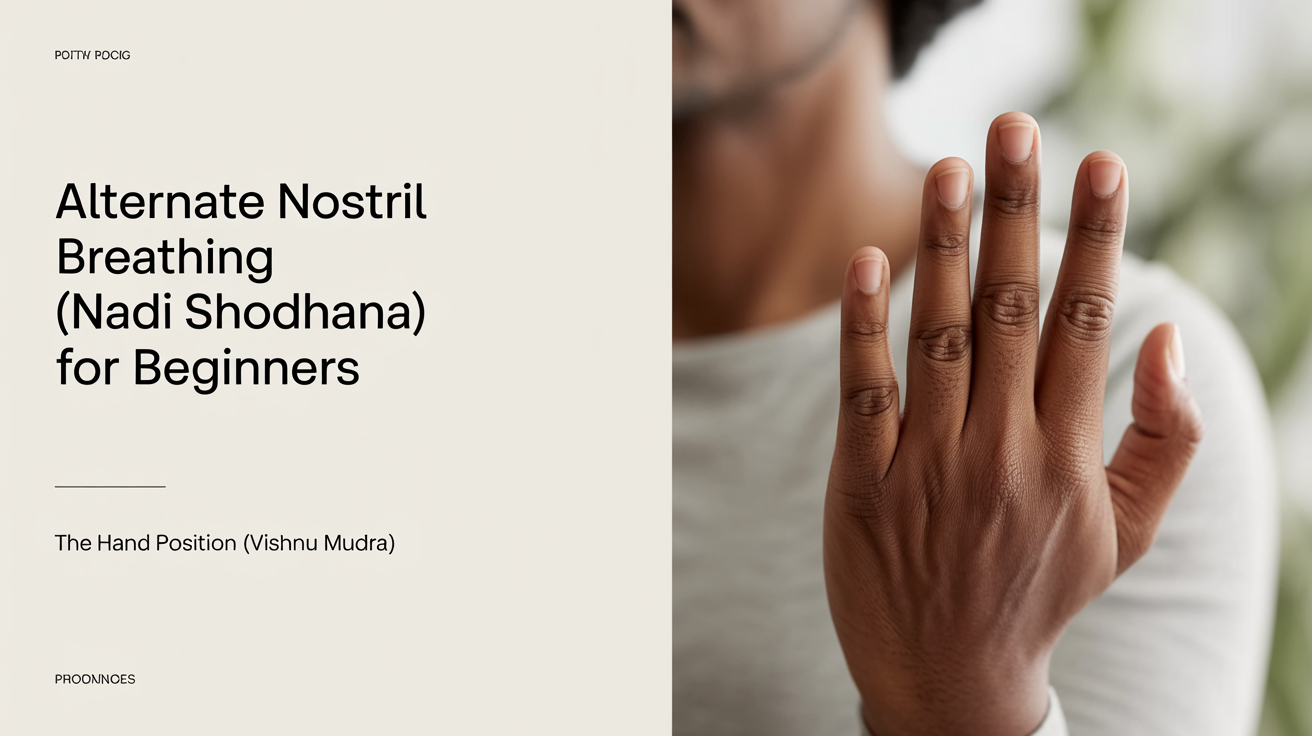
Use your right hand. The classic shape is called Vishnu mudra, and it's simple once you see it.
- Fold your index and middle fingers down toward your palm, or rest them lightly on the bridge of your nose. Either is fine.
- Your thumb will close the right nostril.
- Your ring finger (with the pinky resting alongside) will close the left nostril.
You're not pinching or pressing hard. Think of it as a soft seal, just enough pressure to stop the airflow on one side. Keep your shoulders relaxed and your elbow low rather than winging out to the side. If your arm gets tired, prop that elbow on a cushion or the back of your other hand.
Left-handed? You can mirror this with your left hand. The tradition favors the right, but comfort matters more than convention when you're learning.
Nadi Shodhana steps
Here is the full pattern. Sit tall, somewhere you won't be interrupted, with your spine long but not stiff. Take one normal breath before you start.
- Close your right nostril with your thumb. Inhale slowly through the left nostril.
- At the top of the inhale, close your left nostril with your ring finger, so both are briefly closed.
- Release your thumb and exhale slowly through the right nostril.
- Inhale through that same right nostril.
- Close the right again, release the left, and exhale through the left nostril.
That whole loop is one round. The thing beginners miss: you always switch the side you breathe out of, and you inhale through the same nostril you just exhaled from. Read that twice. It clicks faster in your body than on paper.
A simple count to follow
Don't strain for long breaths on day one. Start gentle and let the counts grow over a week or two.
| Stage | Inhale | Hold (optional) | Exhale |
|---|---|---|---|
| Just starting | 4 counts | skip it | 4 counts |
| Comfortable | 4 counts | 2 counts | 6 counts |
| More practiced | 5 counts | 4 counts | 7 counts |
Skip the hold entirely if it makes you gasp or tense up. A smooth, quiet breath beats an impressive long one. The exhale being a touch longer than the inhale is where most of the calming comes from, so prioritize that over breath-holding.
Aim for 5 to 10 rounds to begin, which lands around three to five minutes. You can build to 10 minutes later.
When and how often to practice
Morning and evening are the popular slots, but the best time is whenever you'll actually do it. A few realistic ways to fit it in:
- Before bed: in place of one more scroll through your phone.
- Mid-afternoon slump: instead of a third coffee.
- Before something stressful: a meeting, a hard conversation, a drive in traffic.
Try to practice on a fairly empty stomach. Right after a big meal, slow breathing can feel uncomfortable. Daily is great, even if it's just three minutes. Consistency does more than the occasional long session.
If you want a gentler on-ramp before coordinating the hand movements, spend a few days with diaphragmatic belly breathing so deep, slow breaths already feel natural to you.
Common beginner mistakes
Most early frustration comes from a handful of small things.
- Pressing too hard on the nose. A light seal is plenty. White-knuckling the nostril shut just adds tension.
- Forcing the breath. If you feel lightheaded, dizzy, or short of breath, stop and breathe normally. Slow breathing should feel easy, never like a struggle. Lightheadedness usually means you're pushing the pace or over-holding.
- Breathing into your chest only. Let the belly and lower ribs expand. Shallow chest breaths undercut the calm.
- Quitting after one awkward attempt. The coordination feels clumsy at first and smooths out within a session or two.
Move gently with everything here, keep the breath flowing, and come out of the practice if anything causes sharp discomfort or panic rather than calm. This is educational and not medical advice. If you're pregnant, recovering from an injury, or managing a heart, lung, or anxiety condition, check with your doctor before starting a new breathing practice, and skip any breath-holds unless they've cleared you.
A quick 5-minute routine to try
Pair Nadi Shodhana with a short settle and you have a tidy little practice:
- Sit comfortably and take 5 slow natural breaths to arrive.
- Do 8 to 10 rounds of alternate nostril breathing at a count that feels easy.
- Drop the hand, rest your palms on your thighs, and breathe normally for one minute.
- Notice how your mind feels before you get up. No need to judge it, just check in.
If you enjoy this and want another calming pattern, the steady rhythm of equal breathing (Sama Vritti) makes a nice companion technique on days you don't feel like coordinating both hands.
FAQ
How long should a beginner practice alternate nostril breathing?
Start with three to five minutes, which is roughly 5 to 10 rounds. That's enough to feel a shift without straining. Build toward 10 minutes over a few weeks if you like it, but short and consistent beats long and occasional.
Which nostril do I breathe in through first?
Tradition starts by closing the right nostril and inhaling through the left. If you can't remember mid-practice, don't worry. The pattern still works as long as you keep alternating the exhale side and inhale through the nostril you just exhaled from.
Why does one nostril feel blocked?
That's normal. Your body naturally cycles which nostril is more open over the course of the day, a rhythm called the nasal cycle. If one side is fully congested from a cold or allergies, save the practice for when you can actually breathe through both sides.
Can I do this if I have anxiety?
Many people find slow breathing settling, but it affects everyone differently. Start with very short sessions and skip the breath-holds, since holding can feel triggering for some. If breathwork ever ramps up your anxiety instead of easing it, stop and talk to a healthcare professional about what's right for you.
Do I have to use my right hand?
No. The right hand is traditional, but you can mirror the whole thing with your left if that's more comfortable. The breathing pattern matters far more than which hand holds your nose.