How to Do Diaphragmatic (Belly) Breathing
Learn diaphragmatic breathing step by step. A calm beginner guide to breathing from your diaphragm, with cues, common mistakes, and a simple routine.
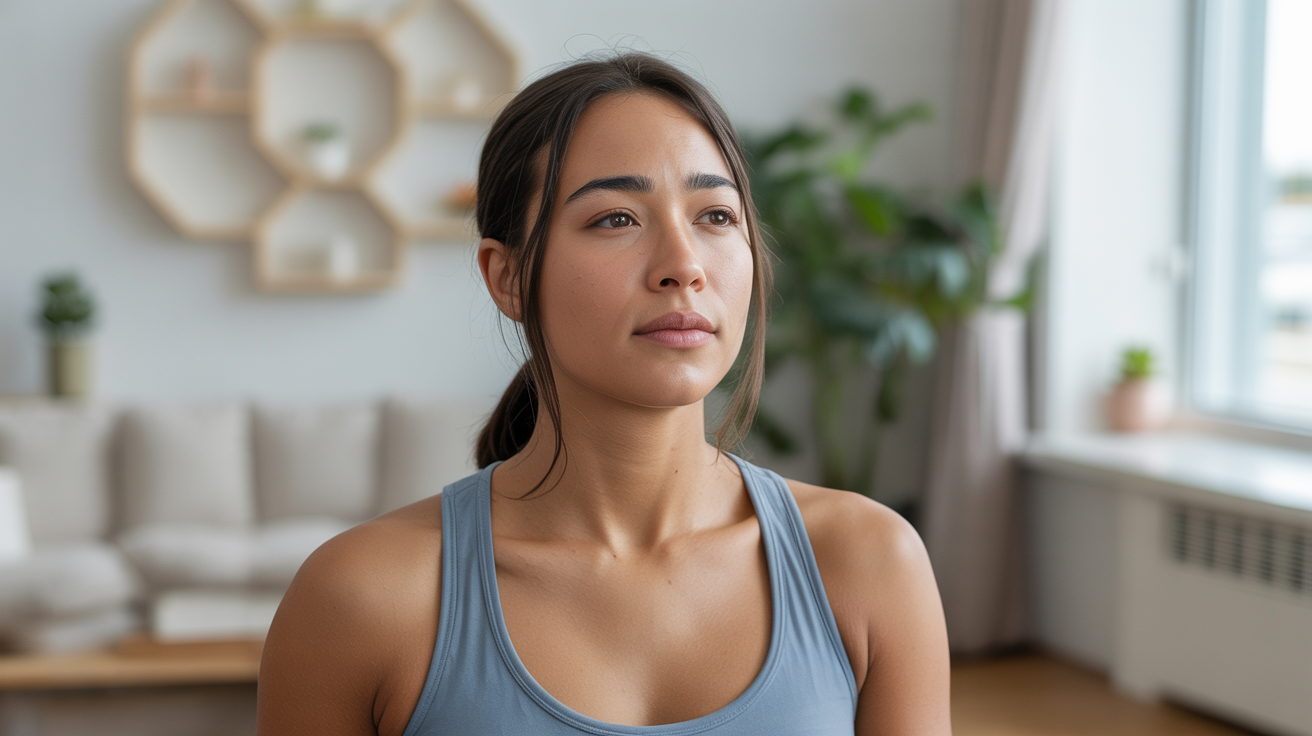
Put one hand on your chest and one on your belly, then take a normal breath. If the top hand moves and the bottom one stays still, you breathe mostly into your upper chest, like most of us do all day. Diaphragmatic breathing flips that. You let the belly do the work, and the breath gets slower, fuller, and a lot calmer.
This is the foundation of nearly every breathing practice in yoga, and it's the easiest one to learn first. You don't need flexibility, equipment, or any experience. You just need a few quiet minutes and the willingness to slow down.
At a Glance
- The belly rises because the diaphragm drops and makes room below it, not because air enters the stomach.
- Breathe in for about a count of 4, pause briefly, then breathe out for about a count of 6. The longer exhale is what triggers relaxation.
- Two to five minutes a day, done consistently, teaches the body a new default faster than one long occasional session.
- An 8-week controlled study found diaphragmatic breathing training lowered cortisol and improved sustained attention compared to no training.
- Lightheadedness usually means you're breathing too big or too fast. Make the breath smaller, not deeper.
- Lying down is the easiest position to learn in; a chair works once the pattern feels familiar.
What the diaphragm actually does
Your diaphragm is a dome-shaped muscle that sits under your lungs, separating your chest from your abdomen. When you inhale, it contracts and flattens downward, which pulls air into the lungs and gently pushes your belly outward. When you exhale, it relaxes back up, and the belly settles.
So "belly breathing" is a slightly misleading name. Air never goes into your stomach. The belly rises because the diaphragm is dropping and making room below it. Once you picture that, the whole technique clicks.
Most people breathe shallowly, using the small muscles around the neck and upper chest. That works, but it's inefficient and tends to keep the body a little keyed up. Learning how to breathe from your diaphragm gives the lungs a fuller exchange of air with less effort, and it nudges your nervous system toward "rest" rather than "alert."
You may have heard the diaphragm called the body's main breathing muscle, and that's accurate. It handles most of the work of a relaxed breath. The trouble is that stress, slumped posture, and a lifetime of sitting teach it to stay lazy while the neck and shoulders pick up the slack. Belly breathing simply hands the job back to the muscle that's built for it.
The research on this is more than anecdotal. In an 8-week controlled study, 40 healthy adults were split into a breathing-training group and a no-training control group. After 20 training sessions, the breathing group showed a significant drop in negative affect, a measurable improvement in sustained attention, and significantly lower cortisol, the body's main stress hormone, compared to the control group. The NIH's National Center for Complementary and Integrative Health similarly notes that diaphragmatic breathing has preliminary evidence for reducing stress and modestly lowering blood pressure, and lists it among the relaxation techniques generally considered safe for healthy adults. None of that requires a special apparatus. It requires practicing the pattern below often enough that it becomes familiar.
How to do diaphragmatic breathing, step by step

Start lying down. It's far easier to feel the belly move on your back than sitting upright, and you can graduate to a chair later.
- Lie on your back with knees bent and feet flat, or with a pillow under your knees. Let your shoulders melt toward the floor.
- Place one hand on your upper chest and the other on your belly, just below the ribs.
- Breathe in slowly through your nose for a count of about four. Aim the breath low, so the belly hand rises and the chest hand barely moves.
- Pause for a beat at the top, without straining.
- Exhale slowly through your nose or pursed lips for a count of about six, letting the belly hand sink. The exhale is a little longer than the inhale on purpose.
- Repeat for six to ten rounds. Keep it smooth and quiet.
The slightly longer exhale matters. A drawn-out out-breath is the part that signals your body to relax, so don't rush to grab the next inhale.
How it should feel
Done right, this feels almost boring, in a good way. The breath is quiet, the shoulders are loose, and the belly rises and falls like a slow tide. You should not feel lightheaded, tense, or like you're gulping air. If you do, you're probably working too hard. Ease off and let the breath be smaller.
A few rounds in, many people notice their jaw unclench or their shoulders drop a centimeter. That's the point. There's no goal to reach and no count to perfect on day one. You're just teaching your body that it's allowed to breathe low and slow.
Where this fits into a broader yoga practice
Diaphragmatic breathing is not a separate skill from the poses. It is the breath underneath almost every pose you will eventually learn. A downward dog held with shallow chest breathing feels tighter and more effortful than the same pose supported by slow belly breaths. Practicing this pattern on its own first, lying flat with nothing else to think about, makes it far easier to carry into a standing pose or a flow later, when your attention is split between alignment, balance, and breath at the same time. Many teachers introduce belly breathing before a single pose for exactly this reason. Get comfortable with it here, and it becomes a resource you can reach for anywhere, not just on the mat.
Common beginner mistakes
These are the snags that trip up almost everyone at first, and the quick fix for each.
| Mistake | What it feels like | Fix |
|---|---|---|
| Forcing the belly out | Pushing or straining the abdomen | Let the belly rise on its own as you breathe in low |
| Heaving the chest | Top hand jumps, shoulders climb | Soften the shoulders, aim the breath toward the bottom hand |
| Over-breathing | Dizzy or buzzy after a minute | Make each breath smaller and slower |
| Holding tension | Gripped jaw, clenched hands | Do a quick scan and relax the obvious spots |
| Racing the exhale | Breath feels choppy | Count the out-breath longer than the in-breath |
If lying down isn't comfortable, sit tall in a chair with both feet on the floor and a small lift through the crown of your head. Slouching folds the belly and blocks the very movement you want.
Building it into a habit
You'll get more from two minutes a day than from one heroic twenty-minute session you never repeat. Consistency teaches the body a new default, which is exactly what the training study above relied on: 20 short sessions over 8 weeks, not one long one.
Here's a gentle first week:
| Day | Practice | Length |
|---|---|---|
| 1–2 | Lying down, hands on chest and belly | 2 minutes |
| 3–4 | Same, eyes closed, counting the breath | 3 minutes |
| 5–6 | Seated in a chair | 3 minutes |
| 7 | Seated, no hands, just feeling the breath | 5 minutes |
Good moments to practice: right after you wake up, during an afternoon slump, or in bed before sleep. Some people use it as a reset before a stressful call. Once the pattern feels natural, you can drop the hands and simply notice the belly moving.
A worked example of the counting pattern. If you breathe in for 4 counts, pause for 2, and breathe out for 6, one full round takes about 12 seconds. Ten rounds at that pace runs about two minutes, which matches the Day 1-2 target above almost exactly. You don't need a timer. Counting ten rounds is enough of a built-in clock.
This deep breathing exercise also makes a solid on-ramp to the rest of yogic breathwork. If you'd like the bigger picture, see our simple introduction to pranayama for beginners. When you want to add a steady rhythm, the equal breathing technique builds directly on the belly breathing technique you're learning here.
A quick safety note
Breathwork is gentle, but it's still a physical practice. Keep the breath comfortable and never force it. If you feel dizzy, just return to your normal breathing for a moment and the feeling passes. If you're pregnant, recovering from an injury, or managing a heart or lung condition, check with your doctor before starting a regular practice. This article is educational, not medical advice.
When you're ready to layer on something a bit more active, alternate nostril breathing is a natural next step that uses the same calm, diaphragm-led foundation.
FAQ
How long should I practice diaphragmatic breathing each day?
Two to five minutes is plenty to start. Short and daily beats long and occasional. As it gets easier you can stretch sessions to ten minutes or fold the breathing into other moments, like a walk or your commute.
Should I breathe through my nose or my mouth?
Nose breathing on both the inhale and exhale is the usual recommendation, since it warms and filters the air and naturally slows you down. Pursed-lip exhaling through the mouth is a fine option if it helps you lengthen the out-breath at first.
Why do I feel a little dizzy when I do it?
That's almost always a sign you're breathing too big or too fast. Make each breath smaller and slower, and add a brief pause after the exhale. Lightheadedness should ease within a few normal breaths.
Can I do belly breathing while sitting at my desk?
Yes. Sit tall, both feet flat, and let your belly soften so it can move. You won't get the same obvious feedback as lying down, but a few quiet rounds at your desk is one of the best uses of the technique.
Is diaphragmatic breathing the same as deep breathing?
Mostly, yes. "Deep breathing" is the everyday term, and diaphragmatic breathing is the specific how: letting the diaphragm drop so the breath fills low rather than puffing the chest. Learning to breathe from your diaphragm is what makes a deep breath actually deep.
What's actually happening in the body when this technique reduces stress?
A slow, diaphragm-led exhale stimulates the vagus nerve and shifts the nervous system away from the fight-or-flight response and toward the calmer, rest-and-digest state. Researchers measuring this effect directly have found lower cortisol and steadier attention after weeks of regular practice, which matches what it feels like subjectively: less reactive, a bit more settled, without any change to your circumstances.