A Gentle Full-Body Stretch Routine for Stiff Beginners
A step-by-step full body yoga stretch routine for beginners who feel stiff. Gentle poses, clear cues, and practical tips to build flexibility safely.
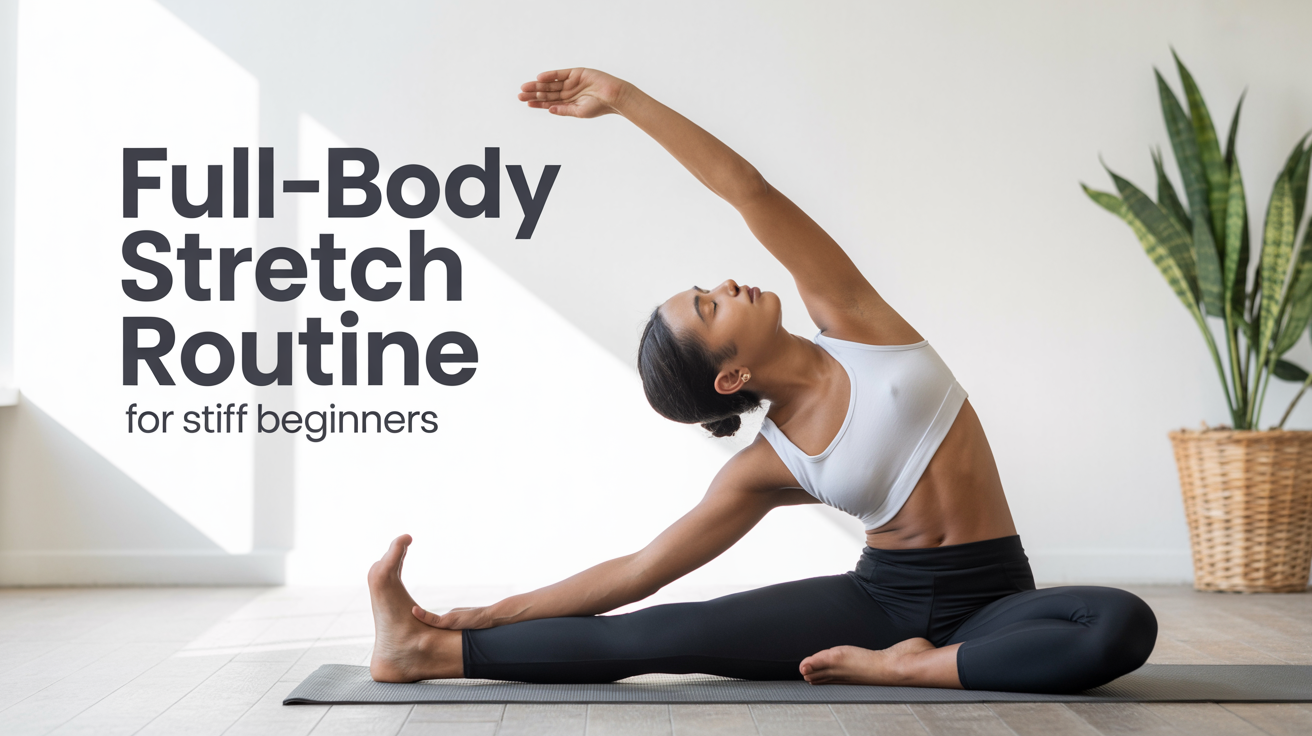
If you feel stiff the moment you get out of bed, you are not broken. Most beginners feel that way. The good news is that a short, consistent stretch routine can shift how your body feels within a few weeks, and you do not need to be flexible to start.
This guide walks through a gentle full-body routine you can do at home in about 20 minutes. Every pose has a modification so you can work at whatever level feels right for your body today.
What to Know Before You Start
Props are welcome. Grab a folded blanket, a firm pillow, a yoga block, or a stack of books before you begin. Props let you hold poses comfortably rather than straining to reach something.
Move with your breath. In each pose, exhale to deepen slightly. If you cannot breathe smoothly, you have gone too far.
Stiffness vs. sharp pain. A mild pulling sensation is normal and expected. A sharp, stabbing, or pinching sensation is a signal to back off or skip that movement.
See a doctor first if needed. If you are pregnant, recovering from an injury, or managing a chronic condition, check with a qualified healthcare professional before starting any new movement practice.
A 20-Minute Gentle Full-Body Stretch Routine
Work through the poses in order. Hold each one for the time listed, breathing steadily throughout.
| Pose | Body Area | Hold |
|---|---|---|
| Seated Cat-Cow | Spine, lower back | 8 rounds |
| Neck Rolls | Neck, upper traps | 4 rounds each side |
| Seated Side Stretch | Obliques, rib cage | 30 sec each side |
| Supine Knees-to-Chest | Lower back, hips | 45 sec |
| Supine Figure-Four | Outer hips, glutes | 45 sec each side |
| Low Lunge | Hip flexors, quads | 45 sec each side |
| Seated Forward Fold | Hamstrings, lower back | 45 sec |
| Seated Twist | Thoracic spine, hips | 30 sec each side |
| Child's Pose | Hips, back, shoulders | 60 sec |
| Supine Spinal Twist | Lower back, outer hip | 45 sec each side |
Seated Cat-Cow
Sit tall at the edge of a chair or cross-legged on the floor. Place hands on knees. On an inhale, arch your lower back and lift your chest (cow). On an exhale, round through your spine, tucking your chin toward your chest (cat). Move slowly, letting the breath lead. This wakes up the entire spine before anything else.
Neck Rolls
Stay seated. Drop your right ear toward your right shoulder without lifting your left shoulder. Hold for two breaths, then slowly roll your chin down toward your chest and up toward the left shoulder. Reverse. Keep the movement small and controlled.
Seated Side Stretch
Sit tall. Raise your right arm overhead and lean left, reaching long through your right side. Hold your left knee or place your left hand on the floor for support. You should feel a stretch along your right ribs. Breathe into it before switching sides.
Supine Knees-to-Chest
Lie on your back. Draw both knees to your chest and wrap your arms around your shins. Rock gently side to side if that feels good. This releases compression in the lower back that builds up from sitting.
Supine Figure-Four
Still on your back, cross your right ankle over your left thigh just above the knee. Flex your right foot. Either stay here or draw your left knee toward your chest until you feel a stretch in your right outer hip. Hold, then switch. If your head lifts off the floor, place a folded blanket under it.
Low Lunge
Step your right foot forward between your hands and lower your left knee to the floor (use a blanket under it for cushioning). Keep your front knee over your ankle. Lift your torso and rest your hands on your front thigh. You will feel a stretch in your left hip flexor. For more stretch, tuck your back toes and gently press your back hip forward. Switch sides.
If getting to the floor is difficult, a lunge against a wall or a supported version using a chair works just as well.
Seated Forward Fold
Sit on the floor with legs extended or slightly bent. Walk your hands forward along your legs or the floor. You do not need to reach your feet. The goal is a long spine, not a collapsed back. Use a strap or belt looped around your feet if reaching forward feels like a strain. For more about building range in this direction, see Yoga for Tight Hamstrings: Beginner Stretches That Help.
Seated Twist
From sitting, bend your right knee and cross it over your left leg, foot flat on the floor. Place your right hand on the floor behind you and your left elbow against your right knee. On each inhale, sit taller. On each exhale, rotate a little further to the right. Switch sides. Never force the twist.
Child's Pose
Kneel and sit your hips back toward your heels, then fold forward and rest your forehead on the floor or a block. Arms can extend overhead or rest at your sides. This pose restores the nervous system between active stretches and is one of the most effective hip-openers available to beginners.
Supine Spinal Twist
Lie on your back. Draw your right knee to your chest, then guide it across your body to the left with your left hand. Extend your right arm out to the side and look right if that feels comfortable for your neck. Let gravity do the work here. Switch sides. This releases the lower back and outer hip at the same time.
How to Build on This Routine
Start with three days a week
Every day is fine if your body recovers well, but three non-consecutive days is a realistic starting point. Consistency over time produces more change than doing too much early and burning out.
Add hold time before adding poses
When 45 seconds feels easy, extend to 60 or 75 seconds rather than adding new poses immediately. Deeper, longer holds do more for flexibility than rushing through a longer sequence.
Track how you feel, not how far you reach
Progress in stretching is mostly felt, not measured. Notice whether your lower back feels less tight in the morning, or whether a pose you used to find uncomfortable now feels neutral. Those shifts are the real milestones.
For a broader look at what consistent practice does for range of motion over time, Yoga for Flexibility: How Beginners Build Range Safely covers the underlying mechanics in more detail.
Morning vs. Evening Practice
This routine works at any time of day, but the experience differs slightly.
In the morning, your body is cooler and tissues are less pliable, so go even more gently than usual for the first few minutes. A morning stretch routine can reduce the general achiness that stiffness causes throughout the day.
In the evening, muscles are warmer from daily movement and many people find they can hold poses longer. Evening stretching also tends to support better sleep.
If hip tightness is a recurring issue regardless of when you stretch, Yoga for Tight Hips: Gentle Hip-Opening Poses focuses specifically on that area with poses you can layer into this routine or do on their own.
Frequently Asked Questions
How long before I notice a difference in flexibility?
Most beginners notice some change in how their body feels within two to four weeks of consistent practice, even if visible flexibility takes longer. The first changes tend to be functional rather than dramatic: your lower back feels less stiff in the morning, or a pose that used to require effort becomes comfortable.
Can I do this routine if I cannot get on the floor?
Yes. The seated poses (cat-cow, neck rolls, side stretch, forward fold, twist) can be done in a chair. For the floor poses, a low couch or bed works as a surface for supine stretches. Do not skip the routine because the floor is not accessible.
Is it normal to feel sore after stretching?
A mild, dull soreness the day after a new stretch routine is common, similar to what you might feel after light exercise. Sharp pain during a stretch or significant pain the next day is a sign to ease back and, if it persists, to check with a healthcare professional before continuing.
Should I warm up before this routine?
A few minutes of gentle walking in place or marching on the spot is enough to raise your body temperature before you begin. This routine is already low-intensity, so you do not need a formal warm-up, but avoid jumping straight into holds after sitting still for hours.
How do I know if I am pushing too hard?
The clearest signal is your breath. If you cannot maintain a smooth, steady inhale and exhale in a pose, you have gone beyond what your body is ready for right now. Ease back until breathing feels easy again. Mild tension that does not interfere with your breath is a safe working range.