Yoga for Flexibility: How Beginners Build Range Safely
New to yoga with zero flexibility? Learn how yoga improves flexibility step by step, with safe beginner poses and a simple routine to start today.
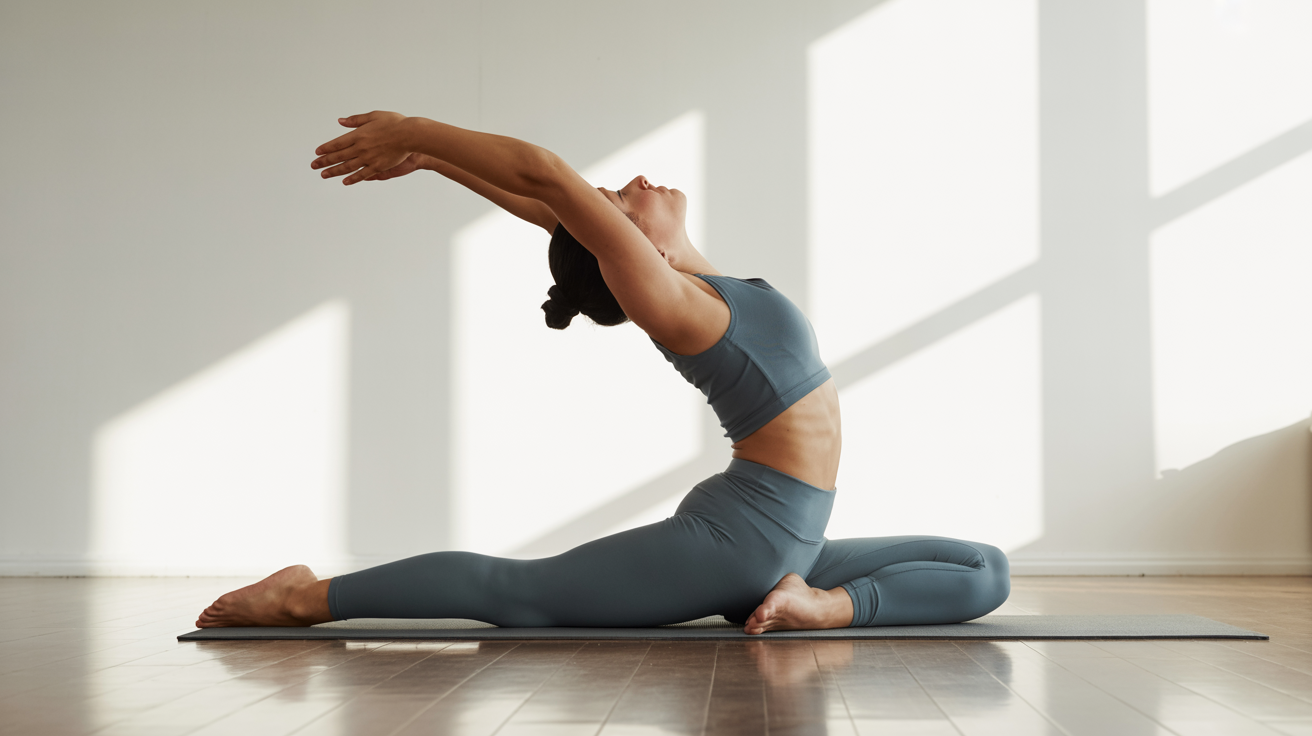
If you've avoided yoga because you can't touch your toes, you've got it backwards. Yoga isn't a reward for people who are already flexible. It's one of the most reliable ways to build flexibility from scratch. The stiffness you feel right now is exactly what yoga addresses.
Most beginners see noticeable changes within four to six weeks of consistent practice, even with short sessions. You don't need a heated room, expensive gear, or a background in athletics. You need a mat, some floor space, and a willingness to go slowly.
Why Yoga Works for Building Flexibility
Flexibility isn't just about muscle length. It also depends on your nervous system, which acts like a security guard for your body. When you move into a new range of motion, your nervous system triggers a protective reflex to keep you from getting hurt. Over time, regular gentle stretching teaches your nervous system that these positions are safe, and it gradually loosens its grip.
Yoga accelerates this process because it combines two things that work well together: slow, held stretches that give the nervous system time to relax, and conscious breathing that calms the body's threat response. A pose held for five to eight breaths does more than a quick bounce-stretch ever could.
On the physical side, yoga lengthens muscle fibers and improves the elasticity of connective tissue, the fascia and tendons that wrap everything together. It also moves your joints through their full range, which keeps the cartilage nourished and reduces stiffness over time.
What to Expect as a Complete Beginner
One thing that surprises beginners: flexibility gains often feel uneven. Your hamstrings might loosen up in two weeks while your hips stay stubborn for months. That's normal. Different areas have different amounts of connective tissue and different movement patterns from daily life.
Here's a rough timeline based on what most beginners experience:
| Timeframe | What Typically Happens |
|---|---|
| Week 1–2 | Muscles feel less sore after sessions; you notice where you're tight |
| Week 3–4 | Small but real range-of-motion gains in frequently stretched areas |
| Week 6–8 | Posture starts to shift; deeper poses feel more accessible |
| Month 3+ | Compounding gains; formerly impossible poses become achievable |
Progress isn't linear. Some weeks you'll feel looser; after a long week of sitting at a desk, you might feel tighter again. That's the body, not a sign you're doing something wrong.
The Core Principles of Flexibility Work
Before jumping into poses, a few principles will keep you safe and help you progress faster.
Move to the edge, not past it. You should feel a stretch, a mild to moderate pulling sensation. You should never feel sharp pain, pinching, or a burning sensation in a joint. If you do, back off immediately. Forcing range of motion doesn't speed things up; it triggers inflammation that actually slows you down.
Hold, don't bounce. Ballistic (bouncy) stretching activates the stretch reflex rather than releasing it. Yoga works because you hold positions long enough for that reflex to quiet down. Aim for five to eight slow breaths in each pose.
Keep breathing. This sounds obvious, but beginners often hold their breath when things get uncomfortable. Holding your breath is a sign you're in a stress response, exactly what you don't want during a stretch. If you can't breathe steadily, you've gone too deep.
Warm up first. Cold muscles stretch less effectively and are more prone to strain. Do five minutes of gentle movement, slow arm circles, hip circles, cat-cow on your hands and knees, before any deeper work.
If you're pregnant, recently injured, or managing a chronic condition, check with your doctor before starting a new flexibility practice. Most people are fine to begin gently, but a quick conversation is worth it.
A Beginner Flexibility Yoga Routine (20 Minutes)
This routine targets the areas where most beginners hold tension: hips, hamstrings, chest, and lower back. Do it three to four times per week for best results.
1. Cat-Cow (2 minutes)
Start on hands and knees with wrists under shoulders and knees under hips. On an inhale, drop your belly, lift your chest and tailbone (cow). On an exhale, round your spine toward the ceiling (cat). Move slowly, letting your breath lead. This warms the entire spine and signals to your nervous system that it's time to relax.
2. Child's Pose (8 breaths)
From hands and knees, send your hips back toward your heels and reach your arms forward along the mat. Rest your forehead down. You'll feel a stretch through your hips, lower back, and the sides of your torso. If your hips don't reach your heels, put a folded blanket behind your knees. Hold steady and breathe into your back.
3. Low Lunge (8 breaths per side)
Step your right foot forward between your hands. Lower your left knee to the mat. Sink your hips toward the floor and keep your front knee over your ankle. You'll feel this in your left hip flexor, the front of the hip, which gets tight from sitting. Don't let your front knee drift inward. Switch sides.
4. Seated Forward Fold (8–10 breaths)
Sit with legs straight in front of you. Inhale to sit tall, then exhale and hinge from your hips (not your waist) to fold forward. Reach for your shins, ankles, or feet, whatever you can reach without rounding your lower back aggressively. The goal is a long spine with a gentle fold, not a dramatic reach. Over time, the hamstrings release and you'll naturally go further. For more detail on this area, see yoga for tight hamstrings: beginner stretches that actually help.
5. Supine Figure-Four (8 breaths per side)
Lie on your back with knees bent. Cross your right ankle over your left thigh, flex your right foot, and either stay here or draw your left knee toward your chest. You'll feel a deep stretch in your right outer hip and glute. This is one of the most effective hip openers for beginners who aren't ready for pigeon pose. For a fuller hip-opening sequence, check out yoga for tight hips: gentle hip-opening poses.
6. Supine Twist (8 breaths per side)
Still on your back, hug your right knee to your chest, then let it cross over to the left side of your mat. Extend your right arm out to the side and look right if that's comfortable for your neck. This releases the lower back and outer hip at the same time. Gentle yoga for a stiff lower back covers this territory in more depth if your back is your main trouble spot.
7. Legs Up the Wall (3–5 minutes)
Scoot close to a wall and swing your legs up so the backs of your legs rest against it. Arms out to your sides, palms up. This passive inversion is surprisingly effective for tight hamstrings and also helps your nervous system downshift after a session. It's a great way to end.
Common Beginner Mistakes to Avoid
- Skipping sessions when sore. Mild soreness is fine to work through gently. Sharp or joint pain is not. Know the difference.
- Comparing yourself to photos or other students. Range of motion varies enormously based on bone structure, not just flexibility. Some people's hips physically cannot do certain poses, that's anatomy, not failure.
- Expecting fast results and quitting. Two weeks of yoga will not undo years of sitting. Four to six weeks of three-to-four-times-weekly practice will show you clear, measurable progress.
- Doing too much too soon. A 20-minute routine done consistently beats a 90-minute session done once. Start modest.
FAQ
How long does it take to see flexibility gains from yoga?
Most beginners notice early changes within three to four weeks of practicing three or more times per week. Meaningful, lasting gains in range of motion typically build over two to three months. Consistency matters more than session length.
Do I need to be flexible to start yoga?
No. Yoga is a practice for building flexibility, not a test of it. Every pose has modifications that make it accessible to stiff beginners. Starting inflexible is completely normal and doesn't put you at a disadvantage.
How often should I practice yoga for flexibility?
Three to four times per week is the sweet spot for most beginners. Daily practice is fine if you keep the sessions gentle, but rest days are valuable too. Even two sessions per week will produce progress over time, just more slowly.
Should I stretch before or after yoga?
Yoga already includes warm-up movements. You don't need to stretch before yoga. If you want to add extra flexibility work, do it after your yoga session when your muscles and connective tissue are thoroughly warm.
Why do I feel tighter some days than others?
Sleep quality, hydration, stress levels, and how much you've been sitting all affect how tight you feel on a given day. This is normal. Don't adjust your expectations based on a single session, track your range of motion over weeks, not days.