Yoga for Tight Hips: Gentle Hip-Opening Poses
Tight hips? Try these gentle hip-opening yoga poses for beginners. Simple cues, real timings, and a safe routine to build hip flexibility.
If your hips feel locked up after a long day at a desk, you are not alone. Sitting for hours shortens the muscles at the front of the hip and lets the glutes go quiet, so by evening everything around your pelvis feels stiff and grumpy.
The good news: you do not need to be bendy to start. Yoga for tight hips is mostly about holding a few gentle shapes, breathing, and letting the muscles release on their own time. Below is a beginner-friendly set of poses you can do on the floor with nothing but a mat and maybe a cushion.
Why Hips Get Tight in the First Place
Your hip is a deep ball-and-socket joint wrapped in big muscles: the hip flexors at the front, the glutes behind, and the adductors on the inside of the thigh. When you sit, the front muscles stay in a short, bent position for hours. Hold that pattern five days a week and those muscles start to feel like the short position is normal.
Tight hips can show up as a stiff lower back, achy knees, or a stride that feels short and stompy when you walk. That is why hip opening yoga poses tend to make your whole lower body feel lighter, not just your hips.
One thing to understand early: "opening" the hips is not about yanking yourself into a deep stretch. It is about giving the muscles a reason to relax. Forcing it backfires, because a muscle that feels threatened grips harder.
How to Stretch Hips Safely
A few ground rules before you lie down on the mat:
- Move into each pose slowly. Take 20 to 30 seconds to settle in rather than dropping straight to your end range.
- Keep breathing. If you are holding your breath, you have gone too far. Slow exhales tell your nervous system it is safe to let go.
- Aim for a 4 or 5 out of 10 stretch, never a sharp 8. You want a steady, spread-out sensation, not a pinpoint.
- Stop on sharp or pinching pain. A dull stretchy feeling in the muscle belly is fine. A sharp, electric, or deep-joint pain means back off and come out.
- Use props. A cushion under a knee or hip takes pressure off and lets you stay relaxed longer.
If you are pregnant, recovering from a hip or knee injury, or managing a joint condition, check with your doctor or a physical therapist before trying deep hip work. This article is educational, not medical advice.
The Gentle Hip-Opening Poses
Here is the core set. Do them in this order, breathe through each one, and switch sides where the pose is one-sided.
| Pose | Hold | What you should feel |
|---|---|---|
| Reclined figure-four | 60–90 sec each side | Stretch deep in the glute |
| Low lunge | 45–60 sec each side | Stretch across the front of the back hip |
| Butterfly (bound angle) | 1–2 min | Stretch along the inner thighs |
| Pigeon (supported) | 1–2 min each side | Glute and outer hip release |
| Happy baby | 30–60 sec | Gentle release through the inner hips |
Reclined Figure-Four
Lie on your back, knees bent, feet on the floor. Cross your right ankle over your left thigh just above the knee, so your right knee opens out to the side. Reach through and hold the back of your left thigh, then gently draw that leg toward your chest. You should feel a stretch in the right glute and outer hip. Keep your head and shoulders heavy on the mat. This is one of the best yoga for tight hips moves because it targets the glute without straining the knee.
Low Lunge
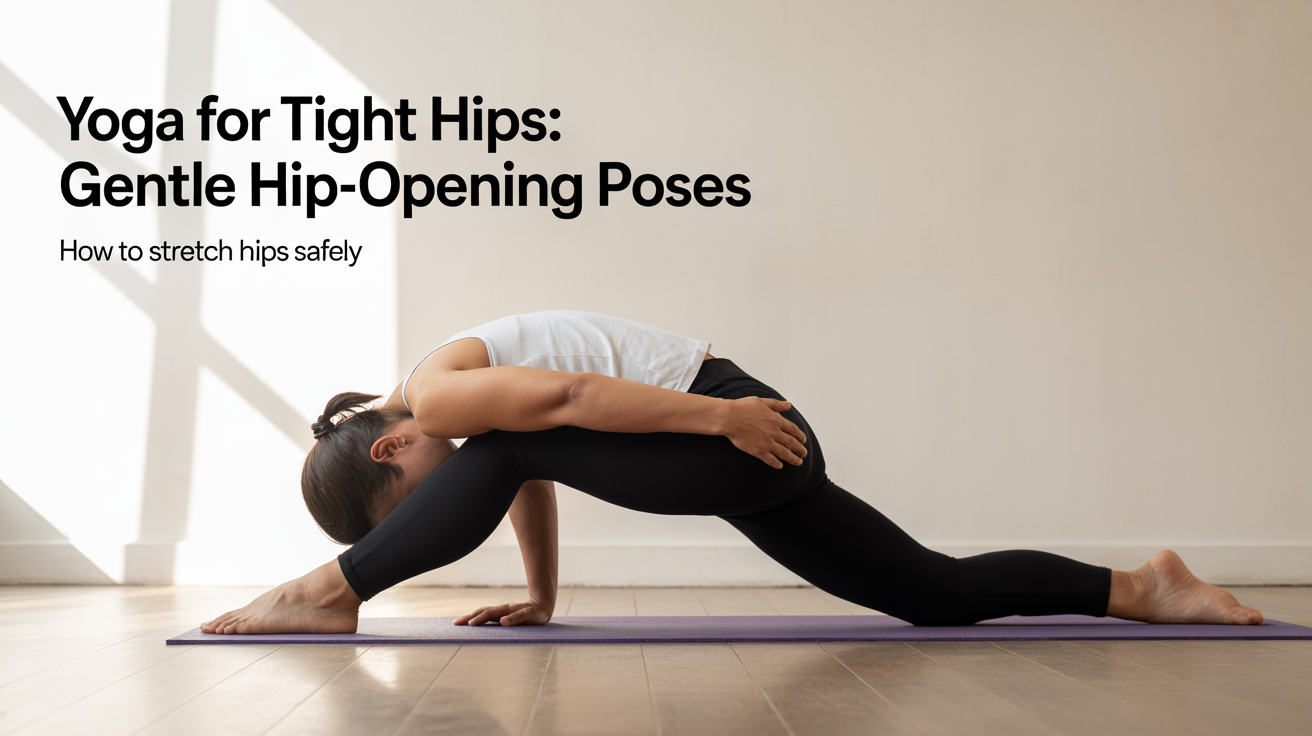
From hands and knees, step your right foot forward between your hands. Slide your left knee back until you feel a stretch across the front of your left hip. Lift your chest and let your hips sink gently toward the floor. Pad the back knee with a folded blanket if it feels tender. This one hits the hip flexors, the muscles that get short from sitting.
Butterfly (Bound Angle)
Sit tall, bring the soles of your feet together, and let your knees fall out to the sides. Hold your feet or ankles and sit up out of your lower back. The farther your feet are from your body, the gentler it is, so start with them a little forward. To go deeper, fold slowly from the hips, not by rounding your spine.
Supported Pigeon
Pigeon is the famous one, and also the easiest to overdo. From hands and knees, bring your right knee toward your right wrist and let your right shin angle across the mat. Slide your left leg straight back. Before you sink down, slip a cushion or folded blanket under your right hip so your pelvis stays level. Stay upright on your hands at first; only fold forward if your hips feel ready. If you feel anything sharp in the front of the bent knee, come out and do reclined figure-four instead, which gives a similar stretch with less knee load.
Happy Baby
Lie on your back, draw both knees toward your armpits, and hold the outside edges of your feet (or the backs of your thighs if your feet are out of reach). Let your knees widen and your lower back settle. Rock gently side to side if it feels good. This is a soft way to finish, releasing the inner hips after the deeper poses.
A Simple Weekly Routine
You do not need a long session for results. Consistency beats intensity with yoga for hip flexibility. Short, frequent practice tells your body the new range is here to stay.
- Daily (5 minutes): Reclined figure-four and a low lunge, both sides. Easy enough to do before bed.
- Three times a week (15 minutes): Run the full pose set above, holding each shape for the times in the table.
- Once a week (25 minutes): The full set plus a few extra minutes in butterfly and supported pigeon, when you have time to relax into longer holds.
Give it three or four weeks. Hip tissue is stubborn, and real change in flexibility happens gradually. If you want the bigger picture on building range without forcing it, this guide on how beginners build flexibility safely pairs well with this routine.
Tight hips rarely travel alone. They often come bundled with stiff hamstrings and a cranky lower back, since those areas all pull on the pelvis together. If yours feel connected, you might also work through gentle stretches for tight hamstrings and this routine for a stiff lower back on alternate days.
Common Beginner Mistakes
A few habits quietly stall your progress:
- Bouncing in a stretch. Bouncing makes muscles tense up. Hold still and let gravity do the work.
- Chasing the floor in pigeon. Getting your chest down matters far less than keeping your hips square and pain-free.
- Rounding the back in butterfly. When you fold, hinge from the hip crease so the stretch stays in your inner thighs, not your spine.
- Skipping the warm-up. A minute of gentle hip circles on hands and knees makes everything that follows feel better.
FAQ
How long until I see results with yoga for tight hips?
Most beginners notice a little more ease within a couple of weeks of regular practice, with bigger gains over a month or two. Flexibility responds to repetition, so short daily holds beat one long weekly session.
Is it normal for my hips to feel tight again the next morning?
Yes, especially if you sit a lot. A single session loosens the muscles temporarily; lasting change comes from doing the poses consistently and moving more during the day. A quick stretch break every hour of sitting helps a surprising amount.
Should hip-opening poses hurt?
No. You want a moderate, spread-out stretch around a 4 or 5 out of 10. Sharp, pinching, or deep-joint pain is a signal to ease off and come out of the pose. Dull muscle stretch good, sharp pain bad.
What if I can't do pigeon pose?
Skip it and use reclined figure-four instead. It stretches the same glute and outer-hip muscles while you lie comfortably on your back, with much less strain on the knee. Many people find it more effective precisely because they can relax into it.
Do I need props to do these poses?
Not strictly, but a cushion or folded blanket helps a lot. Padding under a tender knee or under your hip in pigeon lets you stay relaxed, and a relaxed muscle releases better than a braced one.