Gentle Yoga for a Stiff Lower Back
Ease a stiff lower back with gentle, beginner-friendly yoga. Simple poses, clear cues, and a short routine you can do at home today.
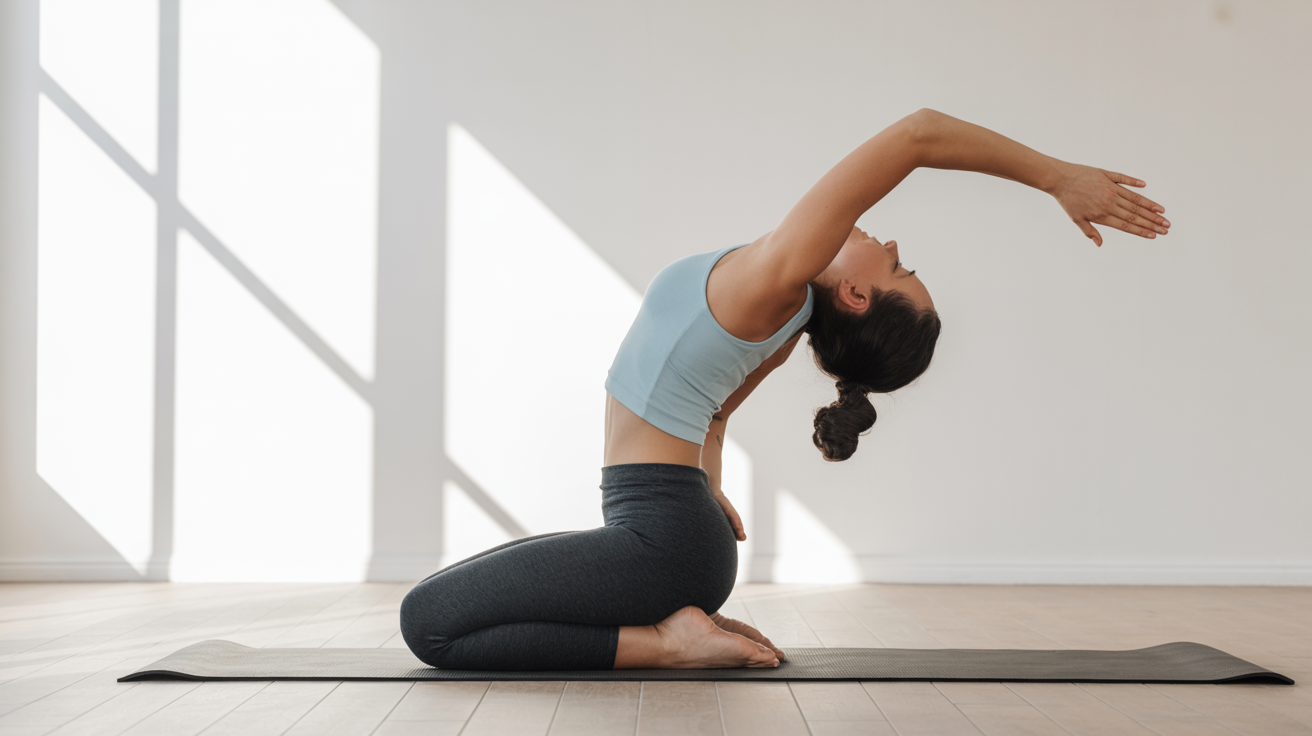
If your lower back feels tight when you get out of a chair or stiff first thing in the morning, gentle movement usually helps more than lying still. You don't need to touch your toes or hold a pose for two minutes. You just need a few slow, kind shapes that let the muscles around your spine relax.
This is a beginner routine for yoga for lower back tension. Every pose below is low to the ground, easy to modify, and forgiving if you've never done yoga in your life.
Why a Stiff Lower Back Responds Well to Gentle Yoga
A stiff back is often a back that hasn't moved through its full range in a while. Sitting for hours shortens the hip flexors and lets the deep core go quiet, and your lower back ends up carrying the slack. Gentle yoga reverses that slowly. You warm the tissue, you ask the spine to bend forward and back in small amounts, and you remind your nervous system that movement is safe.
The key word is gentle. This is not about a deep stretch or a burning sensation. With yoga for back stiffness, the goal is to feel a little more space and a little less guarding, not to push into anything sharp. If a movement causes shooting, pinching, or numbness down a leg, back off and skip it.
One honest note before you start: if you're pregnant, recovering from an injury, or managing a diagnosed back condition, check with your doctor or physical therapist first. This article is educational, not medical advice.
How to Move (and Breathe)
Two habits make every pose below safer and more useful.
- Lead with your breath. Inhale to lengthen or open, exhale to fold or soften. If you catch yourself holding your breath, you're probably trying too hard.
- Move at about half the effort you think you need. A stiff back loosens with repetition, not force. Small range, done calmly several times, beats one big yank.
Set up on a mat or carpet with a pillow or folded blanket nearby. Wear something you can bend in. That's the whole kit.
A Gentle 6-Pose Routine
Do these in order. The first few warm the spine, the middle ones open the hips and hamstrings (both feed into low-back tightness), and the last one lets everything settle. Move slowly between poses.
| Pose | What it does | Hold / reps |
|---|---|---|
| Cat-Cow | Wakes up spinal movement | 6-8 slow rounds |
| Child's Pose | Lengthens the lower back | 5 breaths |
| Knees-to-Chest | Releases the lumbar muscles | 5 breaths |
| Supine Twist | Eases rotation stiffness | 5 breaths each side |
| Sphinx | Gentle backbend, opens the front | 3-5 breaths |
| Reclined Rest | Lets the back unclench | 1-2 minutes |
Cat-Cow
Come to hands and knees, wrists under shoulders, knees under hips. Inhale and let your belly drop as you lift your chest and tailbone (cow). Exhale and round your spine toward the ceiling, tucking your chin and tail (cat). Keep it small and smooth. This is the warm-up, so resist the urge to crank into the deepest version.
Child's Pose
From hands and knees, bring your big toes together, widen your knees, and sit your hips back toward your heels. Walk your hands forward and rest your forehead down. If your hips don't reach your heels, slide a pillow between your seat and your calves. Breathe into your lower back and feel it stretch on each inhale.
Knees-to-Chest
Lie on your back and draw both knees gently toward your chest, holding behind your thighs rather than on top of your kneecaps. Let your tailbone stay heavy on the floor. You can rock an inch side to side for a light massage along the spine. This is one of the most reliable yoga stretches for lower back relief because it directly decompresses the lumbar muscles.
Supine Twist
Stay on your back. Hug your right knee in, then guide it across your body to the left while you extend your left arm out and turn your gaze right. Keep both shoulders reaching toward the floor; it's fine if the top shoulder lifts a little. Switch sides after five breaths. A twist should feel like a wring-out, never a crunch.
Sphinx
Roll onto your front. Prop yourself on your forearms with elbows under your shoulders, legs relaxed behind you. Press your forearms gently down and lengthen the crown of your head forward, making a mild backbend. Keep your glutes soft. If you feel any compression in the low back, lower your chest closer to the floor.
Reclined Rest
Roll onto your back, let your legs fall open, and slide a pillow under your knees. Stay here a minute or two. This pose looks like nothing, but giving the back muscles permission to fully let go is half the benefit.
When to Practice and How Often
Little and often wins. A stiff back changes faster from five to ten minutes most days than from one long session a week.
- Morning: Cat-Cow and Knees-to-Chest loosen overnight stiffness before you stand up into your day.
- After sitting: A quick Supine Twist and Child's Pose resets a back that's been hunched at a desk.
- Before bed: The full routine, moving slowly, helps the back unwind so you sleep easier.
Aim for four or five short sessions a week. Consistency matters more than the length of any single practice, and a stiff back tends to reward a steady habit within a couple of weeks.
Common Beginner Mistakes
A few easy traps to sidestep:
- Forcing the fold. In Child's Pose or Knees-to-Chest, more depth is not more relief. Use props and stay where you can breathe slowly.
- Holding the breath. Clenched breathing keeps the back muscles tense. Long exhales are what signal them to release.
- Skipping the hips and hamstrings. Tightness elsewhere often pulls on the lower back. If your hips feel locked, the gentle work in these beginner hip-opening poses pairs perfectly with this routine, and some easy hamstring stretches can take a surprising amount of strain off your spine.
- Going too hard, too soon. This is gentle yoga for back pain and stiffness, not a flexibility bootcamp. Build range patiently; if you want the bigger picture on doing that safely, see how beginners build range without overdoing it.
FAQ
Is it safe to do yoga with an existing back problem?
Often yes, if it's gentle and pain-free, but it depends on the cause. Get a green light from your doctor or physical therapist before starting, especially with disc issues, sciatica, or a recent injury. Then move slowly and stop anything that increases pain.
How long until my lower back feels less stiff?
Many people feel looser right after a single session because the muscles relax and the spine has moved. Lasting change, the kind where mornings feel easier, usually shows up after a week or two of practicing most days.
What if a pose causes sharp or pinching pain?
Come out of it right away. A good stretch feels like mild tension that eases as you breathe. Sharp, shooting, or pinching pain is a signal to stop, not to push through. Skip that pose and try a gentler version next time.
Do I need to be flexible to start?
No. These poses meet you where you are, and that's the point. Bend your knees, use a pillow, and keep the range small. Flexibility is what you build by showing up, not a requirement to begin.
How often should I practice for a stiff back?
Short and frequent works best. Four or five sessions of five to ten minutes across the week will do more for stiffness than one long weekend practice.