Common Beginner Yoga Mistakes to Avoid
New to yoga? Learn the most common beginner mistakes that cause strain or frustration, and simple fixes to make your practice safer and more enjoyable.
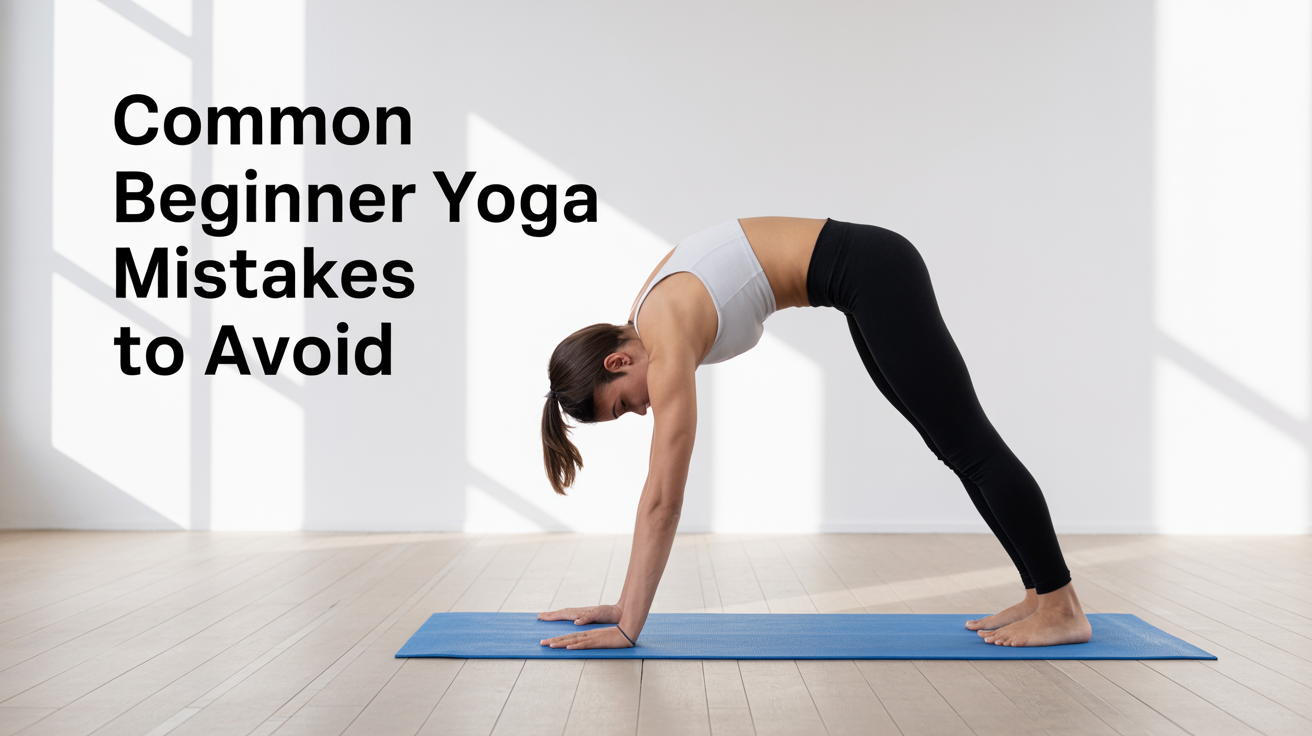
Most people step onto a yoga mat for the first time with good intentions and an open mind. Then something gets pulled, a pose feels impossible, or practice starts to feel like a chore. In most cases, a small handful of fixable habits are behind the trouble. Here are the most common mistakes new students make and, more importantly, what to do instead.
A note before you start: If you are pregnant, recovering from an injury, or managing a chronic health condition, check with your doctor before beginning yoga. Throughout your practice, always listen to your body and back off any movement that causes sharp pain.
At a Glance
- The biggest beginner mistakes are behavioral, not physical: holding the breath, skipping the warm-up, forcing flexibility, and comparing yourself to others.
- Breath and alignment matter more than reaching the "full" version of a pose.
- Yoga-related injuries are usually mild sprains and strains, and overall risk is comparable to other moderate exercise, according to a review of over 18,000 practitioners.
- Props (blocks, straps, blankets) are tools for correct alignment, not a sign you're behind.
- A short, gentle warm-up of 5 to 10 minutes meaningfully lowers strain risk in cold muscles.
- Savasana (final rest) is where the nervous system integrates the session. Skipping it cuts the practice short.
Holding Your Breath Through Difficult Poses
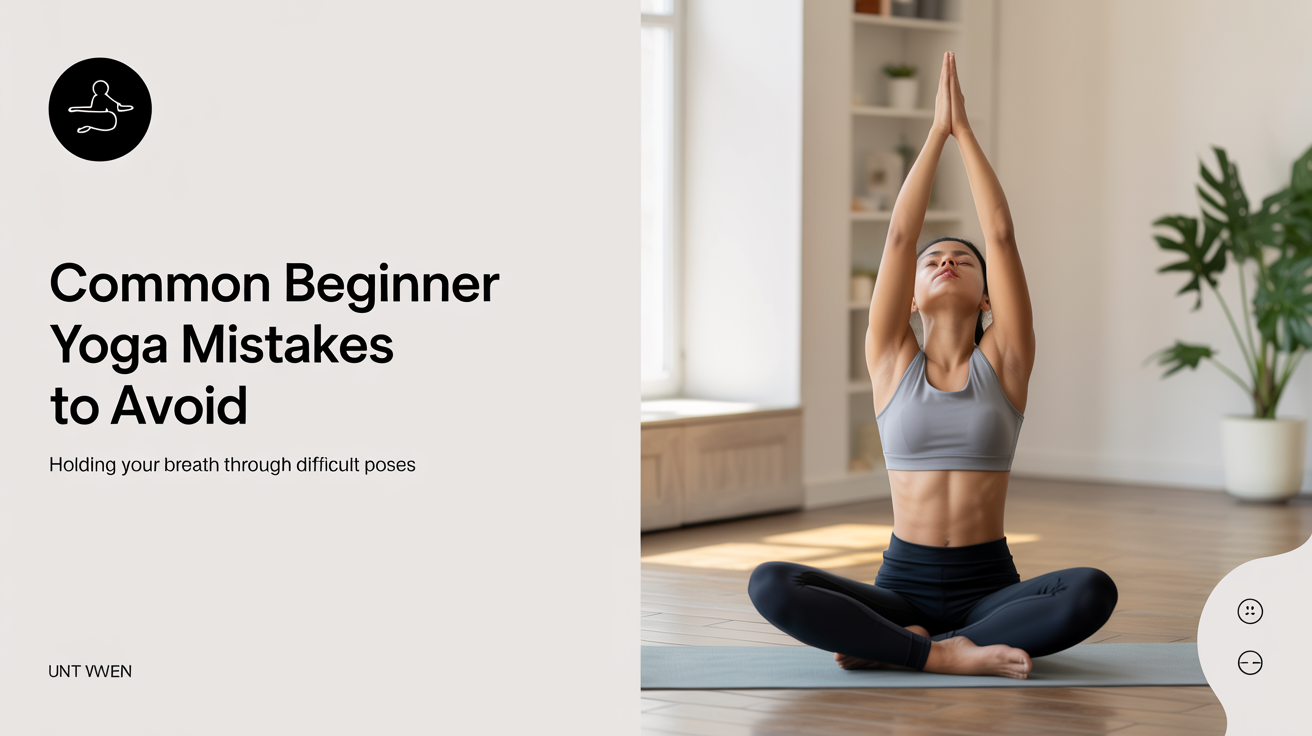
Breath is the foundation of yoga, yet it is the first thing beginners sacrifice when a pose gets hard. The pattern looks like this: you move into a shape, it feels intense, you brace and hold your breath for the whole stretch. Unfortunately, holding your breath signals to your nervous system that you are under threat, which tightens the very muscles you are trying to release.
What to do instead: Breathe on purpose. A slow exhale is almost always available, even in a challenging pose. If you cannot maintain a smooth breath, that is feedback that you have gone too deep or too fast. Ease back until breathing feels natural again.
Matching breath to movement
In flows like Sun Salutations, each movement has a corresponding inhale or exhale. You do not need to memorize a rulebook. As a general starting point, inhale to lengthen or expand, exhale to fold or release. Practice linking just one breath per movement and the rhythm begins to click.
Skipping or Rushing the Warm-Up
Rolling straight into a deep hamstring stretch when the body is cold is a fast route to strain. Cold muscles are less elastic, and forcing range before the tissues are warm is one of the most common causes of yoga-related soreness.
What to do instead: Spend the first five to ten minutes of your practice with gentle, exploratory movement. Cat-cow, easy neck rolls, and slow hip circles cost nothing in terms of time but protect the joints significantly. If you are building a 15-minute daily routine, consider starting with two or three minutes of just breathing on your back before any movement.
Forcing Flexibility You Do Not Have Yet
Yoga culture, especially online, puts flexible bodies front and center. A new student sees someone fold completely flat in a forward bend and tries to replicate it by rounding the spine aggressively, locking the knees, and cranking on the lower back. None of that builds flexibility. It often builds injury.
Flexibility takes weeks and months, not sessions. The stretch sensation should be present but comfortable. If you are wincing, gripping your jaw, or holding your breath, you have passed the productive zone.
This is not a small or rare concern. A systematic review of adverse events in yoga practice, pooling data from more than 18,000 practitioners across nine observational studies, found that the most common injuries were musculoskeletal sprains and strains, the exact category that forcing a stretch tends to produce. The same review found overall risk comparable to other moderate exercise, and most reported problems were mild and temporary. The point is not to be afraid of yoga. It is that the mistakes on this page are the specific, avoidable reasons that small number of injuries happen.
What to do instead: Use props freely. Blocks under your hands in a forward fold, a strap looped around your foot in a seated stretch, a folded blanket under your hips in a cross-legged seat, these are tools, not shortcuts. They allow your body to find proper alignment at its current range of motion, which is exactly where genuine progress happens.
The knees in forward folds
One specific place this shows up is the knees. A tiny bend in the knees in a standing forward fold takes the tension off the hamstrings just enough to let the lower back lengthen rather than round. Most beginners straighten the legs and end up stretching the wrong structure entirely.
Ignoring Alignment in Favor of "Getting Into" the Pose
There is a mental pull toward achieving a shape. You want to touch the floor, bind your hands, or reach the final expression of something. In chasing that goal, the foundational alignment details get dropped: the knee collapses inward, the hip juts out, the wrist takes excess weight at an odd angle.
What to do instead: Think of each pose as having an entry and an exit, not just a destination. Move slowly enough that you can notice what is happening in your body at each stage. For most beginners, a half-depth version of a pose with good alignment does far more than the full pose with everything falling apart.
Alignment checklist for common poses:
| Pose | Watch for | Fix |
|---|---|---|
| Warrior I | Back heel lifting, front knee caving in | Root back heel down, align front knee over second toe |
| Downward Dog | Wrists compressed, shoulders shrugging | Spread fingers wide, draw shoulder blades toward hips |
| Low Lunge | Lower back collapsing | Tuck the pelvis slightly, engage the core |
| Seated Forward Fold | Rounding aggressively from the waist | Sit on a folded blanket, hinge at the hips |
| Triangle Pose | Reaching for the floor past your range | Rest hand on a block or shin instead |
Treating Rest as Optional
Savasana at the end of class looks like lying still. New students often skip it, pack up early, or spend it mentally running through their to-do list. This is a meaningful loss. The final rest is when the nervous system integrates the session and transitions out of effort. Skipping it is the yoga equivalent of leaving a workout and immediately sprinting to your car.
What to do instead: Stay for at least three to five minutes of stillness after movement, even in a short home session. Close your eyes, let your breath return to its natural rhythm, and allow the body to soften completely. If the floor is uncomfortable, a blanket under your knees or head changes everything.
Skipping Straight to Advanced Poses Because They Look Impressive
Headstands, deep backbends, and arm balances are visually compelling, and it is tempting to chase them early. Beginner classes intentionally hold these back, not out of caution for its own sake, but because they require a base of strength, alignment awareness, and joint stability that takes months to build. Attempting an unsupported headstand before the neck and shoulders are prepared is one of the more avoidable ways beginners get hurt.
What to do instead: Trust the sequencing in a well-designed beginner class or program. If a pose genuinely interests you, ask a teacher what preparatory poses build toward it, and practice those first. The advanced pose will still be there once your body is ready for it.
Comparing Your Practice to Others
This one does not have a physical fix, but it causes more discouragement than almost any technical mistake. Scrolling through social media, looking across a studio, or watching a video teacher effortlessly fold into a pretzel shape and measuring your own body against it skews perception quickly. Every body has a different baseline of mobility, strength, and proportion. A pose that is effortless for one person may be genuinely anatomically different for another.
What to do instead: Measure your practice against your own last session. Did the breath feel easier? Did you stay in a pose a few seconds longer? That is real progress. Learning how to build a home yoga practice you will actually keep often starts here, with expectations grounded in your own body rather than someone else's highlight reel.
For a structured look at which poses belong together and in what order, how to sequence a balanced beginner yoga routine walks through the logic step by step.
Frequently Asked Questions
Is it bad to feel sore after yoga? Mild muscle soreness in the day or two after a session is normal, especially when you have worked muscles you do not use much otherwise. Sharp pain during a pose, joint pain, or pain that lasts more than two to three days is a signal to rest and, if it persists, see a professional.
How do I know if I am stretching too far? The reliable test is whether you can breathe smoothly and keep your face relaxed. If you are holding your breath or grimacing, you have gone past a productive stretch and into strain. Ease back until the sensation is present but comfortable.
Do I really need yoga props as a beginner? Yes, genuinely. Blocks, straps, and blankets are not training wheels. They help you find alignment at your actual range of motion instead of the range you wish you had. Most studios provide them, and for home practice, a stack of hardcover books substitutes for blocks and a bathrobe tie works as a strap.
Can I practice yoga every day as a beginner? Short, gentle sessions can work daily. If you are doing more vigorous flows, one to two rest or very gentle days per week gives the body time to recover. Pay attention to cumulative fatigue: if you are consistently stiff and sore, add a rest day.
What if I cannot hold a pose as long as the teacher? Come out of it. Holding a pose past the point of stability just to keep up is the setup for form breakdown and strain. Over time, endurance builds. For now, a shorter hold with good alignment serves you better than a longer one with everything collapsing.
Which beginner mistake causes the most injuries? Based on the pattern in reported yoga injuries, forcing range of motion the body is not ready for, especially in forward folds, deep twists, and unsupervised inversions, accounts for the largest share of avoidable strains and sprains. Cold-muscle warm-up skipping is a close second. Both are fully within a beginner's control, which is part of why this page leads with them.