How to Build a Home Yoga Practice You'll Actually Keep
Learn how to start yoga at home as a beginner and build a habit that sticks, with simple setups, short routines, and honest tips.
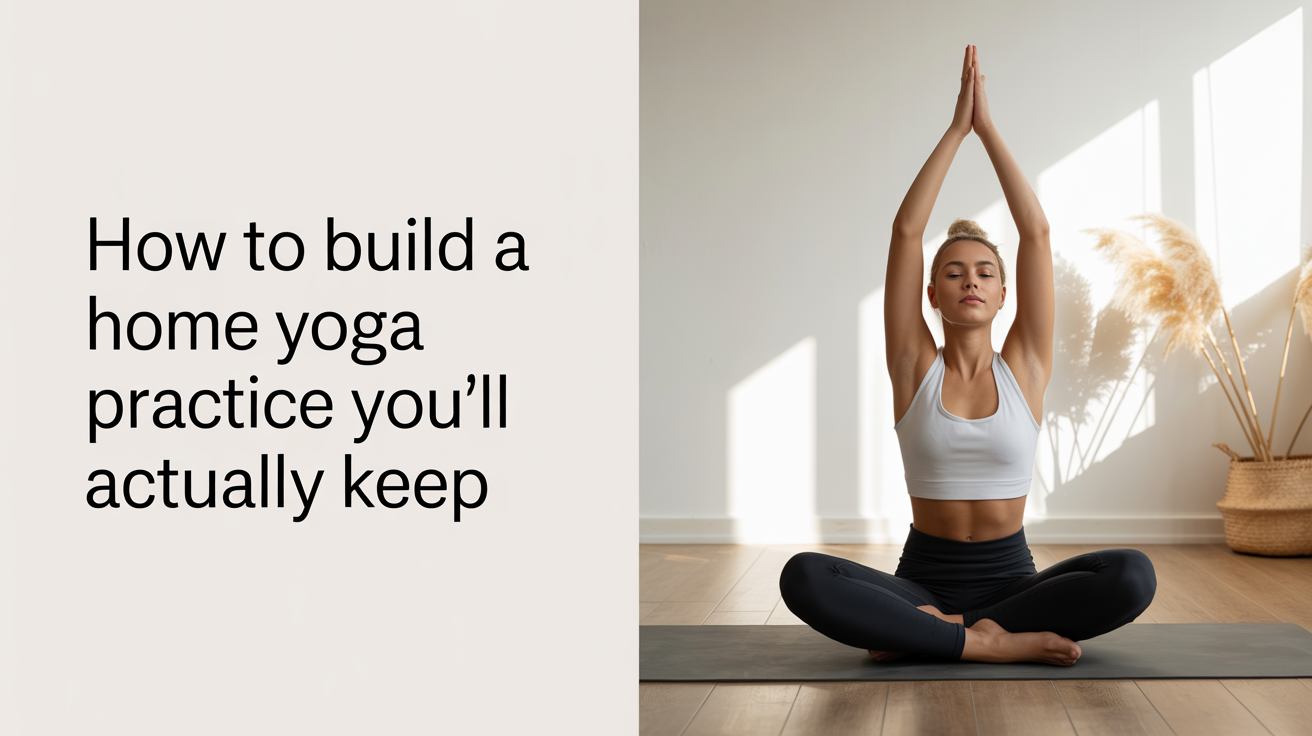
Most people who try yoga at home quit within a few weeks. Not because they hated it, but because the practice they imagined (an hour of flowing poses, a quiet candlelit room, perfect free time) almost never matches a real Tuesday evening.
The good news is that a practice you actually keep looks nothing like that fantasy. It's short, it's a little messy, and it fits into the life you already have. Here's how to start yoga at home in a way that survives past the honeymoon phase.
Start So Small It Feels Almost Silly
The single biggest mistake beginners make is starting too big. You decide you'll do 45 minutes every morning at 6 a.m., you manage it for three days, you sleep in on day four, and the whole plan collapses.
Flip it. Pick something so small you can't talk yourself out of it. Five minutes. One sun salutation. A single pose held for a few breaths. The point at the start is not fitness or flexibility, it's showing up often enough that rolling out the mat stops feeling like a decision.
A home yoga practice for beginners works best when the bar to begin is on the floor. You can always do more once you're already moving. You rarely do anything at all when the starting cost feels high.
Here's what a realistic first two weeks might look like:
| Days | Length | What to do |
|---|---|---|
| 1–4 | 5 min | Gentle stretches, a few slow breaths, one easy pose |
| 5–9 | 7–10 min | Add cat-cow and a standing forward fold |
| 10–14 | 10–15 min | Link a few poses into a short flow |
Notice the jump is gradual. You're not chasing a number, you're letting the habit set before you lean on it.
Set Up a Space That Removes Friction
You do not need a dedicated yoga room. You need about the area of a beach towel and a clear patch of floor. The real goal is to cut the small annoyances that give your brain an excuse to skip.
A few things that genuinely help:
- Leave your mat visible. A rolled-up mat in a closet is a mat you'll forget. Stand it in a corner you walk past daily.
- Keep it warm enough. Cold muscles are stiff and unpleasant. A slightly warm room makes everything feel kinder.
- Have your props within reach. You don't need to buy a thing to start. A couple of firm cushions, a folded blanket, and a belt or bathrobe tie cover most beginner needs. If you want more ideas, household props that stand in for real yoga gear walks through the easy swaps.
If clearing space takes more than thirty seconds, you've found your obstacle. Fix that one thing and your odds of practicing go up more than any fancy mat ever could.
Use a Simple Routine, Not Random Poses
When you're new, decision fatigue kills momentum. Standing on your mat wondering "okay, now what?" is the moment most beginners reach for their phone instead.
So decide ahead of time. Have one short sequence you can do on autopilot. A balanced beginner flow moves through a few predictable phases: a gentle warm-up, some standing poses, a little something for balance, and a calm finish. If you want the logic behind ordering poses well, how to sequence a balanced beginner yoga routine breaks it down.
Here's a plain starter sequence you can memorize:
- Easy seat with breathing (1 minute). Sit cross-legged, lengthen your spine, breathe slowly through your nose.
- Cat-cow (5–8 rounds). On hands and knees, arch and round your back with your breath.
- Downward dog (3–5 breaths). Hips up and back, knees soft, heels reaching toward the floor without forcing.
- Standing forward fold (5 breaths). Hinge at the hips, let your head hang, bend your knees as much as you need.
- Mountain pose (5 breaths). Stand tall, shoulders relaxed, feel grounded.
- Child's pose to finish (1 minute). Knees wide, forehead down, just breathe.
That's it. Seven or eight minutes, no thinking required. If you want a ready-made plan to follow daily, this 15-minute daily routine for beginners gives you a slightly longer version once five minutes feels easy.
What the poses should actually feel like
Beginners often expect yoga to feel like a deep, intense stretch right away. It usually doesn't, and it shouldn't. Downward dog should feel like a long, supported lengthening through your back and legs, not a strain in your wrists or hamstrings. A forward fold should feel like release in your lower back, not a pull behind your knees that makes you wince.
If you feel sharp or pinching pain anywhere, that's your signal to back off and come out of the pose. Discomfort that feels like mild effort is fine. Pain that feels like a warning is not. Keep breathing the whole time, because holding your breath is a sign you've gone too far.
Make the Habit Stick to Something You Already Do
Building a yoga habit is less about motivation and more about wiring it to an existing routine. Motivation comes and goes. A trigger that's already in your day stays put.
Attach your practice to an anchor:
- Right after you brush your teeth in the morning.
- Before your shower in the evening.
- The moment you change out of work clothes.
- While the coffee or kettle is brewing.
The format is simple: "After I [existing habit], I unroll my mat." When the cue is automatic, the practice rides along with it. You stop relying on remembering and stop negotiating with yourself every single day.
A few more things that keep a yoga routine at home alive:
- Track it lightly. A simple checkmark on a calendar or a paper list is enough. Seeing a short streak is quietly motivating.
- Aim for consistency over length. Three short sessions a week beats one ambitious session that leaves you sore and discouraged.
- Plan for the off days. You will miss sessions. The skill that matters is starting again the next day without guilt, not practicing perfectly.
The people who keep a practice for years are not more disciplined than you. They've just made missing one day mean nothing, and made starting again the easy default.
Avoid the Common Beginner Traps
A few patterns reliably derail new home practitioners. Knowing them ahead of time helps you sidestep the worst ones.
| Trap | What happens | Do this instead |
|---|---|---|
| Comparing to videos | You feel inflexible and discouraged | Watch your own body, not the screen |
| Pushing into pain | A tweak or strain ends the streak | Move gently, stop at sharp pain |
| All-or-nothing thinking | One missed day becomes ten | Treat each day as its own fresh start |
| Buying before doing | You shop instead of practicing | Start with what you own, upgrade later |
Flexibility is a result of practicing, not a requirement to begin. Plenty of people start unable to touch their toes and never fully get there, and they still build calm, capable bodies and a habit they love. Your range will open slowly with regular, gentle work. There's no rush.
One safety note worth a sentence: if you're pregnant, recovering from an injury, or managing a health condition, check with your doctor before starting, since some poses may need to be modified. This is educational guidance, not medical advice.
Keep It Going Once the Newness Fades
Around week three or four, the novelty wears off and your practice faces its real test. This is normal. It's also where most people quietly stop.
To get through it, change just enough to stay interested without blowing up your routine. Add one new pose. Try practicing at a different time of day. Lengthen your session by a few minutes, or shorten it on busy days and refuse to feel bad about it. The aim is a practice that bends with your life instead of competing with it.
You're not building a perfect practice. You're building one that's still there next month, and the month after. That's the whole game.
FAQ
How long should a beginner practice each day?
Start with five to ten minutes. That's genuinely enough to build the habit and feel benefits early on. Once showing up is automatic, stretch toward fifteen or twenty minutes if you want. Length matters far less than how often you actually practice.
Do I need to be flexible to start yoga at home?
No. Flexibility is something yoga slowly builds, not something you need beforehand. Bend your knees in forward folds, use cushions under your hips, and treat every pose as adjustable. Working within your current range is exactly the point.
What's the best time of day to practice?
The best time is whatever time you'll actually keep. Mornings can feel calming and set a good tone, but stiff bodies may prefer evenings. Try attaching it to an existing habit and notice when skipping feels hardest. That's usually your sweet spot.
Can I learn yoga at home without a teacher or class?
Yes, especially for gentle beginner work. Follow a simple, repeatable sequence and pay close attention to how each pose feels. The main thing a teacher adds is real-time feedback, so go slowly, never force a stretch, and back off anything that pinches.
What if I keep skipping days?
Skipping is part of it, not a failure. The fix is to make your sessions small enough that restarting feels easy, and to drop the guilt entirely. Missing a day means nothing. Missing the restart is the only thing that ends a practice.