How Long Should You Hold a Yoga Pose (and How Often)?
Learn how long to hold a yoga pose for flexibility gains, how often to stretch, and when to ease off, with practical guidance for beginners.
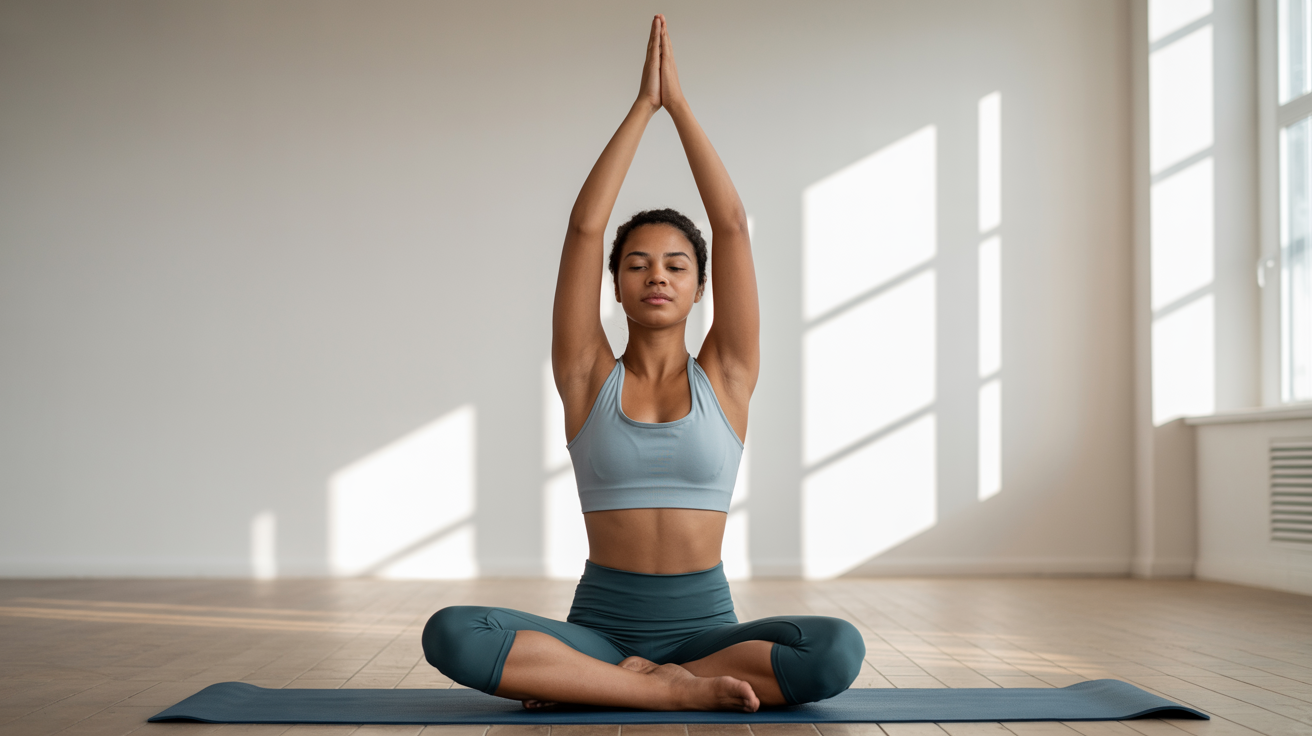
The short answer: most beginners do best holding poses for 20 to 30 seconds during a typical flow class, or up to 90 seconds in a yin or restorative session. For flexibility gains, stretching three to five days a week makes a noticeable difference over a few months.
But those numbers depend on the pose, your body, and what you are trying to get out of your practice. Here is how to think through it.
At a Glance
- Flow and hatha classes: hold poses 5 to 30 seconds (1 to 5 breaths). Yin and restorative: 2 to 10+ minutes.
- A landmark hamstring study found 30 seconds is enough for most flexibility gains; longer holds did not add measurable benefit.
- How often you stretch each week matters less than showing up consistently. Three days a week is a realistic, effective baseline.
- Sharp pain, strained breathing, or soreness lasting more than two days means you held too long or too deep.
- Muscle flexibility and connective-tissue flexibility respond to different hold lengths and different timelines.
- Props (blocks, bolsters, straps) let you hold a pose longer and safer, not shorter.
Hold Time Depends on the Type of Yoga You Are Doing
Not all yoga is the same pace, and the recommended hold time shifts accordingly.
Dynamic (vinyasa-style) classes
In a flowing class you will often cycle through poses quickly, holding each shape for one to three breaths, roughly five to fifteen seconds. The movement itself builds warmth and range, so shorter holds are fine. Your muscles are never fully settled between shapes, which keeps circulation up and reduces the risk of overstretching.
Hatha and foundational classes
A hatha or beginner class typically holds poses for three to five breaths, which lands around 15 to 30 seconds. This gives your nervous system time to register the stretch and lets you notice what needs adjusting without rushing.
Yin and restorative yoga
Yin poses target the connective tissue (fascia, ligaments, joint capsules) rather than the muscles. You hold shapes on the floor for two to five minutes, sometimes longer. The long hold is the whole point. Restorative yoga uses props so thoroughly that the body is fully supported, and holds can stretch to ten minutes or more. These styles are not appropriate if you have certain joint conditions, so check with a doctor or physical therapist if you have joint pain, hypermobility, or are recovering from an injury.
What Happens in Your Body During a Hold
Understanding the mechanics helps you make better decisions on the mat.
When you enter a stretch, your muscles initially resist through a reflex called the myotatic stretch reflex. After about 15 to 20 seconds, that reflex quiets and the tissue begins to yield. This is why holds shorter than about 15 seconds produce less lasting change than holds in the 20 to 60 second range.
A widely cited clinical trial on hamstring stretching tested groups holding a stretch for 15, 30, or 60 seconds, once or three times daily, over six weeks. The result: 30 seconds was enough to produce the full range-of-motion gain. Holding longer, or repeating the stretch more times per session, did not add further benefit in that study. That is a useful number to anchor your own practice to when a teacher's cue ("hold for five breaths") feels arbitrary.
After roughly 90 seconds in a held position, you start to affect the connective tissue around the joint rather than just the muscle belly itself. That is the territory yin yoga works in. The difference matters: muscle flexibility returns fairly quickly if you stop stretching; connective tissue changes accumulate more slowly but can also take longer to heal if you push too hard.
The practical takeaway is that a 30-second hold in a forward fold does more for your hamstrings than ten seconds, and two to three minutes in the same shape does something different still. Neither is wrong. They are simply different tools.
A Simple Reference by Yoga Style
| Style | Typical Hold | What You Are Targeting |
|---|---|---|
| Vinyasa / flow | 1 to 3 breaths (5 to 15 sec) | Strength, coordination, warmth |
| Hatha / foundational | 3 to 5 breaths (15 to 30 sec) | Muscle length, alignment |
| Yin | 2 to 5 minutes | Fascia and connective tissue |
| Restorative | 5 to 10+ minutes | Nervous system, deep release |
You can mix styles across your week. Many people practice one or two hatha or vinyasa sessions and add a yin session once a week to work deeper without adding more load.
Two Ways to Reach the Same Total Stretch Time
Beginners often assume a single long hold is the only way to get results. It is not the only way, just the simplest to track. Here is what "equal total time under stretch" looks like in practice for a hamstring stretch:
| Approach | Structure | Total Time Under Stretch |
|---|---|---|
| Single long hold | One hold of 30 seconds | 30 seconds |
| Three shorter holds | Three holds of 10 seconds, brief rest between | 30 seconds |
| Yin-style hold | One hold of 3 minutes | 180 seconds |
The research on this is mixed on which structure wins, and the practical difference for a beginner is usually small. A single continuous hold is easier to focus on and breathe through, which is why most beginner classes default to it. If a pose is too uncomfortable to hold continuously for 30 seconds, breaking it into two or three shorter holds is a legitimate way to build up rather than a lesser option.
How Often to Stretch for Flexibility
Consistency matters more than any single session. For most beginners, three days a week is realistic and produces steady progress over eight to twelve weeks.
Interestingly, a large 2023 systematic review and meta-analysis of stretch training covering 77 studies found that once you are stretching regularly, the exact frequency, volume, and intensity of sessions did not significantly change how much range of motion people gained over time. What mattered more was simply doing static stretching consistently rather than skipping it. That is good news for beginners: you do not need a rigid, perfectly optimized schedule. You need to show up most weeks.
A few things that affect this:
Daily stretching is safe for most people. Muscles recover from gentle stretching much faster than they recover from strength work. If you feel sore or heavy in a particular area, ease off that region or switch to a gentler style that day.
Short sessions add up. Ten minutes of deliberate held stretching five days a week will do more for your range of motion than one long Saturday session. If a full 60-minute class is not happening every day, a 10 to 15 minute wind-down stretch before bed counts.
Progress is not linear. You may notice quick gains in the first few weeks as your nervous system learns to relax into poses, then a plateau before tissue-level changes catch up. Both phases are normal.
If you are pregnant, have a recent injury, or manage a chronic joint condition, talk to your doctor or a qualified yoga therapist before setting a stretching frequency. Props like blocks, bolsters, and straps can modify almost any pose to suit your current range, and using them is a sign of good practice, not a shortcut.
For more on building range safely over time, see Yoga for Flexibility: How Beginners Build Range Safely.
Signs You Are Holding Too Long or Too Intensely
Longer and deeper is not always better. Watch for these signals:
- Sharp, stabbing, or shooting sensation. Stop immediately. Dull pulling or mild burning in the muscle belly is normal; nerve pain, joint pain, or anything sharp is not.
- Breath becomes strained. If you cannot breathe slowly and steadily, you are past your edge. Back off until the breath smooths out.
- Shaking that does not settle. Some trembling in standing poses is normal. If you are shaking in a passive floor stretch, you are likely past a useful intensity.
- Soreness that lasts more than a day or two. Mild next-day tenderness is common when starting out. Soreness that lingers into a third day suggests you pushed too far.
- Numbness or tingling. This points to nerve compression rather than a muscle stretch. Come out of the pose and reposition rather than pushing through.
The instruction "listen to your body" sounds vague but has real content: steady pull, okay. Sharp or joint-located pain, stop. Breath tight, ease off.
For specific areas that tend to give beginners trouble, Yoga for Tight Hips: Gentle Hip-Opening Poses and Yoga for Tight Hamstrings: Beginner Stretches That Help offer pose-by-pose guidance with prop options.
Frequently Asked Questions
Is it better to hold a pose for 30 seconds or do it three times for 10 seconds?
Both approaches produce flexibility gains, and research suggests they are roughly comparable when total time under stretch is equal. A single longer hold is simpler to focus on, which makes it practical for beginners. If a pose is uncomfortable to hold for 30 continuous seconds, shorter repetitions are a fine way to build up.
Can I hold poses every day?
Gentle held stretching in yoga is low enough in load that daily practice is appropriate for most people. If you have joint hypermobility or a connective tissue condition like Ehlers-Danlos syndrome, daily deep yin holds may not be suitable. Talk to your doctor or a physical therapist who understands yoga if this applies to you.
Why does my flexibility seem worse some days?
Range of motion fluctuates with sleep, hydration, stress hormones, time of day (most people are less flexible in the morning), and accumulated fatigue. A day when you feel stiffer than usual is not a setback. It is normal variation. Adjust your hold intensity on those days rather than pushing to match your best.
How long before I notice real flexibility improvements?
Many beginners notice a difference within four to six weeks of consistent practice. Substantial changes in chronically tight areas typically take three to six months. The body changes slowly but reliably when you show up regularly.
Do I need to hold the stretch until I feel it release?
In yin yoga teachers often cue waiting for a "release" or "melting." In a regular hatha or flow class, you do not need to wait for that sensation. A steady, manageable pull held for your target time is enough. The release feeling, when it happens, is real, but its absence does not mean the stretch is not working.
Does holding a pose longer than 30 seconds ever help?
For pure muscle-length gains, the research above suggests 30 seconds captures most of the benefit for a given session. Longer holds still serve a purpose beyond raw flexibility: they train your ability to stay calm and breathe through sustained sensation, and past about 90 seconds they start to work the connective tissue that yin yoga specifically targets. So a longer hold is not wasted, it is just doing a different job than the first 30 seconds already did.