How to Actually Rest in Savasana (Corpse Pose)
Learn how to do savasana properly, relax deeply in corpse pose, and get the real benefits of this essential yoga rest pose.
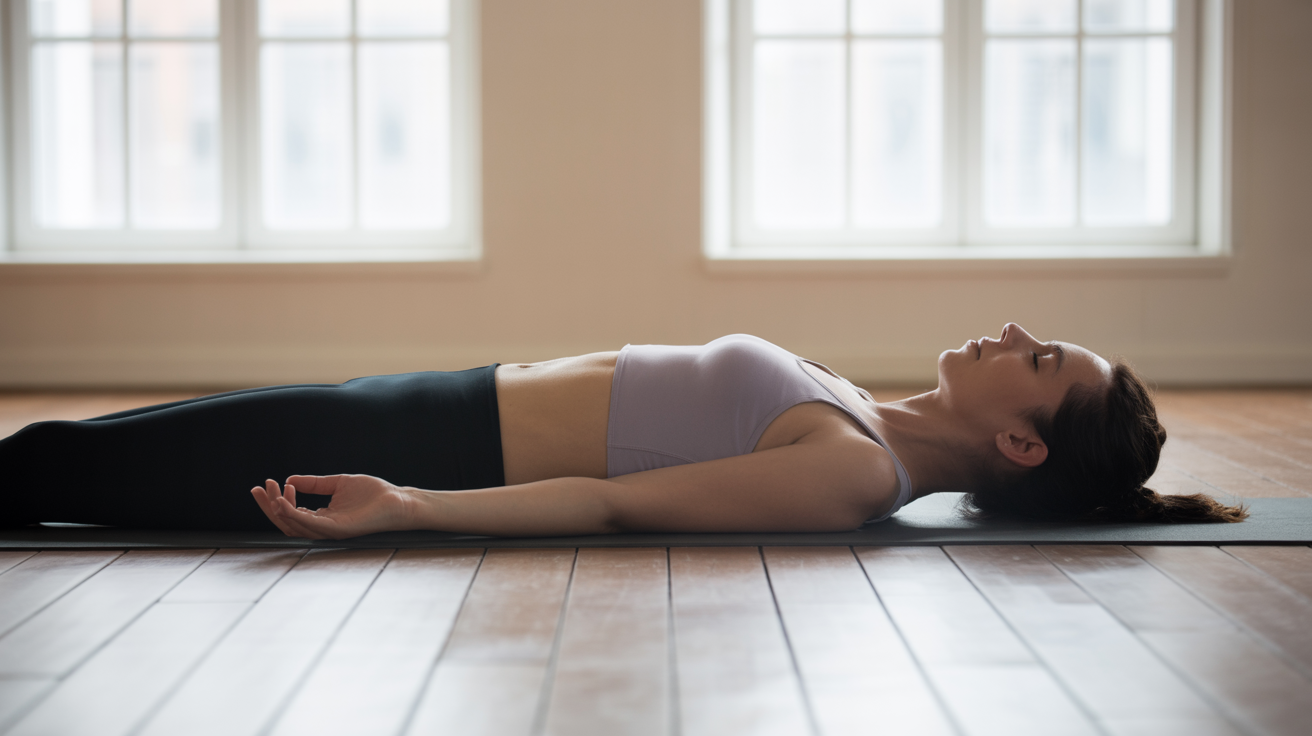
Savasana looks simple: lie flat on your back and do nothing. But most beginners find it surprisingly difficult. The mind drifts, the body fidgets, and five minutes can feel like an eternity. Understanding what savasana is actually asking of you makes all the difference.
Savasana (shah-VAH-sah-nah) is a deliberate practice of conscious rest, not a nap or a reward for finishing class. When you approach it with that framing, it stops being something you wait out and starts being something you actually do.
What Savasana Is Asking You to Do
The pose has one physical instruction: lie still. Everything else is about your attention.
In most yoga poses, you direct focus outward. You track alignment, balance, and effort. In savasana, you turn that attention inward and observe without steering. Thoughts arise, sensations shift, and your job is to notice them without reacting.
This is harder than it sounds for most people. If you find your mind generating to-do lists or replaying conversations, you are not doing savasana wrong. That is exactly what minds do. The practice is returning your attention gently to the present whenever you notice it has wandered.
Give yourself permission to be a beginner at this, just as you would with any new pose.
How to Set Up the Pose
Start by choosing a comfortable surface. A yoga mat works fine, but if the floor feels too hard, placing a folded blanket under your entire back softens the contact.
Basic position:
- Lie on your back with your legs extended and slightly apart, roughly hip-distance or a little wider.
- Let your feet fall outward naturally. There is no need to point or flex them.
- Rest your arms alongside your body with palms facing up, leaving a small gap between your arms and torso so your shoulders can settle.
- Close your eyes or soften your gaze toward the ceiling.
Common props and modifications:
| Situation | What to use |
|---|---|
| Lower back discomfort | Bolster or rolled blanket under the knees |
| Neck tension | Thin folded blanket or small pillow under the head |
| Eyes that won't settle | Eye pillow or folded cloth over the eyes |
| Cold or anxious | Light blanket over the body |
| Pregnancy (after first trimester) | Recline on a bolster at a 45-degree angle rather than lying flat |
If you are pregnant, have a back injury, or are managing a health condition, talk with your doctor before starting yoga and ask a qualified teacher to help you find a savasana variation that works for your body.
The First Two Minutes: Letting Go of the Pose Before
When you transition from your last yoga pose into savasana, your nervous system needs a moment to shift gears. Rushing to lie flat and immediately try to relax often backfires.
Spend the first minute or two doing a gentle body scan. Start at your feet and move slowly upward, noticing any areas that feel held or tense. You do not need to force relaxation. Just noticing is enough. Often the simple act of observing a tense area prompts it to soften on its own.
Pay particular attention to:
- Jaw: Let your teeth part slightly and your tongue rest on the floor of your mouth.
- Hands: Uncurl the fingers. Many people unconsciously grip in savasana.
- Shoulders: Let them drop away from your ears and spread wide across the floor.
- Eyes: Release the muscles around your eyes and brow.
Once you have completed the scan, let it go. You do not need to keep monitoring.
Working With Your Breath
Breath is one of the most useful anchors in savasana. You do not need to control it or change it. You simply follow it.
Notice the natural rise of your chest or belly as you inhale. Notice the release as you exhale. If your mind wanders, come back to the next breath. This is the same principle used in many breath-awareness practices, and savasana is an excellent place to apply it.
If following the breath feels too subtle, you can try counting exhalations from one to ten, then starting over. The counting gives the mind something concrete to hold without requiring effort.
For more background on breath as an anchor, yoga breathing for beginners: a simple introduction to pranayama explains the foundations. If you want to explore a specific technique first, how to do diaphragmatic belly breathing walks through the mechanics in detail.
How Long to Stay and What to Expect
A common guideline is roughly one minute of savasana for every ten minutes of practice. A thirty-minute home session would suggest three minutes; a sixty-minute class, five to six minutes. That said, even two minutes of genuine stillness has value.
What you might notice during savasana:
- Twitching or jerking: Small involuntary movements often happen as the muscles release. This is normal.
- Sensation of sinking: Many people feel heavier than usual as the body lets go. This is a good sign.
- Temperature drop: Your body temperature can fall slightly in stillness. A blanket helps.
- Drowsiness or drifting toward sleep: This is common, especially when you first start. It does not mean you are doing it wrong. Over time, you develop the ability to rest without fully falling asleep.
When you are ready to come out, do not sit up abruptly. Take a few deeper breaths, wiggle your fingers and toes, draw your knees to your chest, and roll slowly onto one side. Pause there for a breath before pressing yourself up to seated.
Building a Savasana Practice Over Time
Savasana is a skill. The first few times you try it, five minutes may feel like an hour. After a few weeks of consistent practice, your system learns what is being asked and drops into rest more readily.
A few things that help the process:
- Practice savasana at the same time each day if possible. Consistency builds the habit.
- Minimize distractions. Silence your phone and, if you are at home, choose a spot where interruptions are unlikely.
- Avoid checking the clock. Set a gentle timer so you can let go of tracking time.
- Be patient with a wandering mind. Returning attention again and again is the actual practice, not a sign of failure.
If you find savasana easier after breath work, you might try alternate nostril breathing (nadi shodhana) for beginners before lying down. A few rounds of that technique can calm the nervous system and make stillness more accessible.
Frequently Asked Questions
Is it okay if I fall asleep in savasana?
Occasionally drifting off is fine, especially when you are tired or new to the practice. If you fall asleep every time, it may be worth evaluating your overall sleep and whether you need more rest. The goal of savasana is conscious rest, so over time you may want to experiment with shorter savasanas when sleepiness is high and longer ones when you are more alert.
How is savasana different from just lying on the couch?
The difference is attention. On the couch, the mind typically scrolls, plans, or zones out entirely. In savasana, you are present and observing, even though you are not moving. That quality of alert rest is what distinguishes it and what generates the benefits.
What are the main benefits of savasana?
Regular savasana practice is associated with reduced muscle tension, a calmer nervous system response, and a greater ability to rest under stress. It is also a direct rehearsal for the kind of focused, non-reactive attention that many people find helpful off the mat. Note that yoga practice, including savasana, supports general wellbeing but is not a medical treatment.
My back hurts when I lie flat. What should I do?
Place a bolster, rolled blanket, or firm pillow under your knees. This reduces the lumbar curve and takes pressure off the lower back for most people. If discomfort persists, consult a healthcare provider before continuing.
Do I have to keep my eyes closed?
No. Some people find an open or soft gaze more manageable than closed eyes, especially if they feel anxious lying still in the dark. A soft, unfocused gaze at the ceiling works just as well. Use an eye pillow if you want to block light without effort.