How to Choose a Yoga Mat for Beginners
A simple, no-jargon guide to picking your first yoga mat: thickness, grip, size, material, and what actually matters when you're starting out.
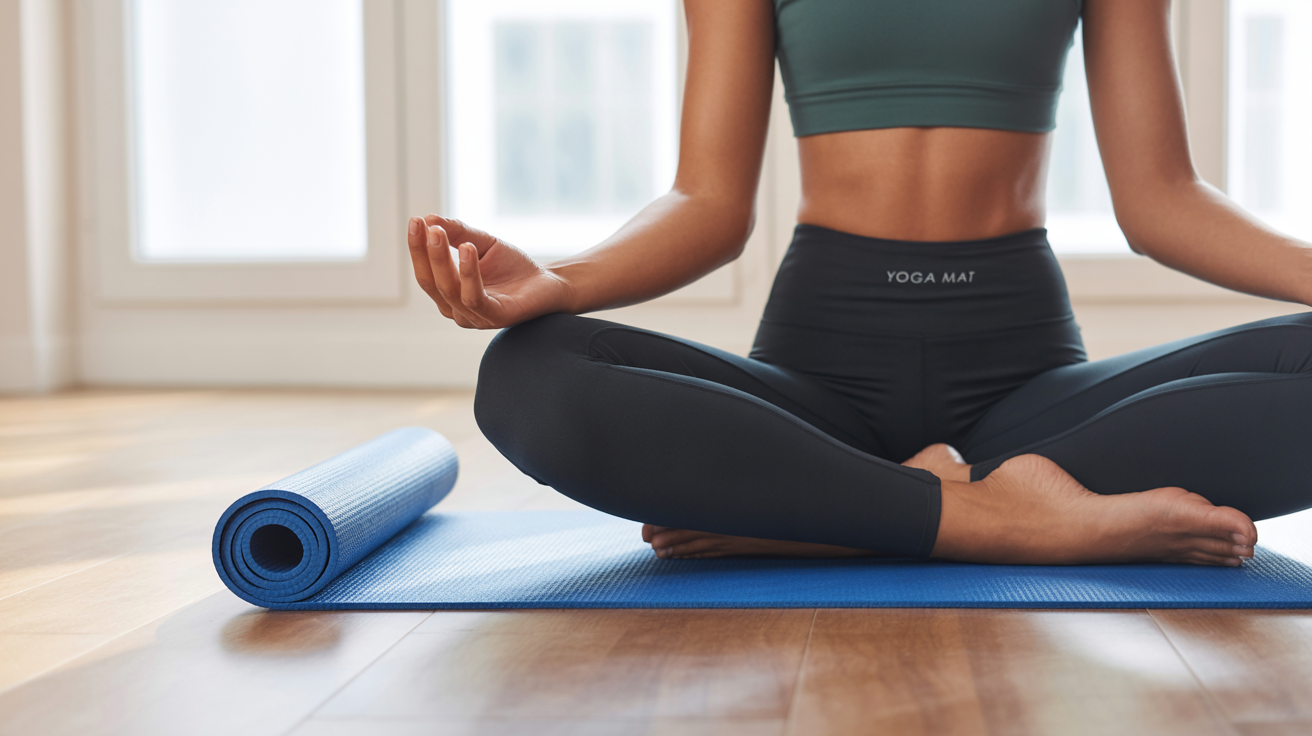
Walk into any sporting goods store and you'll see a wall of rolled-up mats in a dozen colors, all promising to change your life. It's a lot for someone who just wants to try a few stretches at home. The good news: choosing your first mat is far simpler than the marketing makes it look.
You don't need the most expensive option, and you definitely don't need anything fancy. You need a mat that keeps your hands from sliding, cushions your knees a little, and doesn't smell like a tire factory. This guide walks through how to choose a yoga mat that fits your body, your space, and your budget, without the upsell.
Start with how you'll actually use it
Before comparing brands, picture where this mat will live. Are you rolling it out on hardwood in your living room three mornings a week? Tucking it in a bag for a studio class across town? Practicing on carpet? The answers nudge you toward different choices.
If you're brand new and not sure yoga will stick, that's fine. A modest mat is a smart starting point, and you can upgrade later once you know what you like. Plenty of people quietly practice for years on a basic mat that cost less than a takeout dinner. For a wider look at getting going, our complete beginner's guide to starting yoga covers the bigger picture beyond gear.
A quick honesty check: the best yoga mat for beginners is the one you'll actually unroll. A gorgeous mat that intimidates you into "saving it" helps no one.
Thickness: the decision that affects comfort most
Yoga mat thickness is usually measured in millimeters, and it's the spec that most directly changes how your practice feels. Too thin and your knees and spine complain on hard floors. Too thick and you'll wobble in balancing poses because the squishy surface gives way under your feet.
Here's a rough map of the common options:
| Thickness | Feels like | Good for |
|---|---|---|
| 1–3 mm | Firm, barely-there | Travel, balance-heavy practice, packing light |
| 4–5 mm | The standard "Goldilocks" zone | Most beginners, mixed home practice |
| 6 mm+ | Plush and cushioned | Sensitive knees, restorative/gentle styles, joint issues |
For most people just starting, a 4 to 5 mm mat is the safe pick. It protects your knees in poses like low lunge or tabletop while still giving you a stable base to balance on. If you have cranky knees or you know you'll be doing a lot of floor work, lean toward 6 mm. If you crave stability and don't mind a little firmness, go thinner.
One caveat: if you'll mostly practice on carpet, a thinner mat can work fine since the carpet adds padding underneath.
Grip and material: where mats really differ
The second thing you'll notice (sometimes immediately) is grip. When you fold forward and your palms slowly slide toward the front of the mat, you stop trusting it, and that tension shows up in your shoulders. A grippy surface lets you relax into poses.
Material drives both grip and feel. The common ones:
- PVC (vinyl): The classic, affordable mat. Durable and grippy once broken in, though it's a plastic and not biodegradable. A solid budget starter.
- TPE: A newer blend that's lighter and more eco-leaning than PVC, with decent grip. Often a nice middle ground.
- Natural rubber: Excellent grip, especially as you sweat, with a slightly heavier, earthy feel. Pricier, and worth knowing it has a rubbery smell at first and isn't ideal if you have a latex allergy.
- Cork or jute surfaces: Grippier when damp, naturally odor-resistant, and a favorite for sweatier practice. Usually a step up in cost.
New mats sometimes feel slick straight out of the wrapping. That's normal. A few sessions, a quick wipe-down, and a light rinse usually break in the surface. If a mat stays slippery, a folded towel laid over the top is a cheap fix while you decide whether to return it.
A note on smell
That strong "new mat" odor is real, and stronger in some rubber and PVC mats. Unrolling a new mat and letting it air out for a day or two in a well-ventilated room takes care of most of it.
Size, weight, and portability
Standard mats run about 68 inches long and 24 inches wide. If you're taller than roughly 5'10", your feet or hands may hang off the end in a long stretch, and a 72 or 74-inch mat will feel much better. Width matters too: a 26-inch "wide" mat gives more room to sprawl in poses like a wide-legged forward fold.
Weight only becomes a real factor if you're carrying the mat anywhere.
- Practicing at home and leaving it out? Weight barely matters. Buy for comfort.
- Commuting to a studio? A lighter mat (often thinner TPE or PVC) saves your shoulder on the walk.
- Traveling or flying? Look at foldable travel mats around 1.5 mm that slip into a suitcase.
If you're heading to a class soon and wondering what else to grab, our beginner essentials guide on what to wear and bring saves you a few first-day surprises.
Price: what you actually get for more money
You can find a usable beginner mat at the low end, and you can spend several times that on a premium one. So what does the extra money buy? Generally better grip, longer durability, more eco-friendly materials, and a surface that holds up when you sweat.
A reasonable approach for "what yoga mat should I buy" when you're new:
- Start with an inexpensive 4–5 mm PVC or TPE mat to confirm you enjoy practicing.
- Practice for a month or two and notice what bugs you. Slipping? Thin under the knees? Too short?
- Upgrade with that specific complaint in mind, rather than guessing up front.
This beats buying a costly mat on day one and discovering you actually wanted something thicker or grippier.
Caring for your mat (so it lasts)
A little upkeep stretches a mat's life and keeps it from getting slick or smelly. Wipe it down after sweaty sessions with a damp cloth and a drop of mild soap, then let it dry flat or hang it. Skip harsh chemicals on rubber and cork, which can break the surface down. Roll it with the top side out to keep the edges from curling up under your hands.
A gentle word on your body
A mat sets the stage, but how you move on it matters more. As a beginner, move slowly and breathe steadily through each pose instead of holding your breath. Never force a stretch to reach some shape you saw online; ease in only as far as feels like a comfortable pull. Sharp, pinching, or shooting pain is a signal to back off and come out of the pose. If you're pregnant, recovering from an injury, or managing a health condition, have a quick chat with your doctor before starting. This article is educational, not medical advice. If you want a sense of what a first class feels like, here's what to expect at your first yoga session.
FAQ
How thick should a beginner yoga mat be?
For most beginners, 4 to 5 mm hits the sweet spot. It cushions your knees and spine on hard floors while keeping you stable in standing and balancing poses. Go to 6 mm or more if you have sensitive joints, or thinner if you mainly want stability.
Is an expensive yoga mat worth it for a beginner?
Not at first. A budget 4–5 mm mat is plenty to learn on and confirm you enjoy yoga. Once you know what frustrates you about it, like slipping or thinness, you can upgrade with a clear reason instead of guessing.
Why does my new mat feel so slippery?
New mats, especially PVC and rubber, often have a slick film when fresh out of the packaging. A few practice sessions and a gentle wipe-down usually break in the grip. In the meantime, laying a towel over the top stops your hands from sliding.
What size yoga mat should I get if I'm tall?
Standard mats are about 68 inches long. If you're over roughly 5'10", a 72 or 74-inch mat keeps your hands and feet from hanging off the edge during long stretches and lying-down poses.
Can I just use a towel or carpet instead of a mat?
You can start on a carpet or a folded blanket to test the waters, but a real mat gives you the grip that keeps your hands from sliding in poses like downward dog. That stability is the main thing a towel or carpet can't reliably offer.