What to Wear and Bring to Yoga (Beginner Essentials)
What to wear to yoga as a beginner, what to bring to class, and whether you need shoes. A simple, no-stress packing guide for your first session.
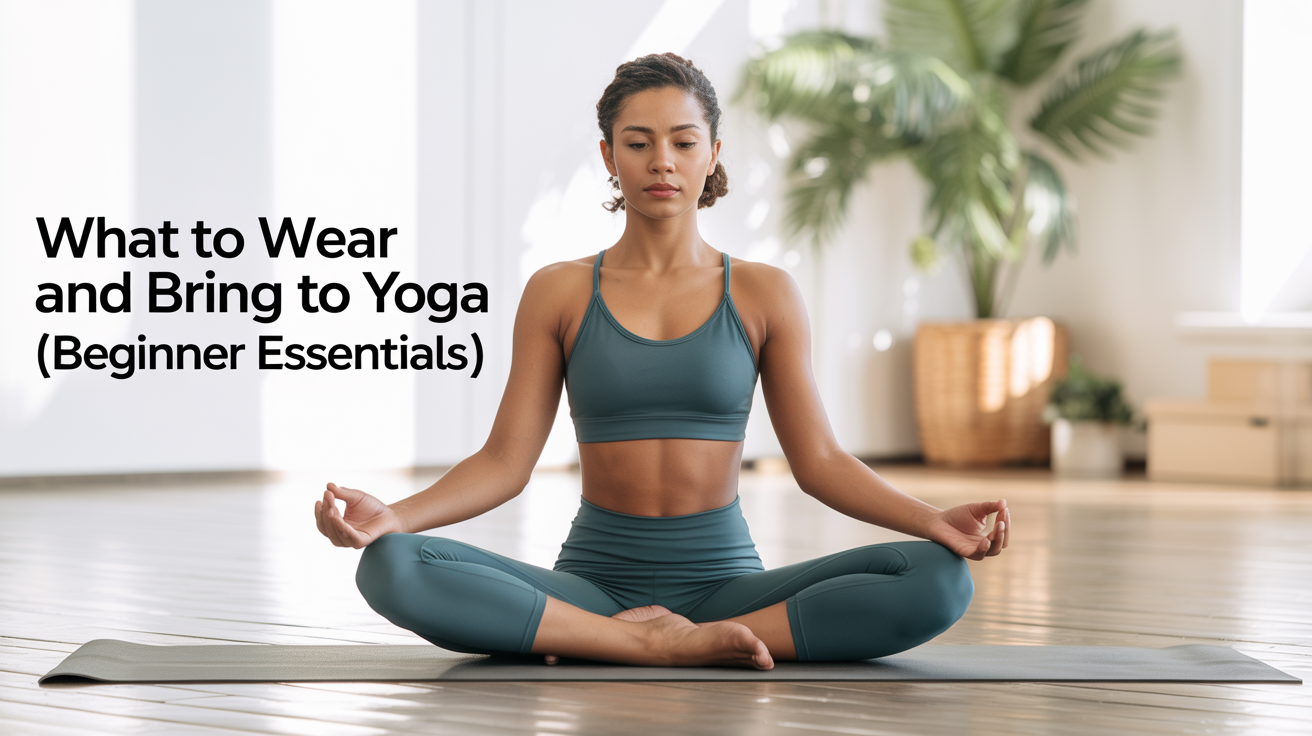
The short version: wear something stretchy that you can bend and breathe in, and bring water, a mat (or rent one), and a small towel. That's really it. You don't need special gear, and nobody is going to judge your outfit.
If you're still nervous about turning up to your first class, this guide walks through exactly what to put on, what to pack, and the one question almost every beginner asks at the door: do you actually wear shoes in yoga?
What to Wear to Yoga as a Beginner
The goal is simple. You want clothes that move with you and don't get in the way when you fold, twist, or flip upside down. Most poses involve a lot of bending, so anything tight at the waist or stiff in the legs will fight you the whole class.
Here's what works for yoga clothes for beginners:
- Bottoms that stretch. Leggings, joggers, or fitted shorts all work. Avoid loose basketball shorts that slide up or down when you invert.
- A top that stays put. A fitted or semi-fitted shirt is ideal. When you bend forward in a pose like Downward Dog, a baggy tee will flop over your face. A snug top or one you can tuck in solves that instantly.
- A supportive layer if you need one. A sports bra or a comfortable bra under your shirt keeps you steady through faster sequences.
- Something warm for the end. Most classes finish lying still for a few minutes. You cool down fast, so a light sweatshirt or pair of socks to pull on at the end feels great.
Fabrics that actually help
You'll warm up more than you expect, even in a slow class. Breathable fabrics make a real difference.
| Fabric | How it feels | Worth it? |
|---|---|---|
| Cotton blend | Soft, breathable, cheap | Great for slow or gentle classes |
| Synthetic (poly/spandex) | Stretchy, wicks sweat | Best for hot or flowing classes |
| Pure thick cotton | Holds sweat, gets heavy | Skip for hot yoga |
| Anything 100% non-stretch | Restricts movement | Avoid |
You do not need a matching set or a single piece of branded activewear. An old pair of leggings and a fitted shirt you already own will carry you through dozens of classes.
What to avoid
A few things genuinely get in the way:
- Jewelry that swings or scratches. Take off long necklaces, dangly earrings, and large rings. Your mat and your wrists will thank you.
- Strong perfume or cologne. Studios are small, warm rooms, and your neighbor is breathing deeply a foot away.
- Slippery or super-loose clothing. If you have to keep adjusting it, you'll lose focus.
- Anything you can't bend in. Test it at home: can you touch your toes and squat down comfortably? If yes, you're set.
Do You Wear Shoes in Yoga?
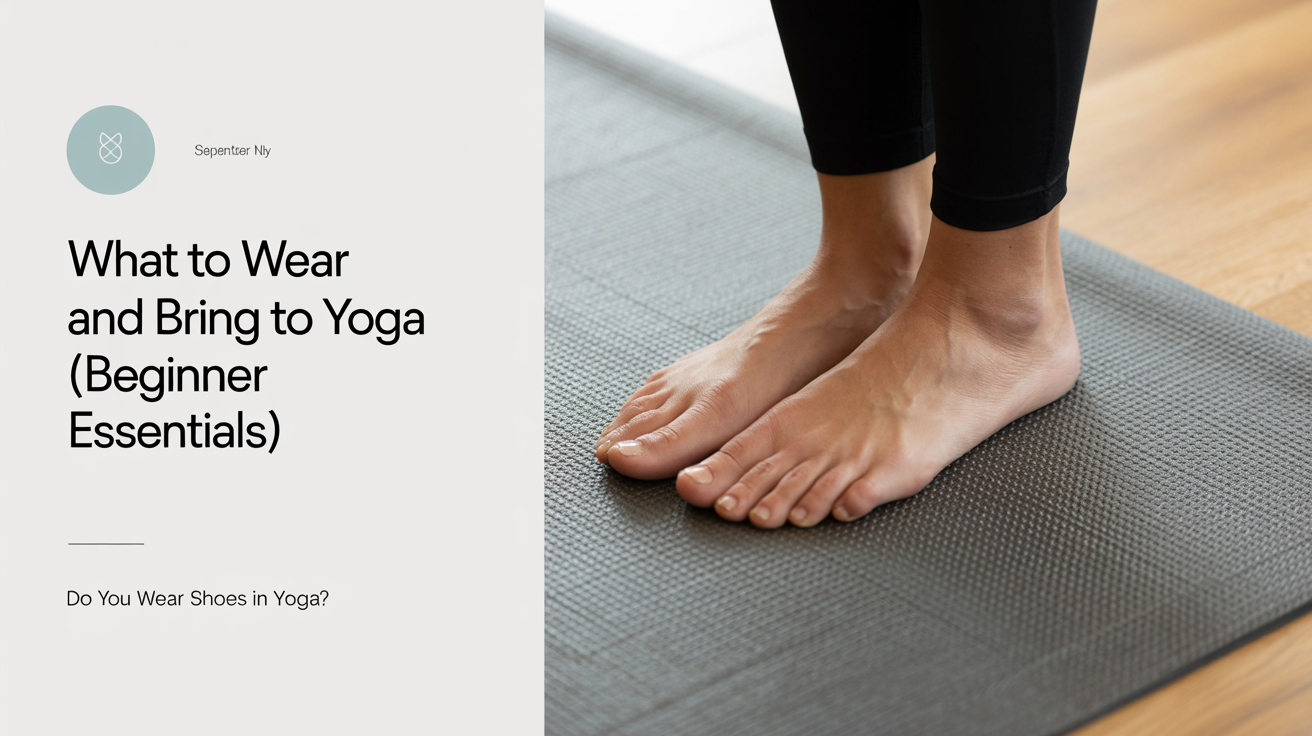
No. Yoga is done barefoot, and this is one of the first things that surprises newcomers. Bare feet grip the mat, help you balance, and let you spread your toes for a stable base in standing poses. Shoes would slide and throw off your footing.
You'll take your shoes off either at the studio entrance or at the edge of your mat. If being barefoot feels strange at first, that's normal, and it passes within a few minutes.
If you really don't like bare feet, you have one option: grip socks. These have rubber dots on the sole that stop you sliding. They're popular in hot classes where feet get sweaty. Regular socks, though, are slippery on a mat and can be a real hazard in a balance pose, so leave those for the relaxation at the end.
What to Bring to Yoga Class
Now for the packing list. Knowing what to bring to yoga class ahead of time saves a frantic morning of searching for a water bottle. Here's the realistic version, split by what you truly need and what's just nice to have.
Essentials:
- A yoga mat (or cash/card to rent one). Many studios rent or lend mats for your first visit, so call ahead if you don't own one yet. When you're ready to buy, our guide on how to choose a yoga mat for beginners breaks down thickness and grip.
- Water. A bottle you can sip between poses. Hot classes especially leave you parched.
- A small towel. For wiping sweat, and in hot yoga, for laying over your mat so you don't slip.
Nice to have:
- A hair tie if your hair reaches your face. Tiny thing, big difference when you're upside down.
- Grip socks, if you went that route above.
- A light layer for the cool-down at the end.
- Your own props only if you have them. Studios supply blocks and straps, so don't go buy any yet.
One thing to leave at home, or at least on silent in your bag: your phone. The whole point of an hour on the mat is the break from notifications.
Packing for a hot class vs. a regular class
The room temperature changes what you reach for.
| Item | Regular class | Hot class |
|---|---|---|
| Water | Helpful | Essential, fill it up |
| Towel | Optional | Bring two |
| Clothing | Lightweight | Minimal, sweat-wicking |
| Change of clothes | Not needed | Bring one |
If you're heading into a heated room, eat lightly beforehand and arrive hydrated. A heavy meal an hour before a hot class sits badly once you start folding over.
A Quick Pre-Class Checklist
Run through this the night before, or the morning of, and you'll walk in calm instead of scrambling:
- Stretchy bottoms and a fitted top laid out
- Water bottle filled
- Small towel packed
- Mat ready, or studio called about renting one
- Hair tie in the bag
- Arrived 10 to 15 minutes early to settle in
Showing up a little early matters more than any outfit. It gives you time to find the bathroom, set your mat, and meet the teacher. For a fuller picture of the room and the routine, see what to expect at your first session.
Listening to Your Body
Comfort isn't only about clothes. Yoga should feel like a gentle stretch and steady effort, never sharp pain. Move slowly into each pose, keep breathing, and back off the moment you feel anything pinching or stabbing. A stretch that's intense but warm is fine; a sharp signal is your cue to ease out.
If you're pregnant, recovering from an injury, or managing a health condition, it's worth a quick chat with your doctor before starting, and let the teacher know so they can offer gentler options. This is educational, not medical advice, but a heads-up to your instructor genuinely helps them help you.
When in doubt about anything beyond clothing, our complete beginner's guide to starting yoga covers the wider basics, from picking a class style to building a simple home routine.
FAQ
Can I wear regular gym clothes to yoga?
Yes, in most cases. If your gym leggings and fitted top stretch and let you bend freely, they're perfect. The only swap to consider is a top that won't fall over your head in forward folds. Otherwise, your usual workout gear is fine.
Do I need to buy a yoga mat before my first class?
Not necessarily. Many studios rent or lend mats, so you can try a few classes before committing. If you do want your own, focus on grip and a thickness that cushions your knees and wrists.
What should I do with my socks and shoes?
Leave shoes at the studio entrance or beside your mat, and practice barefoot. Skip regular socks during poses since they slide. If you prefer covered feet, grip socks with rubber soles are the safe choice.
Is it okay to wear loose clothing to yoga?
Loose is fine on the bottom if it still moves with you, but very baggy tops cause trouble in inversions and forward folds. A semi-fitted or tuck-in shirt keeps the fabric out of your face so you can actually see and breathe.
How much water should I bring?
A standard bottle is plenty for a regular class. For a hot or fast-flowing class, fill it to the top and sip throughout. Arriving already hydrated matters as much as how much you carry in.