How to Do Bridge Pose (Setu Bandhasana) for Beginners
Learn how to do bridge pose step by step. Build strength in your glutes and spine while opening the chest in this gentle, beginner-friendly backbend.
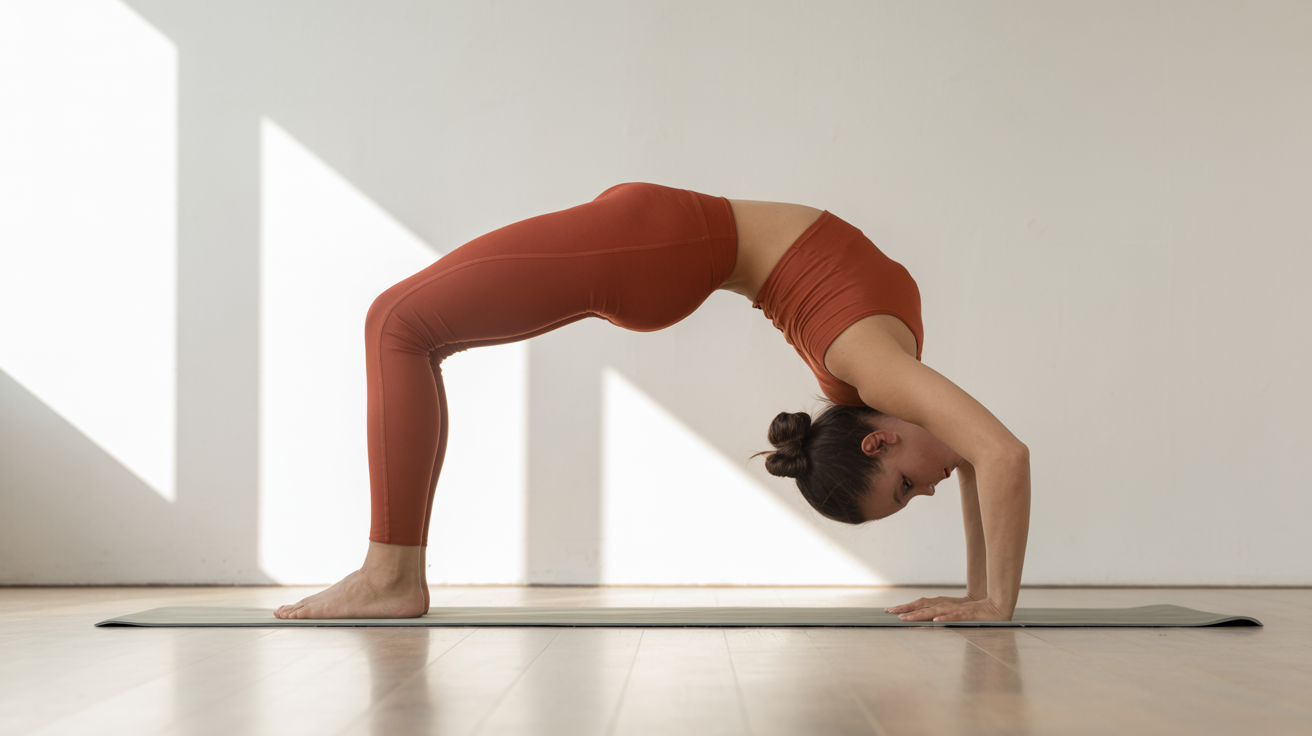
Bridge Pose, or Setu Bandhasana (say-too bahn-DAH-sah-nah), is one of the most useful shapes in a beginner yoga practice. You lie on your back, press your feet into the floor, and lift your hips. That's essentially it. In that simple movement you strengthen your glutes and hamstrings, open the front of your hips, and give your spine a gentle backbend without putting pressure on your neck or wrists.
If you've ever felt stiff across the lower back after a long day of sitting, Bridge is a good place to start.
What You Need Before You Begin
No special equipment is required, but a few things help:
- A yoga mat or non-slip surface. Your feet need to stay put when you press down.
- A yoga block or firm folded blanket (optional). These let you support your hips in a passive version called Supported Bridge, which is easier on the back.
- Comfortable clothes. Nothing that restricts the hips or rides up when you lift.
If you are pregnant, have a disc injury, or are recovering from knee or shoulder surgery, talk to your doctor or a qualified yoga teacher before trying this pose. Modification options are covered below, but a professional eye on your specific situation is worth more than any written guide.
Step-by-Step Instructions
Take your time with each step. There's no rush, and moving carefully from the start teaches your body the shape before you add effort.
1. Set Up Your Starting Position
Lie on your back with your knees bent and your feet flat on the floor, hip-width apart. Place your feet close enough to your hips that your fingertips can just graze your heels when your arms rest by your sides. Let your arms rest alongside your body, palms facing down.
Take a breath here and let your spine settle into the mat. Your lower back may have a slight natural curve off the floor; that's normal.
2. Press Down to Lift Up
On an exhale, press your feet and arms firmly into the floor and slowly peel your hips upward. Start at the tailbone and roll up one vertebra at a time, like you're unrolling a carpet from the bottom. Keep your thighs parallel to each other; they tend to splay outward, so actively press them toward each other without squeezing.
Stop when your hips are roughly in line with your knees and shoulders, forming a straight diagonal from knees to shoulders. Don't force your hips higher than feels comfortable.
3. Find the Shape
Once you're up, check in with your body:
- Feet pressing evenly, all four corners of each foot in contact with the mat
- Knees directly above ankles (not caving in or splaying out)
- Chin slightly away from the chest, so there's a little space at the back of the neck
- Shoulders pressing down, chest lifting toward your chin
You can keep your arms pressing into the mat for stability. Some people clasp their hands under their back and roll the shoulders underneath them to open the chest more, but skip that if it pinches your shoulders.
4. Breathe and Hold
Stay for three to five slow breaths. Breathing tends to be shallow in backbends, so focus on keeping the inhale and exhale steady. Each exhale is a chance to soften any grip in your jaw or hands.
5. Come Down Slowly
On an exhale, lower your spine back to the mat in reverse: release one vertebra at a time, hips last. Don't just drop. The controlled descent is where a lot of the muscular work happens, and it protects your spine.
Rest with both knees pulled gently into your chest for a few breaths before repeating.
Aim for two to three rounds when you're starting out.
Modifications and Props
Bridge is flexible (no pun intended) in how it can be practiced. These adjustments let you meet the pose where you are today rather than forcing a shape your body isn't ready for.
| Situation | Adjustment |
|---|---|
| Lower back aches in the full pose | Place a block under your sacrum (the flat bone at the base of your spine) and rest your hips on it. This is Supported Bridge and is restorative rather than active. |
| Knees keep falling outward | Loop a yoga strap or tie around your thighs, just above the knees, to give yourself something to press out against. |
| Feet slip on the floor | Fold a sticky mat or place it under your feet for extra grip. |
| Neck feels compressed | Check that your chin is slightly away from your chest. Place a thin folded blanket under your shoulders (not your head) to reduce the angle. |
| Shoulder clasp causes pinching | Keep arms flat at your sides instead. The chest-opening benefit is still there without the arm variation. |
Listen to what your body tells you. A mild stretch across the front of the hips and thighs is expected. Any sharp pain in the knees, lower back, or neck is a signal to come down and reassess.
What Bridge Pose Works On
Bridge is a compound shape, which means several things happen at once:
Glutes and hamstrings. These are the primary muscles doing the lifting. If you feel them working, you're in the right position.
Hip flexors. The front of the hips stretches as you lift. People who sit for long periods often feel this intensely, which is a sign they need it.
Spine. The extension (backbend) lengthens the front of the spine and gently compresses the back of it. Over time, this can counteract the rounded-forward posture that comes from desk work or phone use.
Core. The abdominals engage in a supporting role to stabilize the lower back as it lifts. If your lower back takes most of the effort rather than your glutes, try pressing your feet harder into the floor and softening your glutes slightly to redistribute the work.
Bridge also shows up as a transitional shape in sun salutations and flows, so learning it well now builds a useful foundation. For a broader look at how this pose fits into your early practice, see 12 foundational yoga poses every beginner should learn.
How Bridge Connects to Other Standing and Floor Poses
Bridge is a backbend, and backbends pair naturally with forward bends and neutral standing postures that let the spine reset.
After a round of Bridge, a gentle Mountain Pose (Tadasana) standing for a few breaths helps you notice if your posture feels more open across the chest. Mountain is also where you can check whether your hip alignment has shifted during the floor work.
Downward Facing Dog pairs well with Bridge because it's an inversion that lengthens the spine in the opposite direction. After backbending, the hamstring stretch in Downward Facing Dog (Adho Mukha Svanasana) provides a useful counter-stretch. The two poses together give a balanced introduction to spinal movement in both directions.
Frequently Asked Questions
How long should I hold Bridge Pose? Three to five slow breaths is a practical starting point, around 20 to 30 seconds. As your strength builds, you can extend to eight or ten breaths. More important than duration is the quality of each breath; if you're holding your breath to stay up, that's a sign the hold is too long.
My lower back hurts after Bridge. What am I doing wrong? The most common cause is that the lower back is doing the lifting rather than the glutes. Try pressing your feet harder into the mat, engage the glutes more actively, and check that your hips aren't lifted higher than your knees. If discomfort persists, try Supported Bridge with a block under the sacrum, or skip the pose and speak with a yoga teacher or physical therapist about your lower back.
Can I do Bridge every day? Many practitioners include some version of it daily. The active version works the glutes and spine extensors, so a rest day every two or three days lets those muscles recover. The supported (restorative) version with a block is gentle enough for daily use for most people.
What's the difference between Bridge Pose and Wheel Pose? Both are backbends, but Wheel (Chakrasana or Urdhva Dhanurasana) lifts from the hands and feet with straight arms, creating a much deeper spinal extension and requiring significantly more shoulder and wrist flexibility. Bridge is the appropriate starting point; most teachers recommend a strong, comfortable Bridge before attempting Wheel.
I'm pregnant. Can I do Bridge? Bridge is sometimes practiced in the first trimester, but recommendations vary by trimester and individual. Please check with your midwife, obstetrician, or a prenatal yoga teacher before including it. They can advise based on where you are in your pregnancy and your personal health history.