How to Do Mountain Pose (Tadasana) Correctly
Learn how to do Mountain Pose (Tadasana) step by step, with beginner cues, benefits, and common mistakes to fix your standing posture.
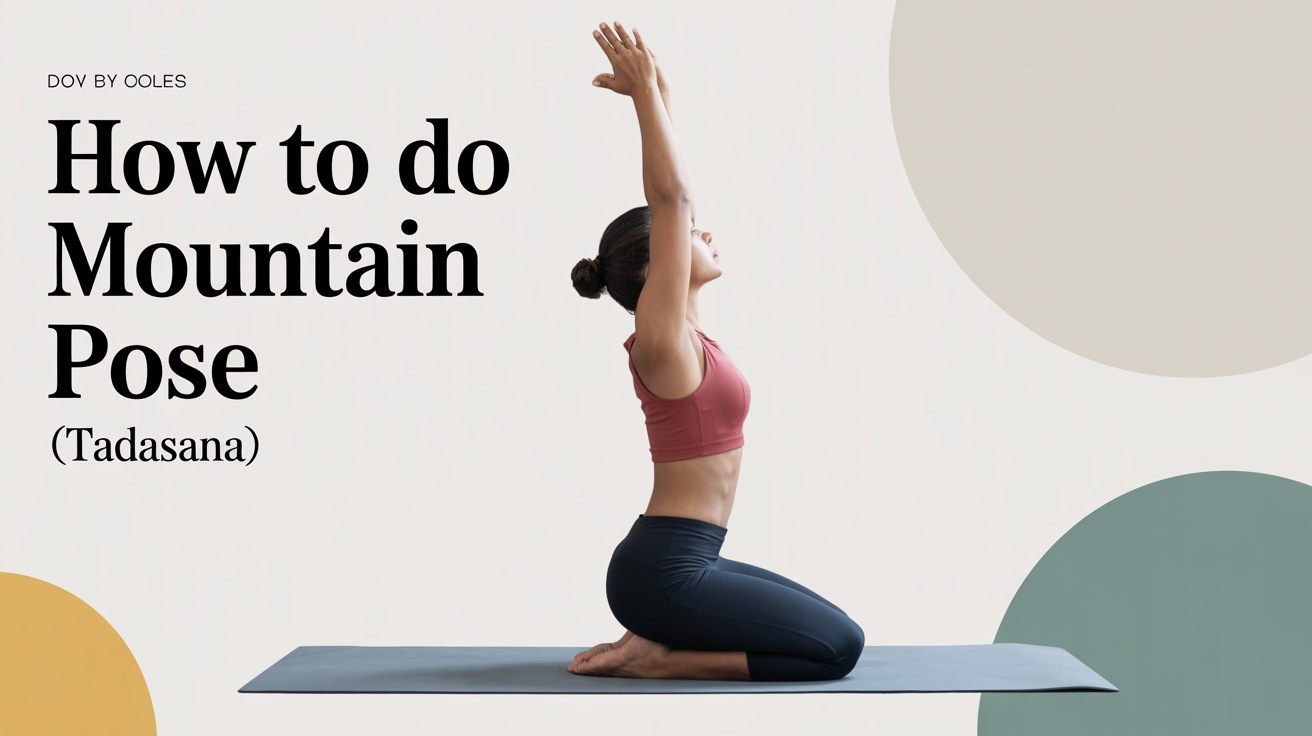
Mountain Pose looks like you're just standing there. That's exactly why beginners skip past it, and exactly why it's worth slowing down for. Tadasana teaches your body how to stack itself, breathe with ease, and find a steady base that shows up in every other pose you'll ever do.
If you've never done yoga and your flexibility is close to zero, good news: this is the most accessible pose there is. You don't need to fold, balance on one leg, or touch your toes. You just need to learn how to stand on purpose.
What Is Mountain Pose (Tadasana)?
Tadasana comes from the Sanskrit tada (mountain) and asana (pose or seat). The name is the instruction. You want to feel grounded and tall at the same time, like a mountain that isn't going anywhere but still rises up cleanly.
In a yoga class, Tadasana is often the starting point and the resting point between standing poses. It's also the template for your spine and shoulders in almost everything else. Get your standing posture in yoga sorted here, and your downward dog, your warriors, and your forward folds all get easier.
It's a quiet pose, not a flashy one. The work is internal: small adjustments you feel more than you see.
How to Do Mountain Pose, Step by Step
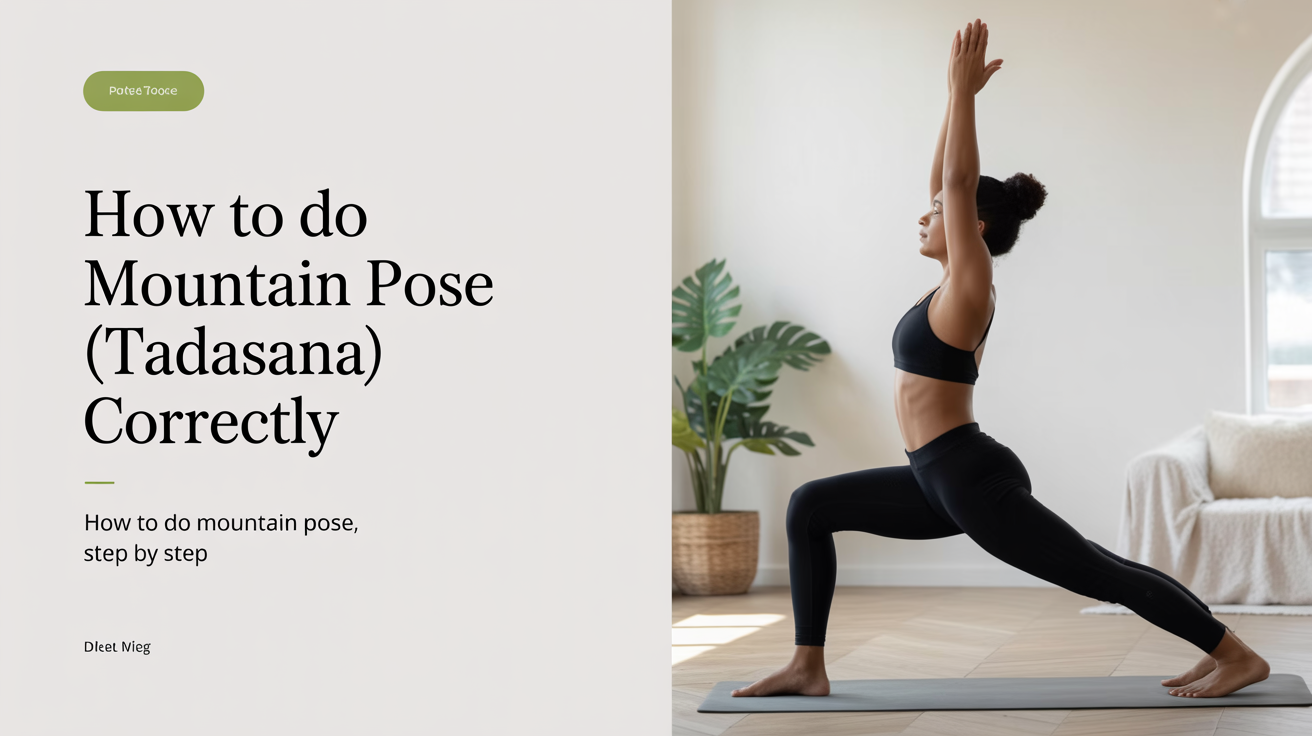
Take your time with each cue. Build the pose from the floor up.
- Set your feet. Stand with your feet hip-width apart, or together if that feels stable. Hip-width means roughly two fists of space between your heels, not as wide as your shoulders. Point your toes forward.
- Spread your weight. Press down through four points on each foot: the base of the big toe, the base of the little toe, and both sides of the heel. Lift and spread your toes, then set them down softly. You should feel evenly planted, not rolling inward or outward.
- Wake up your legs. Gently firm your thigh muscles so your kneecaps lift a little. Keep a micro-bend in the knees rather than locking them back hard.
- Level your hips. Let your tailbone drop toward the floor so your lower back isn't overarched. You're not tucking aggressively, just finding neutral.
- Lengthen up through the spine. Imagine the crown of your head floating toward the ceiling. Your ribs stay soft, not flaring out in front.
- Settle the shoulders. Roll your shoulders up toward your ears, then back and down. Your arms hang alongside your body, palms facing forward or in, fingers relaxed.
- Find your gaze. Look straight ahead at a fixed point. Soften your jaw and the space between your eyebrows.
- Breathe. Take five to ten slow breaths here. Feel the steadiness build with each exhale.
Move gently and never force any of these adjustments. If something pinches or sends a sharp signal, ease off until it stops.
What It Should Feel Like
You should feel light and tall, with your weight dropping down through steady legs. There's a subtle sense of two directions at once: roots going down, spine reaching up. Your breath should move freely. If you feel braced, gripping, or held in place, you're probably overdoing it. Tadasana is active, not rigid.
Mountain Pose Benefits
People underestimate this pose because it looks simple. Here's what regular practice actually gives you.
- Better posture awareness. You start to notice when you're slumping at your desk or jutting your chin forward, then correct it without thinking.
- A stronger base for balance. Learning to feel all four corners of your feet carries straight into tree pose and other one-legged shapes.
- Gentle leg and core engagement. Holding yourself tall fires up the muscles that support your spine all day.
- Calmer breathing. A tall, open chest gives your lungs room, so each breath comes easier.
- A reset button. Returning to Tadasana between poses gives you a moment to check in and steady your mind.
None of this requires flexibility, which is why Tadasana for beginners is such a friendly entry point. You're building the habit of standing well, and that habit travels with you off the mat.
Common Beginner Mistakes (and Easy Fixes)
Almost everyone makes a few of these at first. Spotting them is half the work.
| Mistake | What it feels/looks like | The fix |
|---|---|---|
| Locking the knees | Knees pushed back hard, legs feel jammed | Add a tiny bend; firm the thighs instead |
| Overarching the lower back | Ribs flare, belly pushes forward | Let the tailbone drop, soften the front ribs |
| Rolling onto outer or inner feet | Weight tips to one edge | Re-press all four corners evenly |
| Hunched or hiked shoulders | Tension near the neck and ears | Roll shoulders back and down, relax the arms |
| Holding the breath | Chest feels tight, you tense up | Keep a slow, steady in-and-out rhythm |
| Dropping the head forward | Chin juts out, gaze falls to the floor | Float the crown up, look straight ahead |
If you catch yourself making several at once, just rebuild from your feet. Reset the base and the rest tends to fall into place.
How to Practice Tadasana
You don't need a class or a 60-minute routine to get value from this pose. Try fitting it into your day.
- Morning reset: Stand in Tadasana for ten breaths after you get out of bed.
- Desk break: Every hour or two, stand up and find the pose for thirty seconds.
- Warm-up anchor: Open any home practice with a minute in Tadasana before you move into bigger poses.
- Wall check: Stand with your heels, hips, upper back, and head lightly touching a wall to feel true vertical alignment, then step away and keep it.
As you get comfortable, layer Tadasana into a fuller sequence. It pairs naturally with the building-block shapes in these foundational yoga poses every beginner should learn, and it's the posture you return to after a strong pose like downward-facing dog. When you need a softer counter, drop into child's pose for rest and reset.
A quick safety note: this is educational, not medical advice. If you're pregnant, recovering from an injury, or managing a health condition, check with your doctor before starting a new movement practice.
FAQ
Is Mountain Pose really doing anything if I'm just standing?
Yes, more than it looks. You're training postural muscles, balance, and breath awareness all at once. The benefits are subtle and cumulative rather than dramatic, but they show up in how you stand and move everywhere else.
Should my feet be together or apart?
Either works. Feet together is the classical version and challenges your balance a little more. Hip-width apart is more stable and usually easier for beginners. Pick the one where you feel steady and even on both feet.
How long should I hold Tadasana?
Five to ten slow breaths is a solid start, roughly thirty seconds to a minute. There's no rush to hold it longer. Quality of attention matters more than the clock.
My lower back aches when I stand tall. What's wrong?
You may be overarching, pushing your ribs and belly forward to seem upright. Let your tailbone drop toward the floor and soften your front ribs so your spine finds neutral. If the ache is sharp or lingers, come out of the pose and check in with a professional.
Can I do Mountain Pose if I have no flexibility?
Absolutely. Tadasana asks for zero flexibility. It's one of the best poses to begin with precisely because it meets you exactly where your body is today.