How to Do Child's Pose (Balasana) for Rest and Reset
Learn how to do Child's Pose step by step, plus easy modifications, benefits, and when to use this resting pose to calm down and reset.
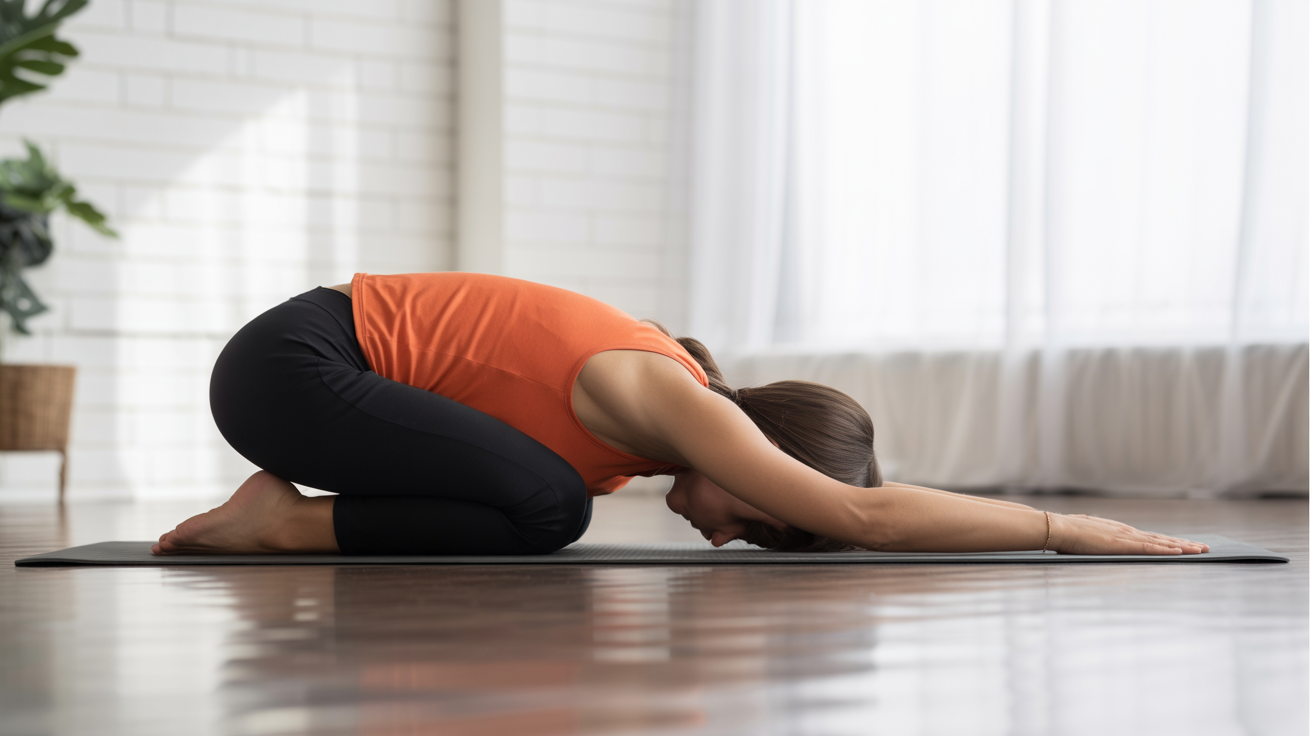
Child's Pose, or Balasana, is the pose you fold into when you need a break. You kneel down, sink your hips back toward your heels, and let your forehead rest on the floor. That's the whole thing. It looks simple because it is, and that's exactly why it's one of the first poses worth getting comfortable with.
If you're brand new and have no flexibility yet, this is a kind place to start. Nothing about it requires you to touch your toes or balance on one leg. You're mostly just resting on the ground and breathing, which turns out to be more useful than it sounds.
What Child's Pose Is and Why It Helps
Balasana is a gentle forward fold done on your knees. The name comes from the Sanskrit word for "child," and the shape is a little like a baby curled up asleep. In a yoga class, the teacher often calls it out as a place to pause between harder poses or anytime you feel like you need one.
Here's what makes it worth doing on its own, not just as a rest stop:
- It gently lengthens your lower back, which feels great after sitting all day.
- It opens the hips and stretches the tops of your thighs and ankles.
- Resting your forehead down tends to quiet a busy head, partly because slowing your breath signals your body to settle.
- It's a reset button. When a flow gets confusing or tiring, you can always come back here.
People talk about balasana benefits mostly in terms of how it feels: less tension across the back, a slower heartbeat, a moment to regroup. You don't need to chase any of that. Just get in the shape and breathe, and the calm part usually shows up on its own.
This is a resting pose in yoga, which means there's no goal of going deeper or pushing harder. The point is to do less.
How to Do Child's Pose, Step by Step
Find a soft surface. A yoga mat, a rug, or a folded blanket under your knees all work. Then follow these steps.
- Start on all fours, hands under your shoulders and knees under your hips. This tabletop position is the same starting point for a lot of beginner work, including Downward-Facing Dog.
- Bring your big toes to touch behind you and keep your knees where they are, or widen them toward the edges of your mat.
- Sit your hips back toward your heels. They may not reach, and that's fine.
- Walk your hands forward and let your arms rest long in front of you, palms down.
- Lower your forehead to the mat. If it doesn't reach, that's normal, and there's a fix below.
- Soften your shoulders, unclench your jaw, and let your belly relax toward your thighs.
- Stay for 30 seconds to a few minutes. Breathe slowly through your nose, feeling your back rise on the inhale.
To come out, press your hands into the floor and slowly roll yourself up. Take your time. There's no rush, and standing up fast can leave you lightheaded.
What it should feel like
You want a mild, spread-out stretch across your lower back and hips, plus a feeling of weight settling into the ground. You should not feel sharp pain anywhere, and your knees shouldn't be screaming. A gentle pull is good. A pinch is a signal to back off or modify.
Common Beginner Mistakes
A few small things trip people up. None of them are a big deal once you know to watch for them.
| Mistake | What happens | Easy fix |
|---|---|---|
| Forcing the forehead down | Strains the neck and back | Rest your head on a block or stacked fists |
| Holding the breath | Tension builds instead of releasing | Breathe slowly through the nose the whole time |
| Hips floating high | Less stretch, less rest | Use a cushion under the hips, or widen the knees |
| Tensing the shoulders | Neck gets tight | Let the arms go heavy, shoulders melt down |
| Knee pain | Sharp pressure in the joint | Pad under the knees and shins |
The forehead one is the most common. Beginners assume their head has to touch the floor, then crane their neck trying to make it happen. It doesn't have to touch. Bring the floor up to your head instead.
Childs Pose Modifications for Every Body
This is where Balasana really earns its spot as a beginner pose. There's a version for almost everyone, and small props change a lot. If you're tight in the hips, stiff in the knees, or further along in pregnancy, one of these will fit.
- Wide-knee version: Spread your knees toward the mat's edges and let your torso settle between your thighs. This gives your belly room and eases the hip stretch. It's the more restful of the two shapes.
- Knees-together version: Keep your knees close for a slightly deeper stretch along the lower back. Choose this when you want more spinal length.
- Forehead support: Stack your fists, a block, or a folded towel under your forehead so your neck stays long and relaxed.
- Tight ankles: If the tops of your feet ache, roll a towel and slip it under your ankles.
- Sore knees: Fold your mat or add a blanket under the knees and shins to cushion the joints.
- Hips won't reach the heels: Tuck a cushion or rolled blanket between your hips and your heels so you have something to rest on. This single change makes the pose feel restful instead of like a strain.
- Arms forward or back: Reaching the arms ahead lengthens the sides of your body. Resting them alongside your legs, palms up, feels cozier and quieter. Try both and keep the one you like.
If you're pregnant, the wide-knee version with a bolster under your chest is usually more comfortable, and it's worth checking with your doctor or midwife before adding new poses. The same goes for anyone managing a knee, hip, or back injury. This is educational, not medical advice, so move gently and listen to your own body over any instruction.
When and How to Use It in Your Practice
You can drop into Child's Pose almost anytime:
- As a warm-up. A minute here at the start loosens the back before you do anything more active.
- As a rest. During a flow, return whenever you need to catch your breath. No teacher worth their salt minds.
- As a cool-down. It pairs naturally with the end of a session, easing you toward stillness.
- Off the mat entirely. Stressed at home? Two quiet minutes folded forward can take the edge off a rough afternoon.
Try linking it with other foundational shapes. Moving between Child's Pose and Downward-Facing Dog is a simple way to wake up the spine, and standing tall in Mountain Pose afterward helps you carry that settled feeling into the rest of your day.
If you're still building your toolkit, it's worth learning a handful of these basics together. A guide to foundational yoga poses every beginner should learn will show you how Balasana fits alongside the other shapes you'll use most.
FAQ
How long should I stay in Child's Pose?
Anywhere from 30 seconds to a few minutes. For a quick reset between poses, a few breaths is plenty. To genuinely unwind, settle in for two or three minutes and let your breathing slow down. Come out sooner if your knees or back start to complain.
My forehead doesn't reach the floor. Am I doing it wrong?
Not at all. Most beginners can't rest their head on the mat right away, and forcing it strains the neck. Stack your fists, a yoga block, or a folded towel under your forehead so your head has something to land on. The pose works just as well.
Is Child's Pose safe if I have bad knees?
Often yes, with padding. Fold your mat or tuck a blanket under your knees and shins to cushion the joints, and slide a rolled towel under your ankles if the tops of your feet hurt. If you feel any sharp or pinching pain in the knee, ease out and skip it for now. Talk to your doctor if you have a known knee issue.
Can I do Child's Pose every day?
Yes. It's gentle enough for daily use, and many people fold into it for a couple of minutes in the morning or before bed. There's no risk in returning to a resting pose this often, as long as you keep it comfortable and breathe.
Why do I feel emotional or sleepy in this pose?
Slowing your breath and curling inward tells your nervous system it's safe to relax, so it's common to feel calm, drowsy, or even a little teary. That's a normal release, not a problem. Stay as long as it feels good, then roll up slowly.