How to Do Tree Pose (Vrksasana) Without Wobbling
Learn how to build a stable Tree Pose with foot placement tips, wall support, and the mindset shift that makes balance easier for beginners.
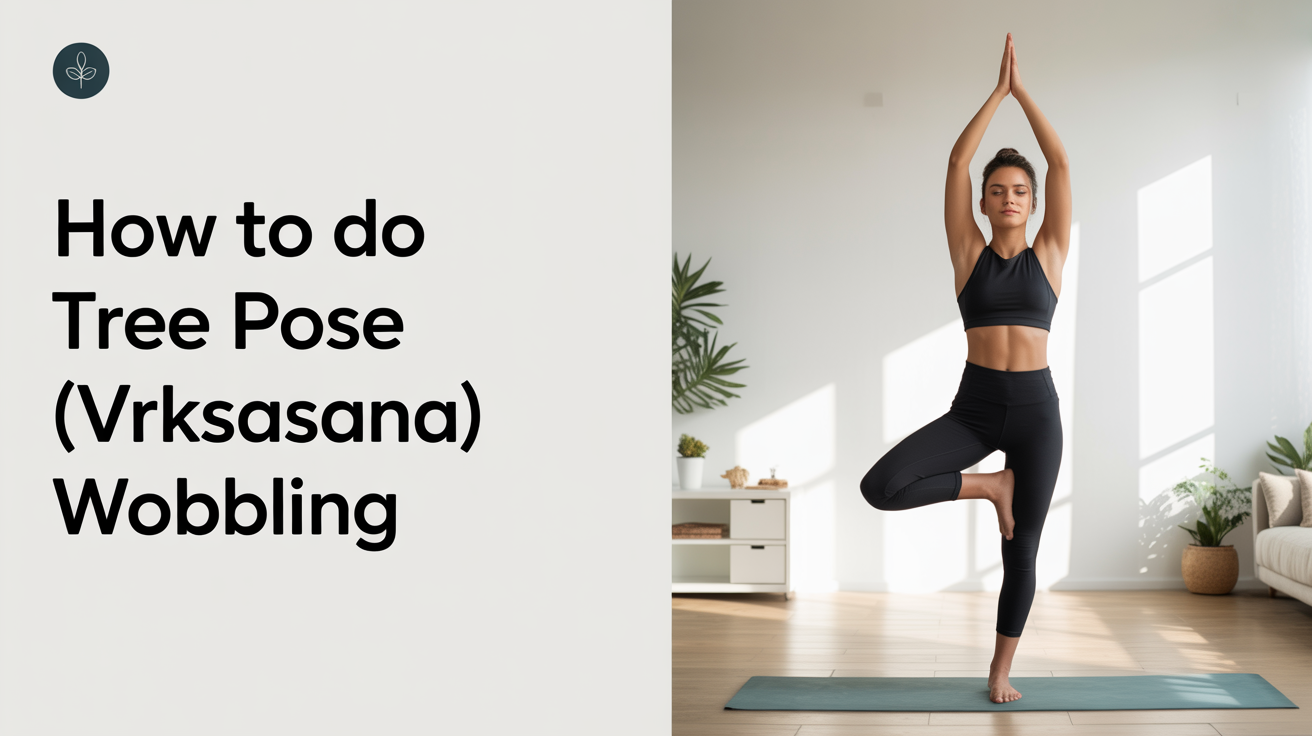
Tree Pose looks deceptively simple in photos: one leg rooted, the other foot pressed to the inner thigh, arms overhead in a graceful V. Then you try it and discover that what the photo doesn't show is the small constant micro-adjustments happening in every muscle of the standing foot.
Wobbling in Tree Pose is not a sign that you're bad at yoga. It's what balance actually feels like while it's being built. The goal is to understand what creates stability, remove a few common setup mistakes, and give yourself permission to use support until your nervous system catches up. That's what this guide covers.
If you have a knee injury, hip issue, or are pregnant, check with your doctor before practicing standing balance poses. Modifying with a wall or chair is always a smart choice, not a compromise.
Set Up Your Root Foot First
Everything in Tree Pose begins with the foot that stays on the floor. Most beginners rush to lift the second foot before the standing foot is genuinely engaged, which is why the wobble starts almost immediately.
Stand with your feet hip-width apart. Spread all ten toes wide so they aren't gripping the mat. Feel three points of contact: the base of the big toe, the base of the pinky toe, and the center of the heel. These three points form a triangle, and when all three press evenly, the arch lifts naturally and the ankle becomes more stable.
From there, feel your calf engage slightly, then your quadriceps firm up without locking the knee. A locked knee (hyperextension) actually reduces stability because it takes the muscular work offline. A softly engaged, slightly unlocked knee gives you better feedback from the ground.
Take three or four breaths here before you even think about lifting the other foot. Let the standing leg feel solid.
Where to Place the Lifted Foot (and Where Not To)
Once your root foot is settled, you have three safe options for the lifted foot. The one you choose depends on your current flexibility and hip openness, and any of them is a complete expression of the pose.
Ankle: Place the sole of the lifted foot on the inner ankle of the standing leg, with your toes touching the floor lightly. This is the most stable version and the right place to start. You still get the hip opening and the balance challenge, just with more ground contact as a safety net.
Calf: Bring the foot higher to press against the inner calf, below the knee. The foot presses in, the calf presses back, and that mutual resistance helps hold the position.
Inner thigh: This is the version you see most often. The sole of the foot presses firmly against the upper inner thigh of the standing leg, well above the knee. The thigh pushes back into the foot with equal force. That pressing relationship is what keeps the foot from sliding.
The one place you should never put the foot is directly on the side of the knee joint. The knee is designed to flex forward and back, not to bear lateral pressure. A foot resting against the knee can strain the joint over time, even if it doesn't hurt in the moment. Above the knee or below the knee are both fine; on the knee is not.
Use a Wall or Chair Without Apology
Proprioception, your body's sense of where it is in space, develops through repetition over weeks and months. On your first day with Tree Pose, your nervous system simply doesn't have the map yet. A wall or chair gives you a reference point while that map is being drawn.
Stand about six inches from a wall. Lightly rest one or two fingertips on it at hip height. The contact doesn't need to hold you up; even a finger's worth of touch gives your brain enough feedback to quiet the wobble. As you get steadier in sessions, reduce the contact to one fingertip, then hover your hand just off the wall without touching it.
A chair works the same way: rest a hand on the back of it. You can also try lifting your foot only to the ankle version, with one hand on the chair back, which gives you two layers of support while you build the pattern.
There's no timeline for when you should stop using props. Some people feel steady on their own after a few weeks. Others come back to the wall whenever they're tired or distracted, and that's sound judgment, not a failure.
Where to Look and What to Do With Your Arms
Your gaze point, called the drishti in yoga, has a surprisingly large effect on balance. A wandering gaze leads to a wandering body. Find one fixed point on the wall in front of you at eye level, something that isn't moving, and rest your eyes there softly. Don't stare hard; just let your gaze settle.
Looking slightly downward at the floor can also help beginners because it brings the center of gravity down and provides a stable reference. Experiment with both and notice which gives you a longer, calmer hold.
For your arms, begin with hands at your heart in a prayer position. This is a natural center-of-gravity position and keeps the upper body from adding instability before you're ready. Once you feel settled, you can take the arms up overhead with palms together or hands shoulder-width apart. Raising the arms shifts your center of gravity upward, which makes the balance more challenging, so let the standing leg be fully stable before you try it.
Practice Strategies That Actually Build Steadiness
Holding Tree Pose for thirty seconds once a week will produce slow progress. What builds proprioception faster is short, frequent repetition: five breaths on each side, three or four times through, practiced several times a week. Short holds with full reset between attempts train the nervous system more efficiently than grinding through one long, shaky hold.
When you do fall out, which you will, step back into the starting position calmly and try again. The act of losing balance and reestablishing it is itself the training. Every recovery is a rep.
A few other things worth trying:
Close your eyes for one or two seconds during the pose once you're feeling stable. Removing visual input forces the foot and ankle muscles to work harder, and it speeds up the proprioceptive development noticeably.
Practice on both sides even if one feels significantly harder. Most people have a stronger standing leg, and that asymmetry is normal. The weaker side catches up with practice.
Try Tree Pose at different times of day. Many people find they balance better later in the day when the body is warmer and the nervous system is fully awake.
For a broader foundation that makes Tree Pose easier, 12 foundational yoga poses every beginner should learn gives you context on how these poses build on each other. Mountain Pose in particular is the direct parent of Tree Pose because it teaches the same root-foot engagement without the balance challenge added yet. See how to do Mountain Pose (Tadasana) correctly for the full breakdown. Once Tree Pose becomes familiar, how to do Warrior I and Warrior II step by step are natural next poses that deepen the standing-leg strength you've been building.
Frequently Asked Questions
Why do I wobble more when I try to hold the pose longer?
Fatigue is part of it: the small stabilizing muscles in the ankle and foot tire quickly because they're doing concentrated work. But the bigger reason is that attention tends to wander the longer you hold, which relaxes the engagement in the root foot. Shorter, more focused holds generally feel steadier than long holds where concentration drifts. Build up the duration gradually rather than forcing a long hold from day one.
Is it okay if my hip opens outward on the lifted leg side?
Yes, that's the point. In Tree Pose, the lifted leg's hip does rotate open to the side, which is the hip-opening element of the pose. What you want to watch is the standing hip: keep it level and neutral rather than letting it hike up or jut to the side to compensate. A simple check is to look down and see if both hip points are roughly even.
My lifted foot keeps sliding down. What's wrong?
This usually means the mutual pressing isn't happening. The foot needs to press into the leg, and the leg needs to press back into the foot with roughly equal force. If the foot is just resting there passively, gravity wins. Try pressing your foot firmly into your calf or thigh and notice the difference in grip. Wearing sticky socks or practicing barefoot on a yoga mat also helps compared to socks on a smooth floor.
Can I practice Tree Pose if I have knee pain?
If you have existing knee issues, keep the lifted foot at the ankle or calf position, never against the knee. The ankle position in particular puts no lateral stress on the knee. That said, if you have an ongoing knee problem, get clearance from a healthcare provider before practicing any standing balance pose. Pain is always a signal to stop and reassess, not push through.
How long does it take to balance steadily in Tree Pose?
There's no single answer because it depends on how often you practice, your starting baseline of balance and proprioception, and how rested you are on any given day. Some beginners find a comfortable hold within a few weeks of regular practice. Others take a couple of months. The useful marker isn't a specific timeline; it's noticing that you're recovering from wobbles more quickly and the steadiness lasts longer than it used to. That progression happens with consistency, not rush.