How to Meditate for Beginners: A Simple Starting Point
Learn how to meditate for beginners with simple, step-by-step guidance. Start with just five minutes a day and build from there.
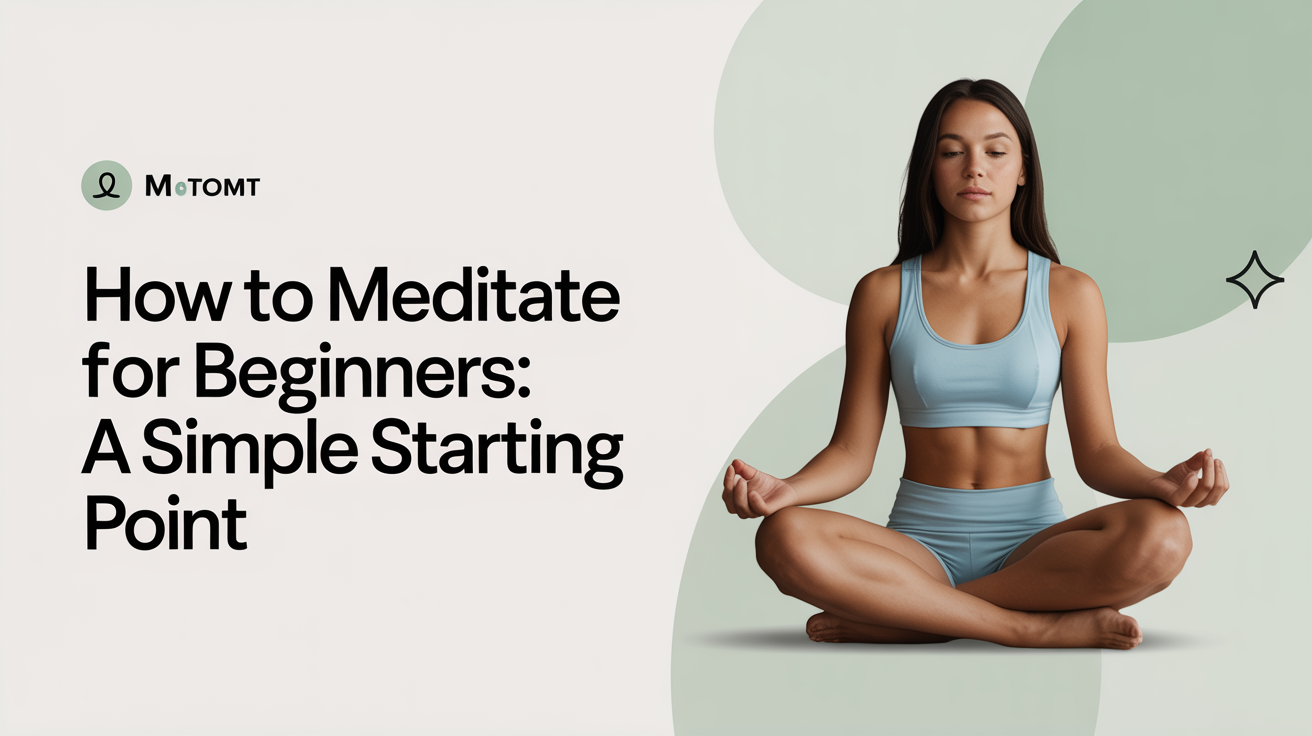
Meditation does not require a cushion, a candle, or years of experience. At its simplest, it is the practice of sitting still, paying attention to your breath, and noticing when your mind wanders. That last part happens constantly at first, and that is completely normal.
If you have five minutes and a quiet spot, you have everything you need to start.
At a Glance
- Meditation trains one skill: noticing your attention has drifted and gently bringing it back.
- Five minutes a day beats forty-five minutes once a week for building the habit.
- Sitting in a chair works as well as sitting cross-legged on the floor. Comfort matters more than form.
- A brief 2020 research review found roughly 8% of meditators report some negative effect, most often anxiety, a rate comparable to psychological therapies.
- Restlessness in the first few sessions is expected, not a sign you're doing it wrong.
- Meditation is not a substitute for treatment of a diagnosed mental health condition.
What Meditation Actually Is (and Is Not)
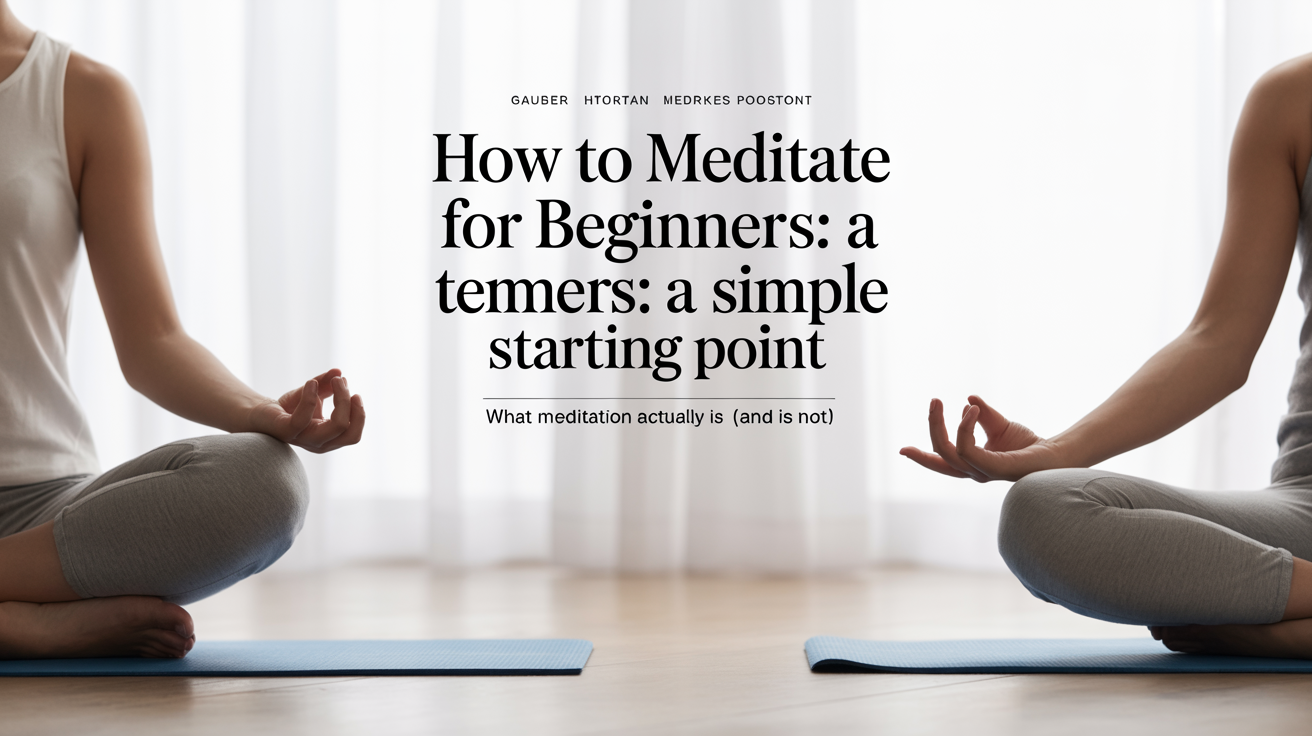
A lot of beginners expect meditation to feel peaceful or blank. The mind rarely goes quiet on command. What meditation trains is the ability to notice that your attention has drifted and bring it back, without harsh self-judgment.
Think of it like a bicep curl for the brain. Each time you notice distraction and return to your breath, that is one rep. A short session with ten of those moments is more valuable than a longer session where you drift off and never catch it.
You do not need to clear your mind. You just need to keep coming back.
The National Center for Complementary and Integrative Health (NCCIH) defines meditation broadly as a group of practices that focus attention, often on the breath, sounds, or a repeated phrase, to calm the mind. That's a useful reminder that there's no single "correct" inner experience you're supposed to be chasing. The mechanics (sit, focus, notice, return) are the practice itself.
How to Set Up for Your First Sit
Comfort matters more than form. You can sit in a chair, on the floor, or even lie down if sitting is uncomfortable. The goal is a position you can hold without fidgeting for five to ten minutes.
A simple setup:
- Sit with your spine reasonably upright, not rigid
- Rest your hands on your thighs or in your lap
- Let your eyes close softly, or keep a soft downward gaze if closing feels uncomfortable
- Set a timer so you are not checking the clock
If you have any injuries, are pregnant, or have a health condition, check with your doctor before starting a new practice. Seated positions can often be adapted, and lying down is a valid option when sitting causes pain.
A Simple Technique to Try First
This is a basic breath-awareness practice. No special training required.
- Settle into your position and take two or three slow, deliberate breaths to signal to your body that you are pausing.
- Let your breathing return to its natural rhythm. Do not force it to be deep or slow.
- Place your attention on the physical sensation of breath. Notice the air entering your nostrils, the rise and fall of your chest or belly, the brief pause between breaths.
- When your mind wanders to a thought, a sound, or a to-do list (and it will), gently return your attention to the breath. No need to push thoughts away or feel frustrated.
- Continue for five minutes. Extend when it starts feeling manageable.
That is the whole technique. The simplicity is intentional. Complexity can come later.
Breath awareness meditation and deliberate slow-breathing techniques are related but not identical. A 2018 review of slow breathing research in Frontiers in Human Neuroscience found that voluntarily slowing the breath tends to shift the body toward parasympathetic, "rest and digest" activity, measurable through increased heart rate variability. The meditation technique above doesn't ask you to slow your breath on purpose. It simply asks you to watch it. In practice, many beginners notice their breath naturally slows anyway once they stop interfering with it.
If you want to explore the breathing side more deeply, the guide on yoga breathing for beginners is a helpful companion to this practice.
Building a Short Daily Habit
Consistency matters far more than session length. Five minutes every day will do more for you than forty-five minutes once a week.
A few things that help sessions stick:
Attach it to something existing. Meditating right after brushing your teeth in the morning or just before bed removes the friction of deciding when to do it.
Start smaller than feels necessary. Two minutes is enough to begin. When two minutes feels comfortable, try five. The goal in the first few weeks is simply to show up.
Expect restlessness. Many beginners feel more distracted when they sit still than they do during the rest of the day. That restlessness was already there. Sitting quietly just makes it visible. This typically settles with a few weeks of practice.
Use a timer. Watching the clock is itself a distraction. A simple phone timer with a gentle sound handles this cleanly.
Track it loosely. A simple checkmark on a calendar for each day you sit, even for two minutes, builds momentum. The goal isn't a perfect streak; it's noticing that most days have a checkmark.
A useful complement to seated breath awareness is working with the breath more deliberately before you sit. The guide on diaphragmatic belly breathing covers how to use the diaphragm effectively, which can make breath-based meditation feel more grounded.
Common Challenges and What to Do
| Challenge | What it usually means | What to try |
|---|---|---|
| Mind races constantly | Normal for beginners | Shorten the session; count breaths from 1 to 10, repeat |
| Falling asleep | Tired body, or lying down too soon | Try sitting upright; meditate at a different time of day |
| Feeling nothing | Also normal | Sensation builds gradually; keep showing up |
| Frustration or boredom | Common in weeks 1 and 2 | Treat the frustration as the object of observation |
| Discomfort in the body | May need position adjustment | Shift freely; no need to hold still through pain |
| Emotions surface unexpectedly | Common once the mind quiets down | Let the feeling pass through; shorten the session if it's overwhelming |
One technique worth trying if racing thoughts are a persistent problem is alternate nostril breathing before you sit. It has a calming effect on the nervous system and can make it easier to settle. The guide on alternate nostril breathing walks through the steps clearly.
When Meditation Isn't the Right Tool Alone
Meditation is generally low-risk, but it isn't risk-free for everyone. NCCIH notes that a 2020 research review found roughly 8% of people who meditate report a negative effect at some point, most commonly increased anxiety or low mood, a rate similar to what's seen with other psychological practices. That doesn't mean meditation is dangerous for most beginners. It does mean that if sitting quietly consistently leaves you feeling worse rather than calmer over several sessions, that's worth mentioning to a doctor or therapist rather than pushing through alone. Meditation works well alongside professional mental health care. It isn't designed to replace it.
Frequently Asked Questions
How long should I meditate as a beginner?
Start with five minutes. That is long enough to practice the core skill of returning attention to the breath, and short enough to actually do it each day. Most people find that five minutes naturally stretches to ten or fifteen over the course of a few weeks.
Do I have to sit cross-legged on the floor?
No. Cross-legged floor sitting is one option, not a requirement. A chair works equally well. The most important thing is that your spine can stay relatively upright without constant effort. If sitting is uncomfortable due to injury or limited mobility, lying flat on your back is a legitimate alternative.
Is it normal to feel worse after meditating?
Sometimes, yes, especially early on. Sitting quietly can surface anxiety, restlessness, or emotions that were easier to avoid while busy. This often settles with time, but if meditation consistently leaves you feeling significantly worse, it is worth speaking with a mental health professional before continuing.
How do I know if I am doing it right?
If you are noticing when your mind wanders and returning to your breath, you are doing it correctly. There is no state to achieve. Distraction followed by gentle return is the practice itself.
What is the difference between meditation and breathing exercises?
Breathing exercises (like belly breathing or alternate nostril breathing) actively change the breath pattern to shift the nervous system. Meditation, in the form described here, simply observes the breath as it naturally occurs. Both are useful, and they pair well together, but they work differently.
How many days a week should a beginner meditate?
Daily practice, even at five minutes, builds the habit faster than a longer but less frequent schedule. If daily feels like too much to start, four or five days a week is still enough to notice a difference within a few weeks. The consistency matters more than hitting seven out of seven.