Is Yoga Hard to Learn? A Realistic Beginner Timeline
Yoga has a learning curve, but it's more gradual than most beginners expect. Here's what to realistically expect in your first weeks and months.
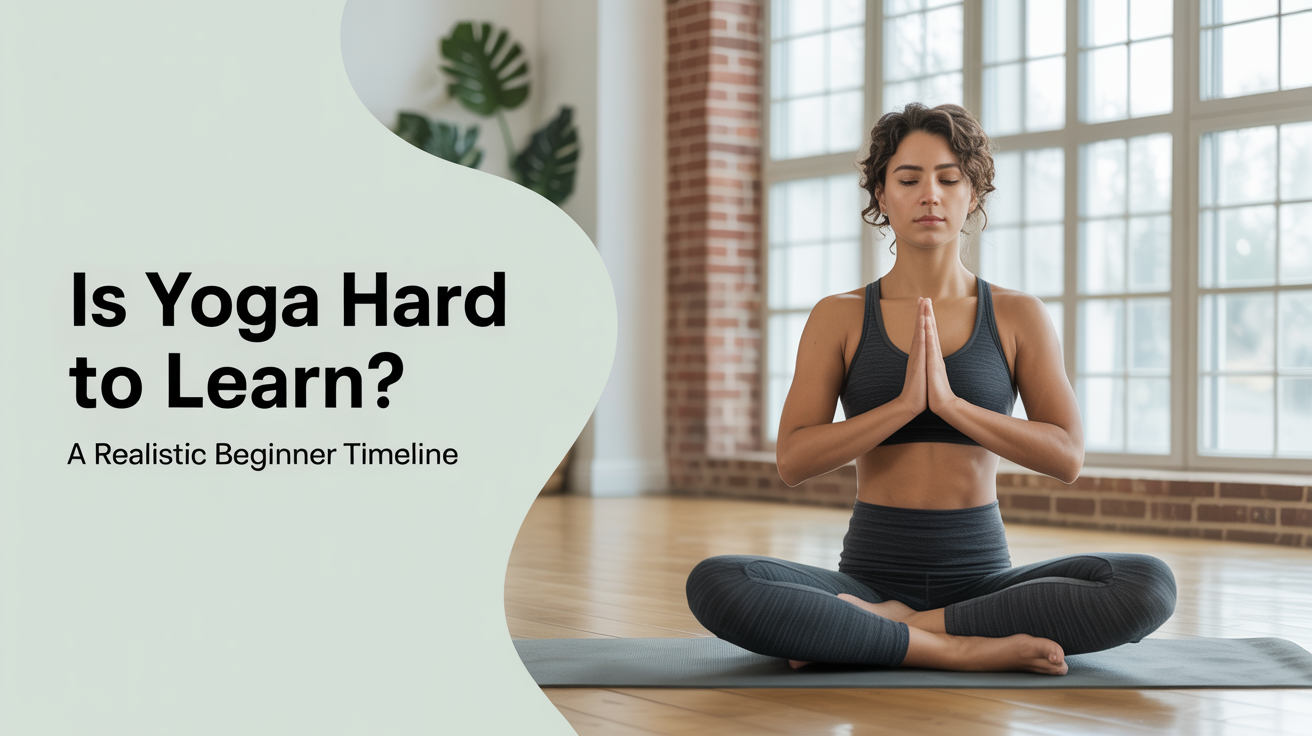
Yoga is not hard in the way that, say, learning a backflip is hard. But it does take time to feel comfortable in the poses, to understand the breathing, and to build the body awareness that makes a class feel natural rather than confusing. Most beginners find the first two or three sessions the steepest part of the curve. After that, things start to click.
The short answer: you can follow a beginner class on day one. You will not master yoga on day one. That gap is exactly where the practice lives.
At a Glance
- The first two to three sessions are the hardest. After that, familiarity builds quickly.
- Flexibility is a result of practice, not a requirement to start. Props close the gap.
- A realistic timeline: poses feel familiar by week 3 to 4, a class feels manageable by month 3, and practice feels like second nature after six months of regular sessions.
- NIH's National Center for Complementary and Integrative Health advises beginners to avoid extreme poses like headstands and deep backbends until foundational strength and awareness are in place.
- Give yourself at least eight sessions before judging your progress. Measurable change is hard to feel before then.
- Injuries in yoga are usually mild sprains and strains, and are uncommon relative to the number of people practicing.
What "Hard" Actually Means in Yoga
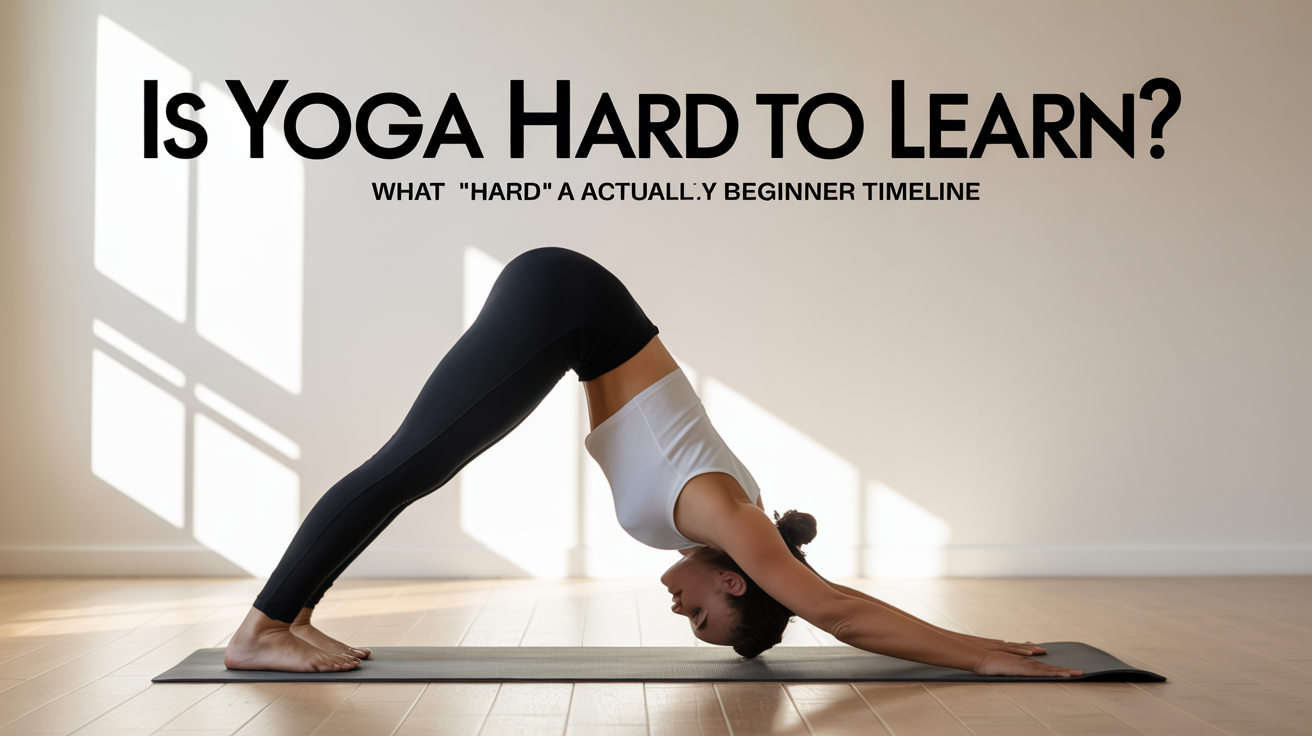
Difficulty in yoga is not linear. Some poses that look advanced are accessible early on. Some poses that look simple require months of work. A deep forward fold is harder if you have tight hamstrings. A headstand is less about strength and more about balance, which some people find quickly and others take longer to develop.
What beginners usually find challenging:
- Remembering pose names. Warrior I, Warrior II, Downward Dog, Child's Pose. There are dozens. You will forget them and re-learn them repeatedly before they stick.
- Breathing on cue. Instructors say "inhale as you lift, exhale as you lower." Coordinating breath with movement takes practice.
- Holding poses longer than feels comfortable. Yoga asks you to stay with mild discomfort rather than immediately pulling back.
- Quieting a busy mind. This is often the hardest part for new practitioners, and it does not have a quick fix.
None of these difficulties require unusual talent to overcome. They respond to consistent, patient practice.
A Realistic Week-by-Week Timeline
This is a rough guide, not a guarantee. Your timeline will vary based on your background, how often you practice, and what "progress" means to you.
| Timeframe | What tends to happen |
|---|---|
| Week 1-2 | Poses feel unfamiliar; you spend most of class looking around; basic sequences feel choppy |
| Week 3-4 | Common poses start feeling familiar; you remember some transitions without watching the teacher |
| Month 2 | Breathing feels slightly more natural; you notice when you're holding your breath |
| Month 3 | You can follow a 60-minute class without losing track; a few poses feel genuinely comfortable |
| Month 4-6 | You start recognizing your own patterns and preferences; modifications feel like tools, not failures |
| 6+ months | A consistent practice starts to feel like second nature; you begin exploring beyond beginner classes |
These windows assume one to three sessions per week. More frequent practice tends to compress the timeline. Less frequent practice stretches it, which is fine.
A worked example: two beginners, two paces
Consider two people starting the same beginner program. Person A practices twice a week for 30 minutes. Person B practices four times a week for 20 minutes, less total time overall. In most cases, Person B reaches the "poses feel familiar" stage (roughly the week 3-4 mark in the table above) faster than Person A, because frequency of exposure matters more than session length when you are still building basic body awareness. Once both people are past that early stage, the gap narrows and total weekly practice time becomes the bigger factor again. The lesson: if you only have 20 minutes some days, use it rather than waiting for a full hour to be free.
No, You Do Not Need to Be Flexible to Start
This question comes up constantly, and the answer is always the same: flexibility is a result of yoga practice, not a prerequisite for it.
Tight hamstrings, stiff hips, and a limited range of motion are exactly why people come to yoga. The practice meets you where you are. Props like blocks, straps, and blankets exist specifically to bridge the gap between where your body is now and where a pose is heading. A block under your hand in Triangle Pose does not mean you're doing it wrong. It means you're doing it right for your body today.
What does help from the start is a willingness to move slowly and pay attention. Yoga rewards curiosity more than athleticism.
If you want to know more about what your first session will actually look like, what to expect at your first yoga class covers the practical details.
How to Make the Learning Curve Less Steep
A few things consistently help beginners move through the early confusion faster.
Start with shorter classes. A 20-minute beginner session is less overwhelming than an hour-long class when you're new. Building familiarity gradually keeps frustration manageable.
Repeat the same sequences. Novelty feels exciting but slows learning. Doing the same 20-minute flow three times in a row over a week teaches your body more than doing three different flows.
Use props without hesitation. Blocks, straps, and bolsters are not beginner equipment that you graduate from. Many experienced practitioners use them every session. Using a block keeps your alignment honest and reduces the risk of compensating with joints that shouldn't be under strain.
Listen to your body over the teacher. Good yoga instruction gives you cues to follow, but your nervous system has information the teacher doesn't. If something feels sharp, pinching, or wrong, back off. Modify. Come out of the pose entirely. Yoga's core principle is ahimsa, which means non-harm. That applies to yourself first.
Give yourself at least eight sessions before judging. The first few classes are spent learning the vocabulary. Progress before session eight is hard to measure. By session ten, most beginners have a clearer picture of what they need to work on.
For a structured place to start, how to start yoga as a beginner walks through choosing a style, finding beginner classes, and building your first routine.
When Yoga Requires Extra Care
Yoga is generally considered low-risk, but certain situations warrant more caution.
The NIH's National Center for Complementary and Integrative Health notes that yoga is generally safe for healthy people when practiced properly, but recommends beginners avoid extreme practices such as headstands, shoulder stands, and forceful breathing techniques until they have built a foundation, and avoid hot yoga because of overheating risk. That guidance lines up with what most beginner-level teachers already build into a first-month curriculum: no deep backbends, no inversions, no forced binds, until the basics are solid.
The injury data backs up the "start gentle, build gradually" approach without suggesting yoga is unusually risky. A systematic review of adverse events across nine observational studies, covering more than 18,000 practitioners, found that most reported injuries were mild musculoskeletal sprains and strains, and that overall risk was comparable to other forms of exercise. Serious adverse events were rare. The practical read for a beginner: normal caution, not special alarm, is the right response.
If you are pregnant, have a recent injury, or are managing a chronic health condition, speak with your doctor before starting a yoga practice. Some poses are contraindicated during pregnancy. Certain back or joint issues need modifications that a general beginner class may not provide. A teacher with specific training in prenatal yoga or therapeutic yoga can make a significant difference in those cases.
Even for healthy beginners, some poses take longer to be appropriate. Deep backbends, inversions, and advanced balances are not first-week territory. A good beginner class will not put you in those positions before you have the foundational strength and body awareness to support them.
The goal is a practice you can sustain over years, not a dramatic first session. Moving gently and building gradually protects that long-term goal.
Frequently Asked Questions
How many sessions does it take before yoga stops feeling awkward?
Most people find that sessions five through eight are where the worst of the awkwardness fades. You stop spending all your mental energy on the pose names and start noticing the physical sensations instead. The timeline varies, but seven to ten sessions is a reasonable expectation for things to feel noticeably less unfamiliar.
Can I learn yoga at home, or do I need a class?
Both approaches work. Home practice gives you flexibility and privacy, which many beginners find helpful when they're still figuring things out. In-person classes give you real-time feedback on alignment, which is genuinely hard to replicate with a video. If you start at home, good instructional videos can take you a long way. If budget or access allows, even one or two in-person sessions early on can help you develop better habits. Either way, knowing what to wear and bring to yoga ahead of time makes starting easier.
What if I can't do a pose that everyone else in the class seems to manage?
That perception is usually wrong. What looks effortless in a group class is often the result of years of practice, and many people in any given class are quietly struggling too. More practically: use the modification. Come into Child's Pose. Sit out one round. Yoga teachers do not expect beginners to keep up with advanced students, and you shouldn't expect that of yourself either.
Is yoga harder if you're older?
Age affects the pace of progress more than the ceiling of what's possible. Older beginners may find that recovery takes longer and that flexibility gains come more gradually. The practice remains accessible. Many people begin yoga in their 50s, 60s, and 70s and develop consistent, meaningful practices. The main adjustment is giving your body more time between sessions and being patient with the timeline.
How do I know if I'm making progress?
Early progress in yoga doesn't always look like doing more advanced poses. It often shows up as subtler things: holding a pose a few breaths longer, noticing tension in your shoulders and choosing to release it, breathing more steadily during a sequence that used to wind you. Those shifts are real progress, even when they're hard to photograph.
Is it normal to feel more sore in the first month than later on?
Yes. New movement patterns and unfamiliar ranges of motion produce more next-day soreness in the first few weeks, similar to starting any new physical activity. As your body adapts, the same sequences tend to produce less soreness even as you hold poses longer or go slightly deeper. Soreness that is sharp, joint-located, or lasts more than two to three days is different from this normal adaptation and worth backing off from.