Stretching vs Yoga: What's the Difference for Flexibility?
Yoga and stretching both improve flexibility, but they work differently. Here's what beginners need to know to choose the right approach.
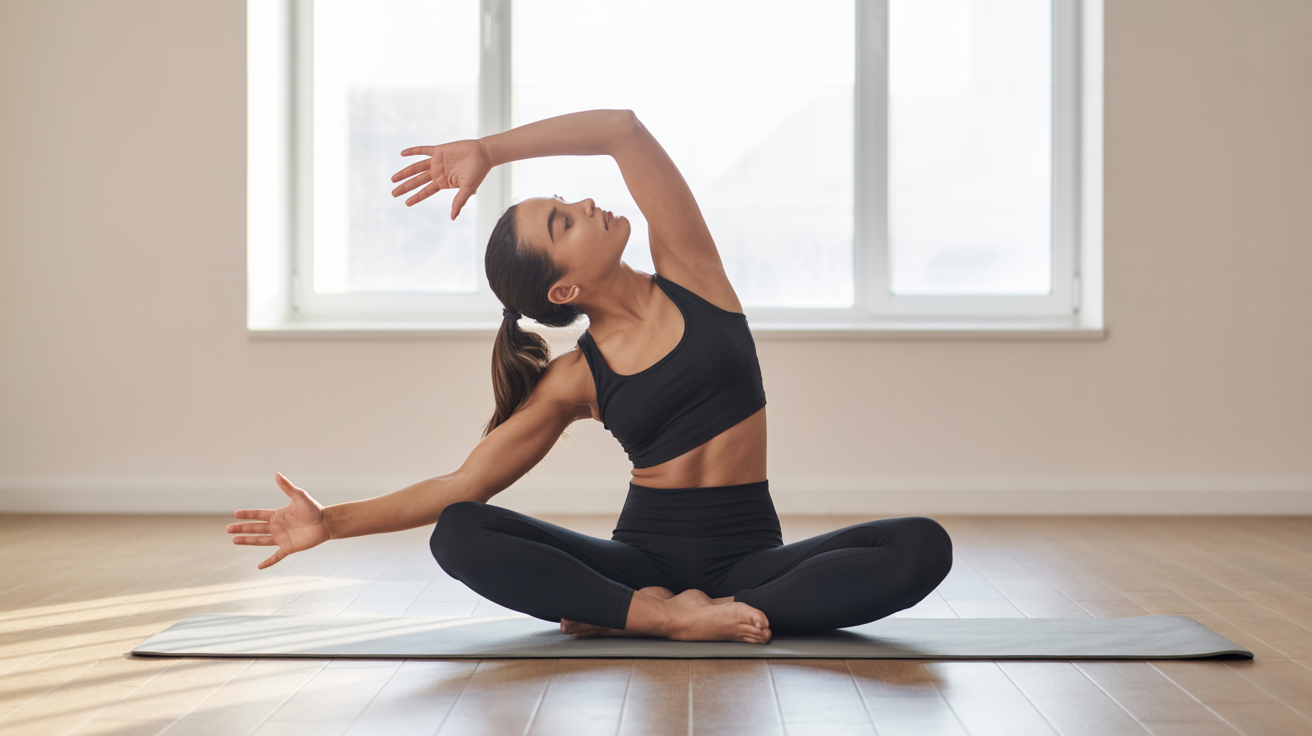
Stretching and yoga both make you more flexible over time. But they are not the same thing, and understanding the difference helps you use each one more effectively.
The short answer: stretching targets specific muscles to increase their length and release tension. Yoga uses movement, breath, and held shapes to build flexibility alongside strength, balance, and body awareness. Flexibility is one outcome of yoga, not the whole point.
What Stretching Actually Does
When you stretch a muscle, you hold it under mild tension for a period of time. Over repeated sessions, the muscle and its surrounding connective tissue gradually adapt, allowing a greater range of motion.
There are two common types:
- Static stretching means holding a position without moving, usually 20 to 60 seconds. Think hamstring stretch on the floor or a calf stretch against a wall.
- Dynamic stretching uses controlled movement through a range of motion rather than holding. Leg swings and arm circles are examples.
Static stretching is effective for increasing flexibility when done consistently. It works best after exercise when muscles are warm, though gentle static stretching can be done any time. If you have an injury or are pregnant, check with a doctor or physical therapist before adding a stretching routine to understand what is safe for you.
What Yoga Does Differently
Yoga does involve stretching, but a yoga class includes much more than that.
A typical yoga session layers together:
- Poses held for time, which do stretch muscles but also ask you to support your own body weight, building functional strength
- Transitions between poses, which train coordination and proprioception (your awareness of where your body is in space)
- Breath work, which is integrated into every movement rather than added on afterward
- A progression or sequence, where earlier poses prepare your body for later ones
Because yoga builds strength alongside flexibility, it tends to create stability at the end range of motion rather than just length. That distinction matters practically. A flexible hamstring with no supporting strength can still feel unstable or prone to strain. Yoga shapes like Warrior I or Downward Dog ask your muscles to lengthen and hold at the same time.
Yoga or Stretching for Flexibility: Which Works Better?
Both work. The research on flexibility training consistently shows that regular practice of either approach leads to improvement over weeks and months. The "better" option depends on what you are looking for.
| Static Stretching | Yoga | |
|---|---|---|
| Time to start | Immediate, no equipment | A mat helps; no other gear needed |
| Flexibility gains | Yes, with consistency | Yes, with consistency |
| Strength benefits | Minimal | Moderate to significant |
| Breath training | Not included | Core component |
| Mental focus | Optional | Built in |
| Variety | Limited | Wide range of styles and levels |
If flexibility is your only goal and you want the most direct path, a focused daily stretching routine is simple and effective. If you want flexibility combined with whole-body conditioning and you enjoy learning a physical practice, yoga delivers more per session. Many people use both: yoga a few days a week, targeted stretching on off days or after workouts.
For beginners to yoga interested in building range of motion specifically, see yoga for flexibility: how beginners build range safely.
Common Beginner Mistakes with Both
Forcing the range
In stretching, the target sensation is mild tension, not sharp pain. Pulling aggressively into a stretch does not speed up flexibility gains and increases injury risk. The same applies in yoga: a deeper pose that you cannot breathe comfortably in is not more effective than a shallower one held with calm breathing.
Skipping warm-up
Cold muscles are less pliable. A five-minute walk, gentle joint circles, or a few rounds of Cat-Cow before a stretching session makes both the stretching and any yoga easier and safer.
Inconsistency
Flexibility responds to frequency more than intensity. Three short sessions a week outperforms one aggressive session. This is true for stretching and for yoga.
Holding your breath
In yoga, the breath is a signal. If breathing becomes strained or shallow in a pose, back out slightly until you can breathe smoothly again. The same principle applies to stretching: slow, steady breathing during a hold helps the nervous system allow greater release.
Targeting Specific Areas
Yoga and stretching both work well for common tight spots like the hips and hamstrings, but yoga offers more layered approaches.
For tight hips, yoga uses poses like Pigeon, Low Lunge, and Garland that work the hip from multiple angles simultaneously, addressing the hip flexors, rotators, and inner thigh in one shape. Props like blocks or a rolled blanket under the hip make these accessible at any starting point. You can find a guided approach in yoga for tight hips: gentle hip-opening poses.
For hamstrings specifically, yoga and dedicated stretching overlap significantly. Poses like Standing Forward Fold and Seated Forward Bend resemble classic stretches, but yoga versions include breath cues and often use a strap to keep the spine long rather than rounding. See yoga for tight hamstrings: beginner stretches that help for a detailed starting point.
Listening to Your Body
Both practices carry a low risk of injury when done thoughtfully, but "low risk" is not "no risk." A few guidelines apply to both:
- Work within a range where you feel tension but not sharp, pinching, or shooting pain
- Use props (blocks, straps, blankets, a folded towel) to bring the floor or the pose to you rather than collapsing your alignment to reach farther
- Progress gradually over weeks, not within a single session
- If you are pregnant, recovering from surgery, or managing a joint or back condition, speak with your doctor or physical therapist before starting. They can advise on which movements to modify or avoid.
Frequently Asked Questions
Is yoga just stretching with extra steps? No. Yoga does involve stretching, but it also builds strength, trains breath control, and develops body awareness through the transitions between poses. The flexibility benefits overlap, but the overall effect of a yoga practice is broader than what stretching alone produces.
Can I get flexible from stretching alone, without doing yoga? Yes. A consistent static stretching routine targeting your tight areas, held 30 to 60 seconds per stretch three to five days a week, will improve flexibility over time. Yoga is one path to flexibility, not the only one.
Should I stretch before yoga? A gentle warm-up before yoga is useful, but you generally do not need a dedicated stretching routine beforehand. A well-designed yoga class builds its own warm-up into the first few minutes with poses like Child's Pose, Cat-Cow, or gentle spinal rolls.
How long before I notice flexibility improvements? Most people notice a change in how a stretch or pose feels within two to four weeks of consistent practice, though visible range-of-motion improvements often take six to eight weeks. Individual variation is wide and depends on your starting point, how often you practice, and how your body recovers.
Can I combine yoga and stretching? Yes, and many people do. Yoga on active days and targeted static stretching after workouts or on rest days complement each other well. There is no conflict between the two.