Yoga for Shoulders and Upper-Back Tension
Gentle yoga poses that release tight shoulders and upper-back tension for beginners. Move safely, breathe, and find relief at your own pace.
Sitting at a screen for hours, carrying bags, or sleeping in an awkward position can all leave the shoulders and upper back feeling like a wound-up rope. Yoga is one of the most accessible ways to start unwinding that tension because it pairs breathing with slow, held movement rather than forcing a stretch.
This guide walks through the most useful poses for the shoulders and upper back, explains why they work, and gives you a short sequence you can follow at home.
Before you begin: if you have a shoulder injury, history of rotator cuff problems, neck pain from an accident, or are pregnant, check with your doctor or physiotherapist before adding new movement to your routine. Work gently and stop if anything feels sharp or pinching rather than simply intense.
At a Glance
- Desk posture shortens the chest muscles and overworks the upper back, a pattern yoga addresses from both directions at once.
- A 15-minute sequence of five poses (seated cat-cow through thread-the-needle) covers rotation, opening, and traction in one short session.
- A 2023 randomized trial found weekly Hatha yoga performed as well as targeted stretching for reducing neck and shoulder pain in office workers.
- Short, daily sessions beat one long weekly session for chronic desk-related tension.
- Sharp pain, tingling in the hands, or pinching means back off or add a prop; mild pulling across the chest and shoulder blades is expected.
- Pain-free clicking in the shoulder during movement is common and not usually a reason to stop.
Why the Shoulders and Upper Back Get Tight
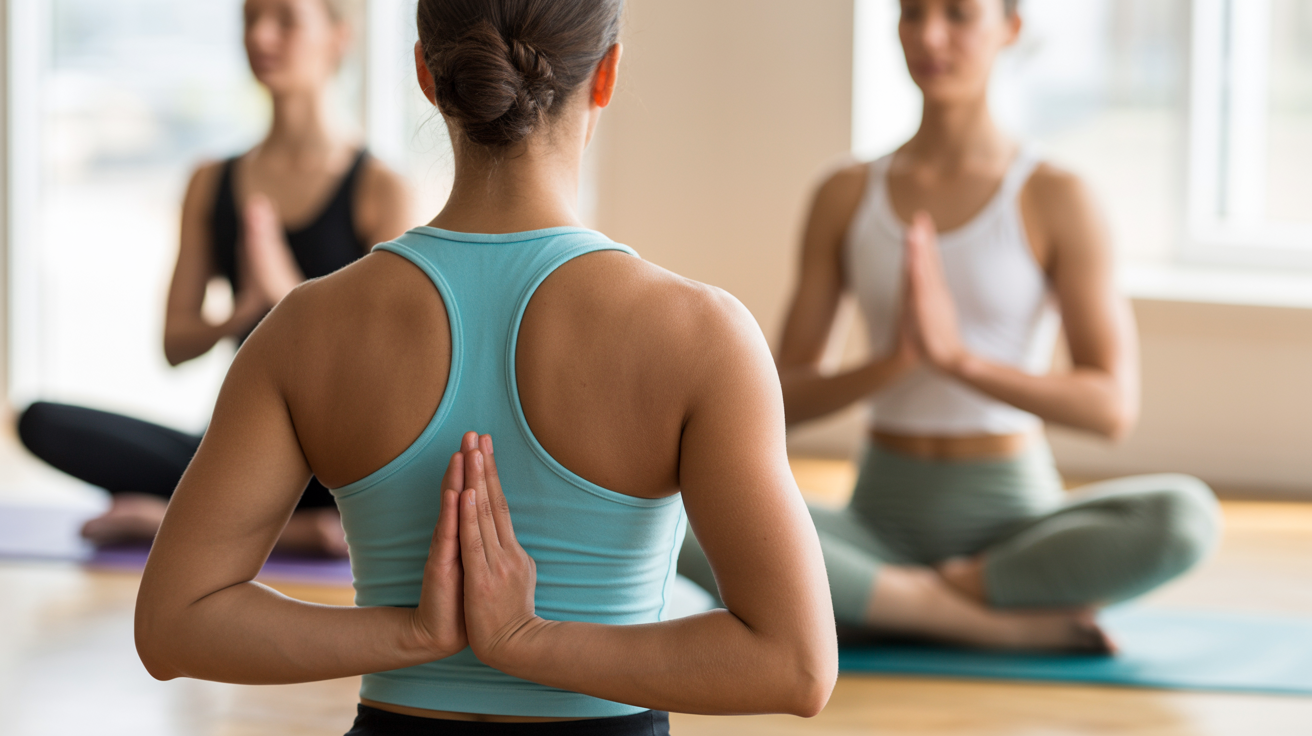
The muscles along the upper back, trapezius, rhomboids, and levator scapulae, run from the base of the skull down to the mid-back. The trapezius alone has three separate functional regions: the upper fibers help support the weight of the arms and elevate the shoulder blades, the middle fibers retract them, and the lower fibers depress and rotate them. When you spend hours with your arms reaching forward toward a keyboard, that whole system holds a static, low-level contraction for far longer than it is built for. Over time that sustained load shortens the muscles at the front of the chest (pectorals) and exhausts the ones at the back, a pattern sometimes called upper crossed posture.
A yoga practice approaches this from both directions. Forward folds and arm variations lengthen the back-of-shoulder muscles. Chest openers stretch the front. Breathing cues help the whole area release rather than grip.
Research backs up yoga as a reasonable option here, not just a feel-good habit. A randomized controlled trial of 150 sedentary office workers with mild to moderate neck and shoulder pain compared once-weekly group Hatha yoga to a stretching-exercise program, both with home practice, over four weeks. The two approaches produced statistically similar improvements in pain, flexibility, neck function, and quality of life, and 92 to 98 percent of participants in both groups rated themselves as improved. The takeaway for a desk-bound beginner: you do not need an advanced practice to get real relief. Consistent, moderate movement, whether you call it yoga or stretching, is doing the work.
Poses That Target Shoulder and Upper-Back Tension
Thread-the-Needle
Start on all fours with wrists under shoulders and knees under hips. Inhale and reach the right arm up toward the ceiling. Exhale and slide it under the left arm along the floor, palm facing up, until the right shoulder and right cheek rest on the mat. Hold for 6 to 10 slow breaths, then repeat on the other side.
This pose creates a rotational stretch deep in the shoulder blade and the muscles around the thoracic spine. It needs almost no flexibility to begin and is safe for most beginners.
Modification: place a folded blanket under the lowered ear and shoulder if the floor feels too far away.
Eagle Arms
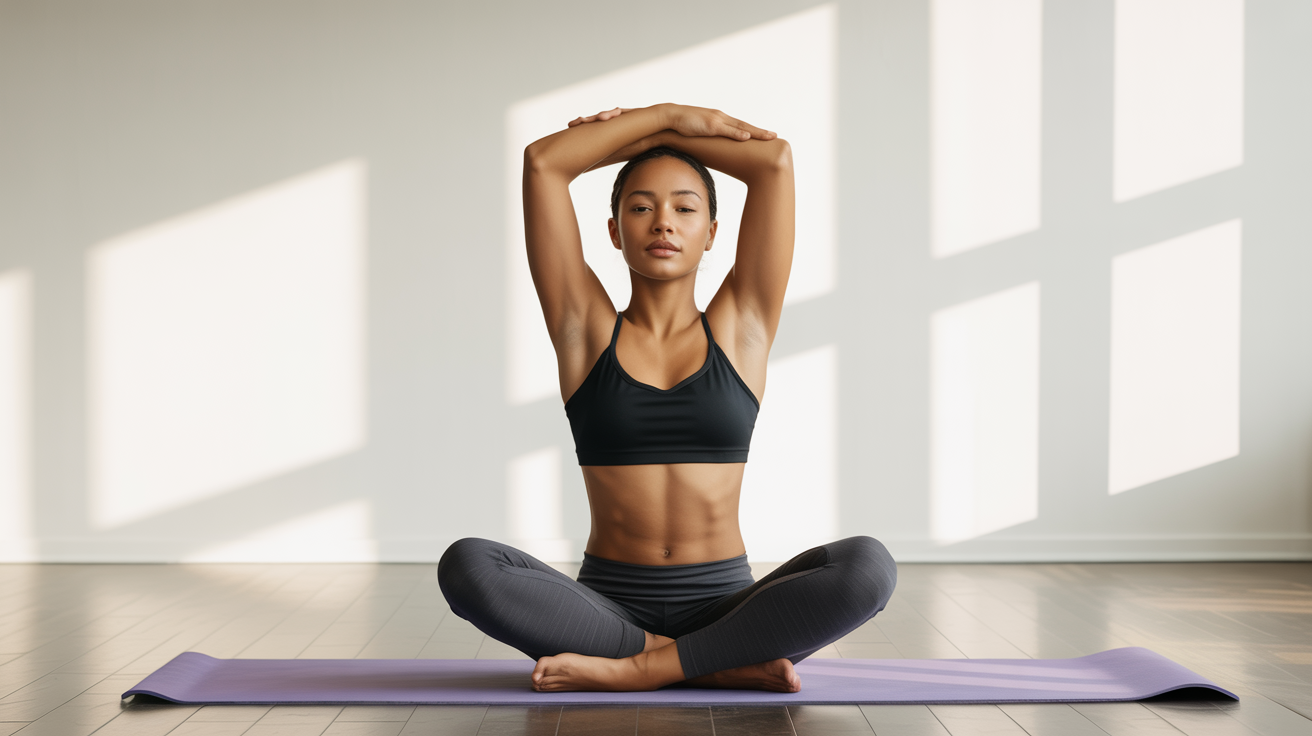
Sit or stand comfortably. Stretch both arms out to the sides, then swing the right arm under the left, crossing at the elbows. Try to bring the palms together, or rest the backs of the hands against each other if that is as far as they go. Lift the elbows slightly and draw them away from the face. Hold for 5 to 8 breaths, then switch which arm is on top.
Eagle arms open the muscles between the shoulder blades and stretch the posterior deltoid. You can do this seated at a desk for quick relief, which makes it one of the most practical poses in this list for someone who cannot leave their chair for a full session.
Child's Pose with Arm Variation
From all fours, sink the hips back toward the heels and extend the arms forward on the mat, forehead resting down. Once settled, walk both hands to the right, keeping the left shoulder heavy. You will feel a stretch along the left side from the armpit down to the hip. Breathe here for 6 breaths, then walk back to center and repeat to the left.
Standard child's pose already decompresses the upper back. The side walk adds a lateral stretch that reaches the lats and the space between the shoulder blade and spine. See how to build range gently before pressing into any edge.
Puppy Pose (Anahatasana)
On all fours, walk the hands forward until the arms are fully extended, letting the chest melt toward the floor while the hips stay stacked over the knees. Rest the forehead or chin on the mat. Hold for 6 to 10 breaths.
This creates a long, passive traction of the thoracic spine and the front-of-shoulder area. It is stronger than child's pose, so use a block under the forehead if the floor is too far.
Listen to your body: this pose can feel intense across the chest. If you feel pressure in the neck or tingling in the hands, back off or use a prop.
Seated Cat-Cow for the Thoracic Spine
Sit on the floor or in a chair with feet flat. Place hands on thighs. On an inhale, lift the chest, draw the shoulders back, and let the spine arch gently. On an exhale, round the back, let the shoulder blades separate, and draw the chin toward the chest. Repeat slowly 8 to 10 times, matching the movement to the breath.
This is often the gentlest entry point for someone with neck and upper-back pain. It moves the spine through its natural range without any weight-bearing through the arms. For related work on lower-chain tightness that connects to postural tension, hip openers for beginners address the opposite end of the chain.
A Short Sequence to Follow
The poses above work well in this order, which takes about 15 minutes. Move through it slowly.
| Order | Pose | Time Each Side |
|---|---|---|
| 1 | Seated Cat-Cow | 8 to 10 rounds |
| 2 | Eagle Arms | 5 to 8 breaths per side |
| 3 | Child's Pose with Arm Walk | 6 breaths per side |
| 4 | Puppy Pose | 6 to 10 breaths |
| 5 | Thread-the-Needle | 6 to 10 breaths per side |
| 6 | Return to Child's Pose | 5 breaths, center |
Finish by lying on your back with arms out to the sides, palms up, for 2 minutes. Let the shoulder blades sink into the floor.
A quick desk-break version
If a full 15-minute sequence is not realistic during the workday, a shortened version still helps: 8 rounds of seated cat-cow, then eagle arms held for 5 breaths per side, done seated in your chair. This takes about 3 minutes and can be repeated once or twice through the day. It will not replace a full session, but three-minute breaks spread across an 8-hour desk day add up to more total movement than a single evening stretch.
How Often to Practice
For chronic desk-related tension, a short daily session of 10 to 15 minutes tends to do more than one long session per week. The body responds to consistent, gentle repetition rather than occasional intensity. This matches the study cited above: participants who supplemented a single weekly class with home practice saw meaningful improvement within four weeks.
If soreness is severe after a session, reduce how long you hold each pose and check that you are breathing throughout rather than holding your breath. Holding a stretch while holding the breath usually increases tension rather than releasing it.
For a longer flexibility framework that complements this work, the beginner hamstring stretches guide covers the lower body so you can build a balanced full-body routine over time.
Frequently Asked Questions
How long before I notice a difference in shoulder tension? Most people notice some shift within the first session, especially from poses like eagle arms and thread-the-needle. Structural change, where the muscles no longer default to a tense state, tends to take a few weeks of regular practice. Consistency matters more than duration.
Can I do these poses if I have a pinched nerve in my neck? A pinched nerve (cervical radiculopathy) needs a medical assessment before adding any stretching. Some movements that feel like shoulder stretches actually load the neck, so it is worth getting a clear picture from a physiotherapist before self-managing with yoga.
Is it normal to hear clicking or cracking sounds in the shoulders? Occasional clicks that are painless are common and usually caused by tendons or connective tissue moving across bony structures. If clicking is accompanied by pain, weakness, or catching, get it evaluated. Pain-free clicking during yoga is generally not a reason to stop.
Should I use props? Yes, absolutely. A folded blanket under the lowered shoulder in thread-the-needle, a block under the forehead in puppy pose, or a chair for seated work all make the practice more accessible and safer. Props are not a sign of limited ability; they are how you hold a position long enough for the muscles to actually release.
What if tension returns quickly after a session? This is normal at first, especially if the work pattern causing the tension continues. Short movement breaks during the day, moving the shoulders back and down a few times per hour, help maintain what the yoga session builds. Over time, the resting position of the shoulder tends to improve.
Is yoga actually better than just stretching for this kind of tension? Not necessarily better, just different in delivery. The research comparing the two in office workers found comparable results for pain and function. Yoga adds a breathing and body-awareness component that some people find easier to stick with, which matters because consistency, not the specific label on the movement, is what produces the improvement.