Chair Sun Salutation: A Gentle Variation for Stiff Bodies
Learn chair yoga sun salutation step by step. A gentle, seated variation perfect for beginners with stiff joints, limited mobility, or recovery needs.
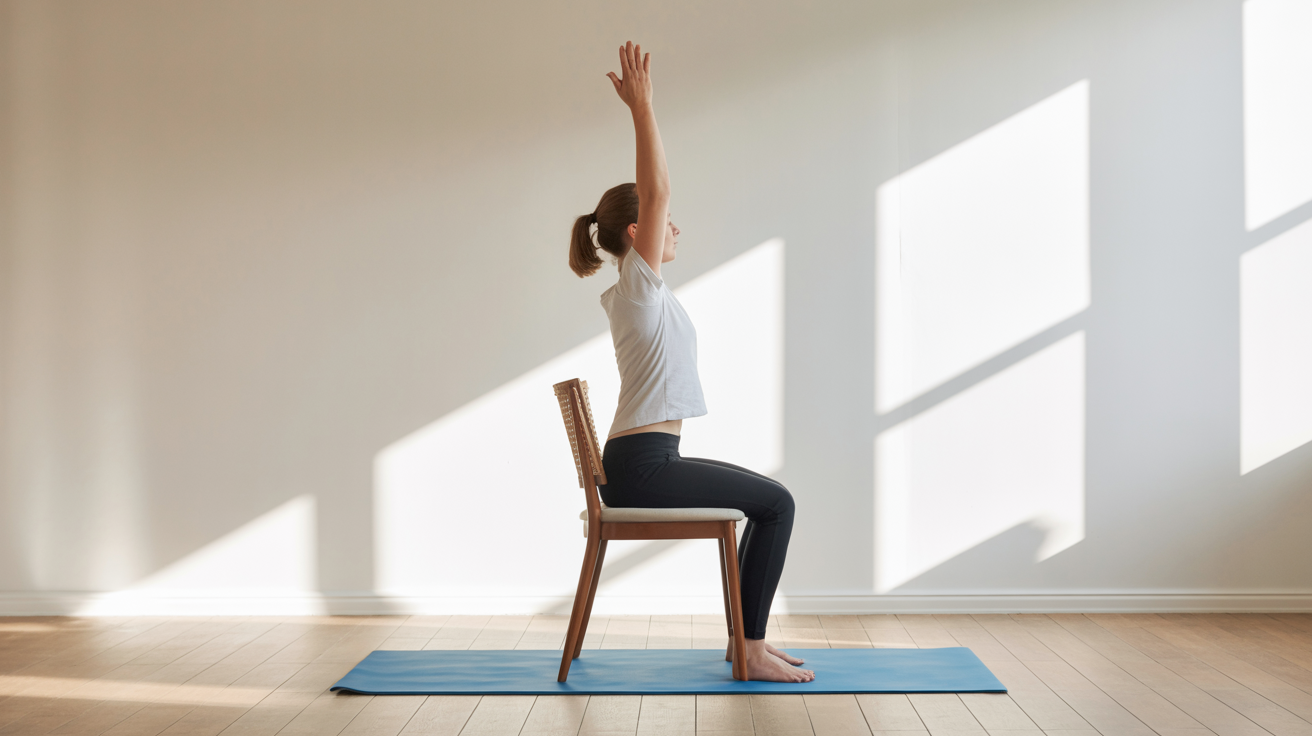
Sun salutations are the backbone of most yoga practices, but the classic floor version puts real demands on wrists, hips, and hamstrings. If your body feels stiff in the morning, or if getting down to the floor and back up again is its own workout, a chair variation gives you the same breath-linked movement with far less strain.
This guide walks through a chair sun salutation sequence you can do with a sturdy, armless chair. No mat required. No prior yoga experience needed.
Why a Chair Variation Makes Sense
The standard Sun Salutation A involves planks, forward folds with straight legs, and Downward Dog. For someone new to yoga or dealing with tight hips, stiff lower back, or joint discomfort, those shapes can feel discouraging at best and painful at worst.
The chair version replaces floor-based poses with standing and seated alternatives that follow the same logic: inhale to lengthen, exhale to fold or release. The breath-movement link is identical. The warmth you build through the sequence is real. What changes is the entry point.
If you are pregnant, recovering from an injury, or have a health condition that affects your joints or balance, check with your doctor before starting. A chair provides stability, but every body is different.
What You Need Before You Start
A standard armless chair, placed on a non-slip surface. Kitchen chairs with a flat seat work well. Avoid chairs on wheels or with soft, sinking cushions.
Wear comfortable clothes you can move in. Bare feet or grippy socks help if you stand up during parts of the sequence.
One session takes roughly eight to twelve minutes for three or four rounds. You can do one round if that is all you have time for.
The Chair Sun Salutation Sequence, Step by Step
Work through each pose slowly on your first pass. Once the order is familiar, you can link the moves to your breath more naturally.
Mountain Pose in the Chair (Tadasana)
Sit toward the front third of the seat. Both feet flat on the floor, hip-width apart. Hands rest on your thighs. Sit tall without forcing your lower back into an arch. Take two or three slow breaths here to arrive.
Arm Raise (Urdhva Hastasana)
On an inhale, sweep both arms out to the sides and up overhead. Palms face each other or press together if your shoulders allow. Lift through the sides of your body. If lifting both arms overhead causes shoulder discomfort, raise only to shoulder height, or lift one arm at a time.
Seated Forward Fold (Uttanasana variation)
On an exhale, hinge forward from the hips and lower your chest toward your thighs. Let your hands rest on your shins, the floor, or a block. Release your head and neck. Stay here for one to two breaths. This is your fold, the exhale shape in the sequence.
Halfway Lift
On an inhale, press your hands to your shins and lift your chest halfway up until your back is roughly flat. Gaze forward. This decompresses the spine before the next movement.
Chair Warrior I (Virabhadrasana I variation)
From the halfway lift, place both hands on the seat edge or your thighs. Stand up with control, then step your right foot back about two to three feet. Keep the right heel lifted. On an inhale, raise both arms overhead. This standing pose replaces the lunge and plank shapes from the floor sequence. Stay for one breath.
Lower your arms, step your right foot forward to meet the left, and return to sitting.
Chair Downward Dog (Adho Mukha Svanasana variation)
Place your hands on the seat of the chair in front of you (or on the back of a second chair placed ahead of you). Step your feet back until your arms are straight and your hips hinge so your back forms a long diagonal line. Press through your hands, lengthen your spine, and let your head release between your arms. Stay for two breaths. This is the most restful shape in the sequence.
Walk your feet back in, return to sitting.
Return to Mountain Pose
On an inhale, sweep your arms out and up. On an exhale, bring your hands to your heart in prayer position (Anjali mudra). Pause. Notice how your body feels compared to when you sat down.
That completes one round. Rest for a few breaths, then begin again on the other side (stepping the left foot back in the Warrior I step).
Breathing Through the Sequence
The breath pattern in a sun salutation is not decorative. It is what turns a series of shapes into an actual practice.
| Movement | Breath |
|---|---|
| Arms rise | Inhale |
| Forward fold | Exhale |
| Halfway lift | Inhale |
| Stepping back | Exhale |
| Arms overhead (Warrior I) | Inhale |
| Chair Downward Dog | Exhale, then steady |
| Arms sweep up | Inhale |
| Hands to heart | Exhale |
If the breath and movement get out of sync, pause. A slow breath is more useful than rushing to keep pace with a count.
For more on linking breath to movement, see how to link breath to movement in yoga: vinyasa basics.
Building Up Over Time
Three to five rounds in a single session is a reasonable starting target. You do not need to get there on your first try.
In the first week, aim for one or two rounds and focus mainly on getting the order of poses into your body. Let the breath come second. Once the sequence feels automatic, the breath-movement pairing clicks much more easily.
If you want to eventually try the standing floor version, sun salutation for beginners: surya namaskar A step by step walks through the traditional form at a pace that works for newcomers. When you feel ready to go further, surya namaskar B: the next step after sun salutation A adds the next layer of complexity.
There is no timeline. Some people stay with the chair version indefinitely and find it suits them perfectly. That is a complete practice, not a lesser one.
Frequently Asked Questions
Can I do chair sun salutations every day?
Yes, for most people a gentle chair sequence is fine daily. Pay attention to how you feel the next morning. Mild warmth in the muscles is normal. Sharp pain, joint aches that linger, or fatigue that does not resolve with rest are signals to take a day off and possibly check in with a healthcare provider.
My chair slides when I stand up. What should I do?
Place the chair against a wall so the back legs are braced. A non-slip mat under the chair legs also helps. If the chair still feels unstable, stay seated for the whole sequence and skip the standing Warrior I step until you have a more stable setup.
What if I cannot reach the floor in the forward fold?
Rest your hands on your thighs, on a block placed between your feet, or simply let your arms hang toward the floor without forcing them to touch. The goal is a gentle hip hinge, not contact with the ground.
Is this suitable for seniors?
Chair yoga is used in many senior wellness programs because it removes the floor transitions that make traditional yoga difficult. That said, "seniors" covers a wide range of fitness levels and health conditions. If you have balance issues, osteoporosis, recent surgery, or cardiovascular concerns, a conversation with your doctor before starting is a good step.
How is this different from regular seated yoga?
A sun salutation is specifically a flowing sequence linked to breath, designed to warm the body from the inside out. Seated yoga classes often focus on individual poses held for several breaths. The chair sun salutation keeps the flowing, rhythmic quality of the original sequence. Both have value; they are just different tools.