Surya Namaskar B: The Next Step After Sun Salutation A
Learn surya namaskar B step by step. A beginner-friendly breakdown of the sun salutation B sequence with real cues and common mistakes.
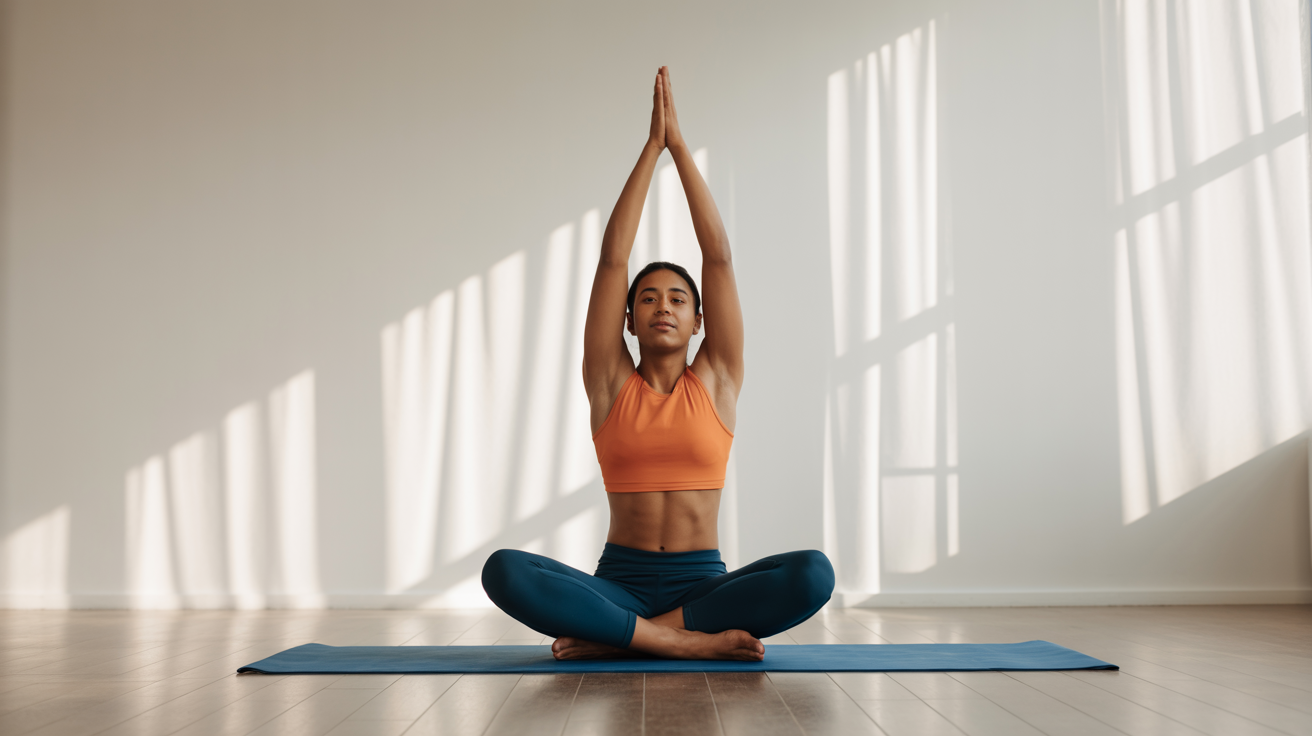
If you have been practicing Sun Salutation A for a while and it feels familiar, Surya Namaskar B is the natural next thing to try. It keeps the same flowing rhythm but adds two new poses, Chair Pose and Warrior I, that build more heat and lower-body strength.
This guide walks through every step of the sun salutation B sequence, tells you what to actually feel in each pose, flags the spots where beginners most often go wrong, and gives you a comparison table so you can see exactly how it differs from the A version.
What Makes Sun Salutation B Different from A
The structure of surya namaskar B is longer. Where A has 12 positions, B has 17. The two additions are:
- Utkatasana (Chair Pose) at the very start and end, before and after the standing sequence
- Virabhadrasana I (Warrior I) added to each side after the lunge
The vinyasa sun salutation core, Plank, Chaturanga, Upward Dog, Downward Dog, stays identical. So if you already know A, you are not starting from scratch. You are plugging new poses into a familiar frame.
One other difference: B typically moves a bit faster in a class setting, because it has more material and teachers often do fewer rounds of it. At home, go at whatever speed lets you breathe fully.
The Full Surya Namaskar B Steps
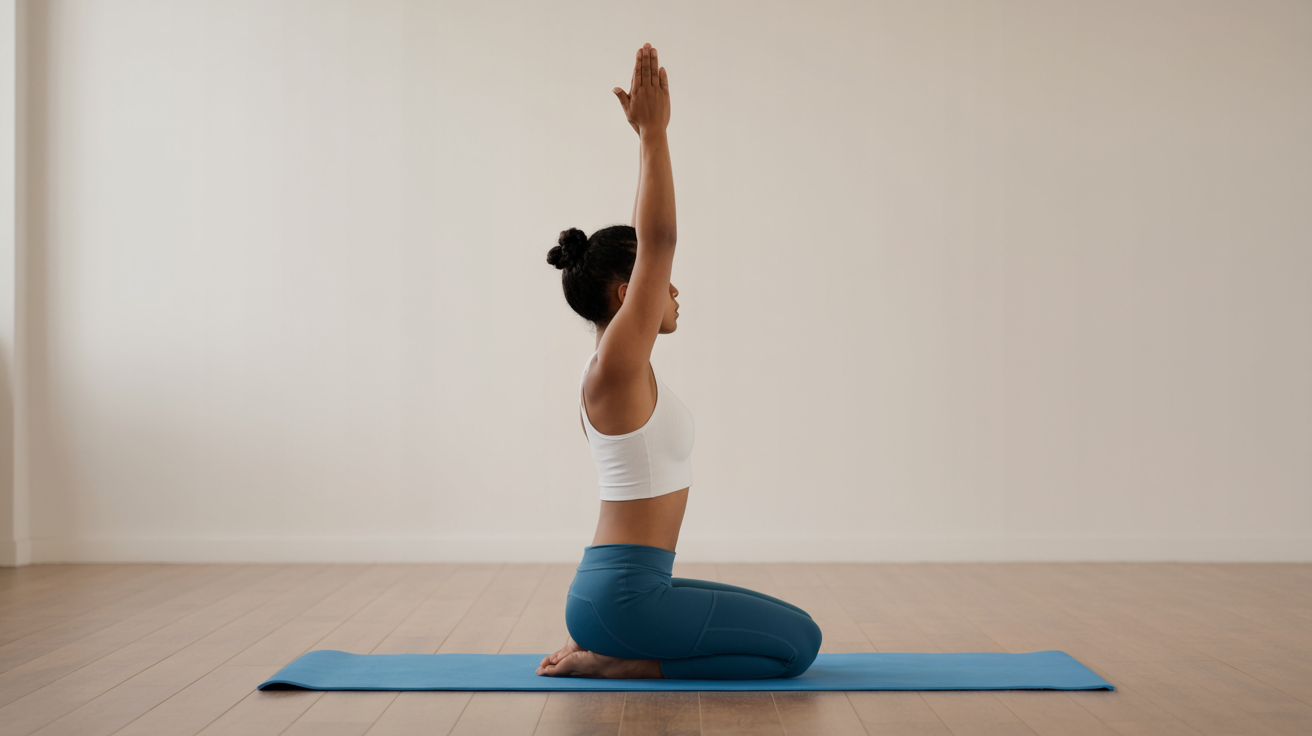
Work through these slowly the first few times. There is no prize for rushing.
1. Utkatasana (Chair Pose)
Stand at the top of your mat, feet together or hip-width apart (hip-width is easier for most beginners). Inhale, bend your knees as if sitting back onto a chair, and sweep your arms overhead. Keep your weight in your heels, you should be able to wiggle your toes. Your torso will naturally tilt forward a little; that is fine. Do not let your knees cave inward.
2. Standing Forward Fold
Exhale, straighten your legs, and fold forward with a flat back (lead with your chest, not your chin). Bend your knees generously if your hamstrings are tight. Place your hands on the floor, your shins, or a pair of blocks.
3. Half Lift
Inhale, press your fingertips into the floor or shins, and lengthen your spine until your back is roughly parallel to the floor. This is not a crunch, you are creating length, not height.
4. Chaturanga Dandasana (Low Plank)
Exhale, step or hop back to Plank, then lower your body in a single piece until your elbows hit about 90 degrees, hugging them close to your ribs. If this is hard, drop your knees first. Chaturanga is genuinely difficult; most beginners need months before the full version feels controlled.
5. Urdhva Mukha Svanasana (Upward-Facing Dog)
Inhale, press the tops of your feet into the mat, roll your shoulders back, and lift your chest. Your thighs should be off the floor. If that strains your lower back, try Cobra instead, it works the same muscles with less load.
6. Adho Mukha Svanasana (Downward-Facing Dog)
Exhale, tuck your toes and press your hips up and back into an inverted V. Hold for five breaths. Soften your knees if your hamstrings pull. Press actively through all ten fingers to take weight out of your wrists.
7. Warrior I, Right Side
Inhale, step your right foot forward between your hands. Pivot your left heel down so the foot angles out about 45 degrees. Square your hips toward the front as much as you can (they will not go fully square, that is normal). Bend the front knee over the ankle and sweep your arms overhead. Look up slightly or keep your gaze forward if your neck bothers you.
This is the pose most beginners find awkward at first. The back foot placement takes some experimentation. Try a wider stance if you feel like you are on a tightrope.
8. Back Through Vinyasa
Exhale, bring your hands to the mat, step back to Plank, lower through Chaturanga, Upward Dog, then Downward Dog.
9. Warrior I, Left Side
Inhale, step your left foot forward, pivot the right heel down, square your hips, and sweep your arms up. Mirror everything from step 7.
10. Back Through Vinyasa
Exhale again, plant your hands, step back, and move through Chaturanga, Upward Dog, Downward Dog.
11. Walk or Hop to the Front
Inhale, look between your hands, walk or lightly hop your feet forward to meet your hands.
12. Half Lift, Fold, Chair, Stand
Inhale to Half Lift, exhale to Forward Fold, then inhale and sit back into Chair Pose, arms sweeping up as you bend your knees. Finally, exhale and stand tall with hands at your heart or by your sides. That completes one round.
Surya Namaskar A vs. B: A Quick Comparison
| Feature | Sun Salutation A | Sun Salutation B |
|---|---|---|
| Number of positions | 12 | 17 |
| Chair Pose (Utkatasana) | No | Yes, start and end |
| Warrior I | No | Yes, both sides |
| Core vinyasa | Same | Same |
| Typical rounds in class | 5 | 3–5 |
| Difficulty for beginners | Moderate | Moderate–challenging |
| Time per round (slow pace) | 2–3 min | 3–5 min |
Tips for Beginners Doing Sun Salutation B
Start with one round. Seriously. One full round of B, done attentively, is better practice than three rushed ones.
Let Warrior I be imperfect. The back-foot angle, the hip square, the arm reach, all of it shifts over weeks. On day one, just get roughly into position and breathe.
Keep your breath in charge. Each movement is driven by one inhale or exhale. If you lose your breath, pause in Downward Dog. Linking breath to movement is the real skill in a vinyasa sun salutation, the poses are just where the breath lives.
Modify freely. Drop to your knees in Chaturanga. Use blocks in your forward fold. Take Cobra instead of Upward Dog. These are not concessions; they are how you build the practice safely.
Expect heat. B generates noticeably more warmth than A, especially through the legs. That is the point. If you feel faint or short of breath, stop and rest in Child's Pose.
If you are pregnant, recovering from a knee or shoulder injury, or managing a heart condition, check with your doctor before adding this sequence to your routine.
Building a Practice Around Sun Salutation B
A simple beginner framework:
- Start every session with 2–3 rounds of Sun Salutation A to warm up
- Add 1–2 rounds of B once A feels steady
- Move into standing poses or a short floor sequence afterward
For a complete morning option, try combining a couple of rounds with a gentle 10-minute morning flow, the sun salutations serve as a built-in warm-up.
Most people find that after two or three weeks of regular practice, the sequence clicks and they stop having to mentally recite each step. That is when it starts to feel like a real practice rather than a memorization exercise.
FAQ
How many rounds of Surya Namaskar B should a beginner do?
Start with one or two rounds and build from there. Three rounds is a solid daily goal. More than five rounds in one session is unnecessary for most beginners and can tire out your shoulders and legs before you have done anything else.
Do I need to do Sun Salutation A before learning B?
Not strictly, but it helps a lot. A teaches you Downward Dog, Chaturanga, and the basic forward fold, which are all embedded in B. Going straight to B is possible but can feel overwhelming when you are learning the vinyasa sun salutation pattern for the first time.
What if I cannot step my foot all the way between my hands?
Very common. Step as far forward as you can, then use your hand to help walk the foot to the top of the mat. Over time, your hip flexors will open and the step will get easier. You can also try stepping wide (outside your hands) temporarily to make room.
Is Warrior I supposed to feel difficult on the back hip?
Yes. The back hip, particularly the hip flexor, gets a real stretch in Warrior I. You may also feel the back foot struggling to stay grounded. Both sensations ease with practice. If you feel sharp pain in the knee, take the foot at a wider angle or shorten your stance.
How long until Surya Namaskar B feels smooth?
Most beginners hit a turning point somewhere between three and six weeks of practicing three to four times a week. The early sessions involve a lot of pausing to think. That is completely normal, it does not mean you are doing it wrong.