Common Sun Salutation Mistakes (and How to Fix Them)
Learn the most common sun salutation mistakes beginners make and simple fixes to move more safely and get more from your practice.
Sun salutations feel deceptively simple when you watch someone else do them. In practice, small alignment slips can build up over time and make the sequence feel harder than it should. The good news: most of these issues are easy to spot and fix once you know what to look for.
If you're new to the sequence, a step-by-step breakdown of Surya Namaskar A is a helpful place to start before working through these corrections.
Holding Your Breath Instead of Breathing With the Movement
This is the most common issue beginners run into, and it quietly undermines the whole sequence. Sun salutations are built around breath: one inhale or exhale per shape. When you hold your breath, the poses feel harder, your nervous system braces, and the flow loses its rhythm.
What to do
Slow down until you can match movement to breath. Every inhale lifts or opens; every exhale folds or releases. If you find yourself catching up to your breath, pause in a neutral shape, take a full cycle, and continue. Speed is not the goal.
Learning to link breath and movement intentionally is worth practicing on its own. This guide to vinyasa basics walks through exactly how to do that.
Collapsing the Shoulders in Plank and Low Push-Up
In plank, it's common to let the shoulders creep toward the ears or let the chest sink between the shoulder blades. In low push-up (chaturanga), the elbows often flare out wide, which puts a lot of pressure on the wrist and shoulder joints.
What to do
In plank, think about pushing the floor away from you. The shoulder blades spread apart and sit flat against the back rather than pinching together. Shoulders stay over wrists or slightly behind them.
In chaturanga, keep the elbows close to the sides of the ribs as you lower, and only go as low as you can control. Many beginners benefit from modifying: lower your knees to the mat first, then lower the chest. There's no loss in doing that; it builds the strength you need for the full form.
If you have a wrist injury or shoulder issue, modify or skip this transition and come straight to the floor in a sphinx or baby cobra instead. Check with a doctor or physio before continuing if you're dealing with joint pain.
Sinking the Hips in Upward Dog (or Crunching the Lower Back in Cobra)
These two backbends are often confused, and both have a common error: compressing the lumbar spine by pushing too far into the shape.
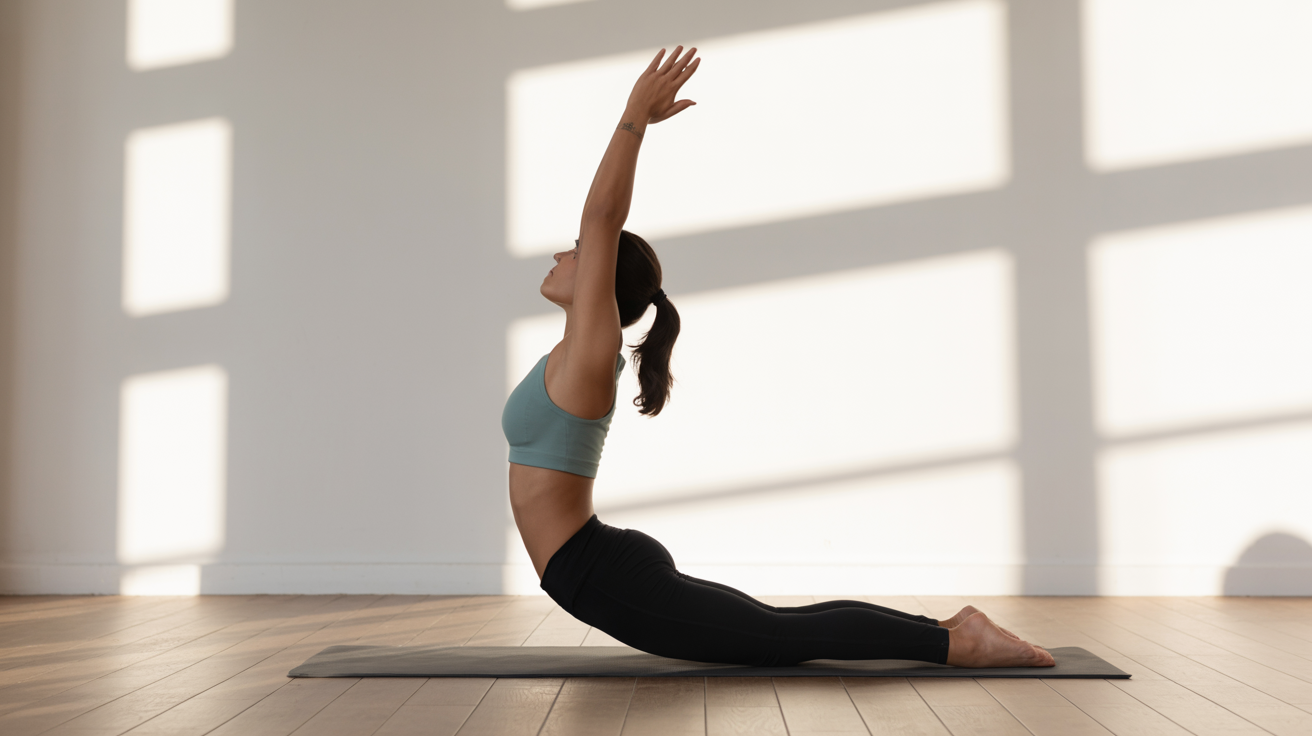
In upward dog, the hips should lift off the mat. If they stay resting on the floor, you're in cobra, not upward dog, and neither pose is wrong, but knowing which one you're doing matters for how you protect your back.
What to do
For upward dog: press firmly through the tops of the feet and the palms, straighten the arms, and let the hips rise. Engage the thighs. The lower back lengthens rather than crunches.
For cobra: keep the elbows bent and close to the sides. Come up only as far as feels comfortable, which for many beginners is just a few inches. Use less height than you think you need.
If you have lower back sensitivity, cobra with low height is safer than either full version. Props: fold a blanket under the hip points for extra support.
Letting the Heels Float in Downward Dog
In downward facing dog, tight calves and hamstrings often pull the heels up and push all the weight into the wrists. The shape becomes more of a plank than a V.
What to do
Bend the knees generously. Straightening the legs is not required, and for most beginners, bent knees allow the pelvis to tilt forward and the spine to lengthen far more than straight-legged straining does.
Press through the base of the index finger and thumb to shift weight back toward the hips. The heels move toward the floor over time, not by force.
A block under each hand can also reduce wrist angle if the floor feels too far away.
Rushing Through the Transitions
When beginners learn the sequence from a video or in a fast class, the transitions between poses tend to become blurry. The step from forward fold to plank gets jumped; the landing in forward fold from downward dog skips the breath.
Rushed transitions are where minor misalignments tend to stack up into strain.
What to do
Practice the sequence slowly, one breath per shape, with full pauses. You're not trying to keep up with anyone. Once you can move through each transition with awareness, adding a little pace feels natural rather than chaotic.
If you're ready to add complexity once the basics feel steady, Surya Namaskar B builds on these same transitions with a few added poses.
Quick Reference: Common Mistakes and Fixes
| Mistake | Quick fix |
|---|---|
| Holding breath | Slow down; one breath per shape |
| Shoulders by ears in plank | Push floor away; spread shoulder blades |
| Elbows flaring in chaturanga | Elbows hug ribs; lower knees if needed |
| Lower back crunching in cobra | Reduce height; keep elbows bent |
| Heels lifting in downward dog | Bend knees; press through index/thumb |
| Rushing transitions | One breath per shape; pause fully |
Frequently Asked Questions
Is it okay to modify poses every time, or should I push through?
Modifying is not a shortcut. It's the correct approach when a full version would strain rather than strengthen. Many experienced practitioners use props regularly. Listen to your body; modifying bent-knee downward dog or low-cobra instead of full upward dog is sound practice, not a workaround.
My wrists hurt in plank and downward dog. What can I do?
Try rolling the base of the fingers into the mat to shift some weight off the wrist heel. You can also use fists (knuckles down) or yoga wedges to change the angle. If wrist pain persists, stop and speak with a doctor or physio before continuing.
How many sun salutations should a beginner do?
Two to four rounds done carefully and with attention is more useful than ten rushed ones. Quality of movement matters more than volume, especially early on. If you're pregnant, recently postpartum, or managing an injury, check with your healthcare provider before starting.
Why do I feel dizzy coming up from forward fold?
Rising too quickly from a forward fold can cause a brief drop in blood pressure. Come up slowly, bending the knees first and letting the head rise last. If dizziness happens regularly, mention it to your doctor.
Should the sequence feel smooth right away?
No. It takes time for the shapes to connect. Most beginners find that a few weeks of slow, deliberate practice produces a noticeable shift. Expect it to feel choppy at first; that's normal and not a sign that you're doing it wrong.